Loading article...

The House Financial Services Committee voted 28-21 on Sept. 16, 2026 to send the American Reserve Modernization Act, which would place federal Bitcoin in a 20-year Treasury reserve, to the full House.
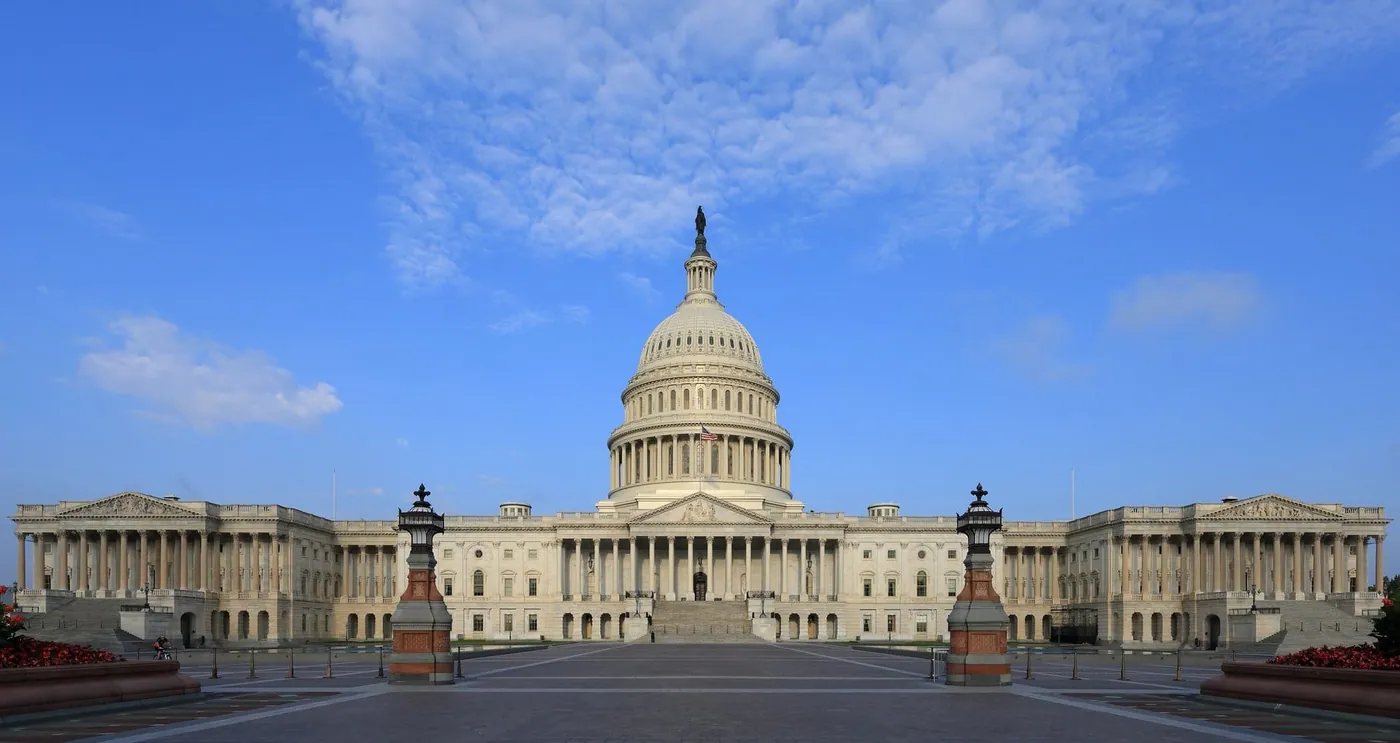
East front of the U.S. Capitol in Washington, D.C. Photo: Martin Falbisoner via Wikimedia Commons (CC BY-SA 3.0). Source
The House Financial Services Committee voted 28-21 on Sept. 16, 2026 to report the American Reserve Modernization Act of 2026 to the full House, giving the first full-committee approval to a bill that would write a federal Strategic Bitcoin Reserve into law. Cointelegraph reported the tally on Sept. 17. The Crypto Times recorded the same 28-21 margin on the motion to report H.R. 8957 as amended.
"We cannot allow Bitcoin to be held by the federal government to languish in fragmented and inconsistent custody," Rep. Nick Begich, the bill's sponsor, said. He warned that the current setup "poses unacceptable cybersecurity risks and fails to give an adequate accounting of what the federal government actually owns," in remarks carried by Cointelegraph.
The bill would establish a Strategic Bitcoin Reserve and a separate Digital Asset Stockpile inside the Department of the Treasury for Bitcoin and other digital assets the federal government holds after criminal or civil forfeiture cases. The bill text describes the purpose as transparent management of federal Bitcoin holdings. A press release from Begich's office says the measure consolidates custody of digital assets now scattered across federal agencies under the Treasury.
Begich introduced H.R. 8957 on May 21, 2026 with Rep. Jared Golden of Maine as the Democratic co-lead. The GovInfo record lists Begich as sponsor and Golden among the cosponsors, with referral to the Financial Services Committee on the same day. The release from Begich's office names Golden as co-lead and lists more than a dozen original Republican cosponsors.
What the committee passed was not the introduced draft but a rewritten version. The panel adopted a substitute amendment from Rep. Bryan Steil of Wisconsin, who chairs the Digital Assets subcommittee, by voice vote before taking the recorded vote, The Crypto Times reported. Ranking Member Maxine Waters of California then offered Amendment No. 9, labeled Waters 2 in committee shorthand, and the panel rejected it 21-28 on Record Vote FC-316. The final motion to report the bill as amended passed 28-21 on Record Vote FC-317, the report says.
The substitute changed how the headline 20-year lockup works. Under the introduced draft, each new deposit of Bitcoin into the reserve would have started its own 20-year clock, so a coin seized in 2031 could have stayed locked until 2051. The Steil language instead pegs the 20-year period to the date of enactment for all reserve Bitcoin, so coins already held and coins added later share one statutory start line, according to the report.
The rewrite also built a limited exit after year 20. The Treasury could recommend selling up to 10 percent of reserve Bitcoin in any two-year window once the holding period ends. That mechanism is recommendation-based rather than automatic, so no sale happens by default when the clock runs out, the report says.
Reporting rules shifted in the substitute as well. The introduced bill called for quarterly public proof-of-reserve reports backed by independent third-party audits, as described in the May release and in Cointelegraph's account. The version the committee approved trims that to an annual public report covering total holdings, transactions, and control of private keys, verified by an independent auditor with cryptographic-attestation experience, with the Comptroller General keeping oversight, The Crypto Times reported.
The substitute sets hard deadlines for the accounting. Each federal agency would have 60 days after enactment to deliver a complete inventory of Bitcoin and other digital assets it holds, seizes, or controls. The Treasury Secretary would then have 180 days to stand up custody infrastructure, with transfers of eligible assets to follow within 30 days of certification, according to the report.
The bill does not fund new Bitcoin purchases. One section directs the Treasury and Commerce secretaries to study, within 180 days of enactment, whether more Bitcoin can be added over a five-year horizon without expanding the national debt in nominal or economic terms. The same section bars new borrowing, new taxes, and deficit spending as acquisition tools, with annual updates to Congress, the report says.
Private ownership gets explicit protection. The bill affirms the right of individuals to own, transfer, and self-custody digital assets, describing control of private keys as "fundamental to the principles of financial sovereignty, privacy, and personal liberty in the digital age," as quoted by Cointelegraph. Nothing in the act authorizes the government to confiscate lawfully held coins, the report adds.
States get an optional role. The substitute creates a segregated custody account inside the Federal Reserve where participating states can store their own Bitcoin. States would keep title to the coins, pay for the custody service, and carry the operational risk, which makes the provision a custody product rather than a federal guarantee, according to the report.
Forked and airdropped assets get different treatment from reserve Bitcoin. Under the substitute, the Treasury may dispose of such assets one year after receipt, down from five years in the introduced draft. After that year the Treasury keeps the chain with the higher market capitalization and may sell the minority token, sending proceeds to the general fund unless Congress is told of a novel utility case for the smaller chain, the report says.
Nobody knows the exact size of the federal stash. Arkham Intelligence estimates the government holds 324,527 Bitcoin worth about $24.7 billion, as cited by Cointelegraph. The Crypto Times puts published estimates between roughly 198,000 and 328,372 coins depending on which forfeiture wallets analysts attribute to federal agencies, and notes the Treasury has never published a reconciled balance sheet. Known sources of the stash include Silk Road forfeitures, the Bitfinex hack recovery, and the Prince Group case, with almost none of it bought on the open market with taxpayer money, the report says.
One claim circulating after the vote does not check out. Several social media posts said the bill extends the wash-sale rule to crypto, which blocks taxpayers from claiming a loss when they repurchase a nearly identical position within 30 days. Section 1091 of the tax code, which governs that rule, is not amended anywhere in the introduced text or the substitute, and wash-sale drafts are moving on a separate track under the Ways and Means Committee, according to the report.
Industry reaction was swift. Bitcoin Policy Institute executive director Connor Brown called the vote a "genuinely historic step for Bitcoin policy." Strive CEO Matt Cole had earlier called the bill "the single most important crypto legislation that can come out of DC," both in posts cited by Cointelegraph.
The vote arithmetic looks partisan despite the bipartisan label. The GovInfo record lists 20 cosponsors alongside Golden, all Republicans except Golden himself. Golden does not sit on the Financial Services Committee, and no Democratic committee member was on the cosponsor list going into the markup, so the 28-21 outcome tracks a party-line split more than a cross-aisle coalition, The Crypto Times observed.
Committee passage is a procedural gate, not a law. The bill still needs a House floor vote, Senate passage in identical form, and the president's signature. No floor vote had been scheduled, and House members were set to leave Washington after Sept. 17 until after the November election, which makes a floor vote this month unlikely, according to the report. The vote landed one day after the Senate failed 49-50 to advance the CLARITY Act market-structure bill, well short of the 60 votes needed to open debate, the report noted.
The markup gaveled in at 10:00 a.m. Eastern in Room 2128 of the Rayburn House Office Building for a session that covered several unrelated bills alongside H.R. 8957, according to the committee calendar entry cited in the report.