Loading article...

Nearly 2.4 million ZEC voted in Zcash's NU7 governance poll, with holders backing 25-second blocks, unchanged halvings, and a 2031 start for recycled fee payouts.
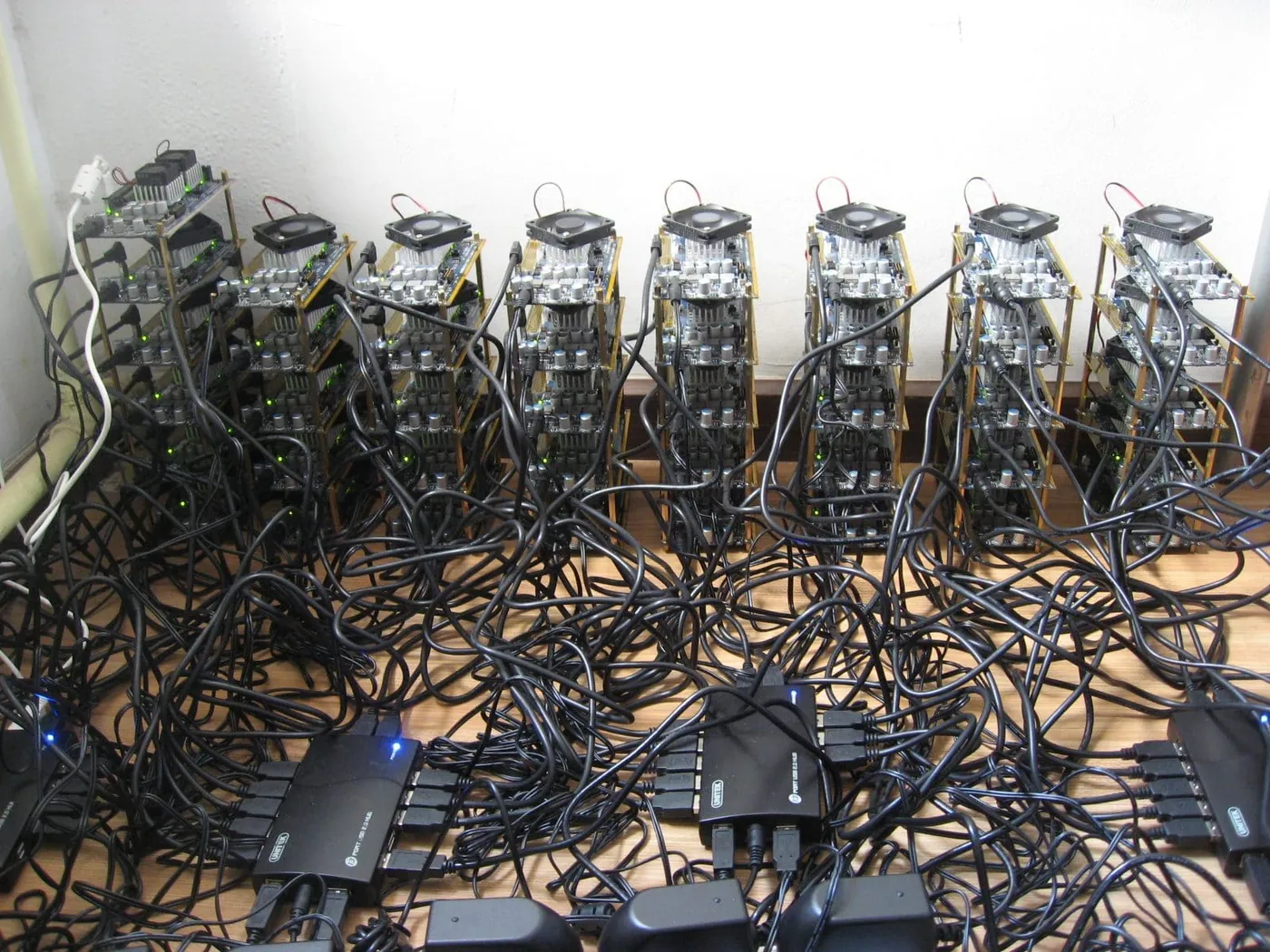
A cryptocurrency mining rig. Miner rewards were central to the Zcash vote on halvings. Photo: Xiangfu via Wikimedia Commons (CC BY-SA 4.0). Source
Holders of the privacy token zcash voted overwhelmingly for faster transactions and keeping the network's bitcoin-style halving schedule in a governance vote that drew roughly two-thirds of the ZEC eligible to take part, CoinDesk reported.
Nearly 2.4 million ZEC voted in the poll on the network's next major upgrade, known as NU7, out of roughly 3.6 million ZEC eligible at the snapshot. The results are weighted by coins rather than by individual voters, with one eligible ZEC counting as one vote, according to the same report. Organizers had set 1 million ZEC as the minimum turnout for treating the result as representative of coin holders.
The turnout figure matches the count posted by the vote organizer. Dev ValarDragon, posting as @zkDragon, said a record 2.4 million ZEC voted against 3.6 million in the pool at snapshot height, or 66 percent participation, in results shared on the Zcash community forum.
Some 99.9 percent of the participating ZEC backed cutting the time between blocks to 25 seconds from 75 seconds. Blocks are batches of transactions added to the network, so shorter block times generally mean users see payments confirmed faster, the report notes.
Another 98.9 percent voted to keep Zcash's bitcoin-style halvings. Miners, the computers that help secure the network, are paid partly in newly created ZEC, and a halving cuts that new-coin reward in half at fixed intervals. The alternative would have replaced the large scheduled cuts with a smoother issuance curve that gradually reduces new ZEC creation over time, according to the same report.
The exact tallies were posted in the forum's results thread. Preserving halvings drew 2,375,932.375 ZEC against 22,384.875 for the smooth issuance curve, with 4,147.625 voting to leave issuance smoothing out of NU7 and 1,072.125 abstaining, the thread shows.
Holders also voted 96.6 percent to wait until February 2031 before beginning to reissue ZEC collected through the Network Sustainability Mechanism, or NSM per the report's breakdown. The forum tally put 2,319,643.750 ZEC behind the February 2031 date, against 70,239.625 for starting as soon as possible and 6,283 for February 2027, with 4,985.625 abstaining, according to the thread.
The mechanism removes funds from circulation, including at least 60 percent of transaction fees, and eventually recycles the ZEC through future block rewards. It does not change Zcash's maximum supply (details in the report). The result keeps the existing halving schedule while letting those recycled fees accumulate for several years before returning to miners.
Holders showed little appetite for delaying the broader upgrade. About 99.3 percent voted to ship NU7 as soon as possible, dropping any feature not implemented by a Sept. 30 readiness deadline rather than waiting for every approved component, according to the report.
The vote also settled the fate of the network's oldest privacy system. Deprecating Sprout immediately at NU7 won clear coin holder consensus after extended community debate, ValarDragon said in the results thread. A snapshot posted in the thread summarized the alignment across questions: disabling the old Sprout transactions, 25-second blocks, and shipping by the September deadline.
The voting system itself is as unusual as the result. Only ZEC held in Ironwood, Zcash's newest private transaction pool, could vote. Shielded coins let the blockchain verify that coins exist and are spent correctly without publicly showing wallet balances or transaction details, the report explains.
That privacy carried over into the vote. In a normal token vote, a wallet casting 500,000 votes effectively announces that it controls 500,000 tokens and which side it backed. Here, ballots were encrypted and split into 16 separate pieces before counting, so validators could add up the final result without reconstructing which holder cast which vote or how much ZEC that holder controlled, according to the same report.
The design let holders apply their actual economic weight to decisions on monetary policy and the technical roadmap while keeping the size of their stakes hidden.
That is a sharp change from Zcash's earlier coin holder polling. A February NU7 sentiment poll drew participation equal to just 7.25 percent of circulating ZEC and exposed disagreements between coin holders and the Community Advisory Panel, or ZCAP as the report recounts. The current system arrived this summer to replace the previous token-holder voting process with stronger privacy guarantees for shielded balances.
The advisory side voted separately. A total of 135 Zcash Community Advisory Panel members cast ballots out of 198 eligible participants, a 68 percent response rate, with voters permitted to abstain on individual questions, the Zcash Foundation posted.
The two electorates agreed on most questions but split on two. A snapshot posted in the thread showed ZCAP divided on the issuance question, with 57 votes for smoothing and 54 for preserving halvings, while the panels favored starting NSM reissuance as soon as possible against the coin holders' choice of February 2031, according to the thread.
The gap on timing drew a response from the teams that will implement the upgrade. Shielded Labs, Project Tachyon, ZODL, the Zcash Foundation, and Valar Group discussed the split and aligned on February 2031 as the most conservative reading of the results, a community member posted in the thread. Choosing 2031 does not prevent revisiting the question later, the post said, since another poll can reconsider the timeline if circumstances change.
The 25-second block proposal fits into wider work to make private ZEC payments faster. The outlet reported in August that new Zcash software cut proof-generation times on mobile devices from more than three seconds to under 200 milliseconds in some tests, while separate work around Zakura and Project Tachyon targets higher private-transaction throughput.
The vote gives developers a clearer map for NU7 after months of disagreement over its scope. It does not itself change the network, and the selected features still need to be implemented, tested, and included in the eventual upgrade.