Loading article...

The House Ways and Means Committee plans to review H.R. 9175, which would let miners and stakers defer taxes on new token rewards, and H.R. 9172, which would extend wash-sale restrictions to digital assets, though reports say Republicans may strip the mining provisions.
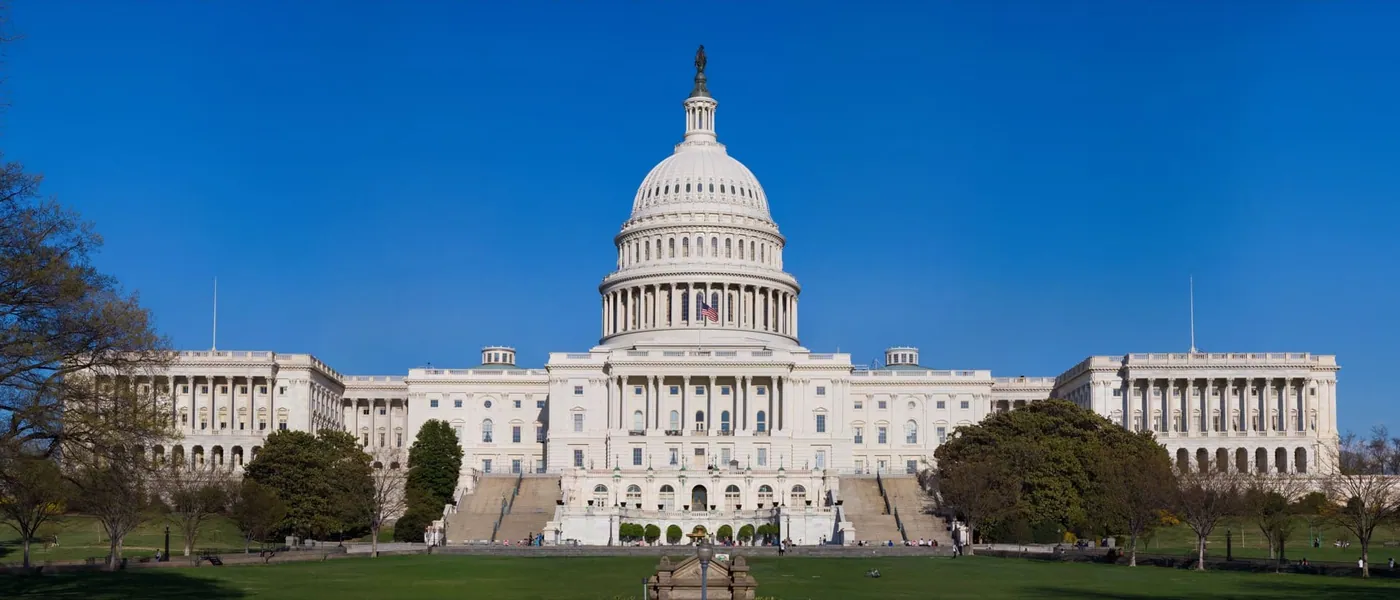
Wide view of the western front of the U.S. Capitol, seat of the U.S. Congress. Photo: Noclip via Wikimedia Commons (public domain). Source
The House Ways and Means Committee plans to consider two crypto tax bills on Sept. 16, though the committee's public calendar had not posted a markup notice as of Sept. 14, leaving the meeting time and final bill list unconfirmed in official records.
The two bills address separate parts of the tax code. H.R. 9175, the Tax Clarity for Mining and Staking Act, introduced on June 8 by Rep. Mike Carey (R-OH), would create an optional income-deferral system for qualifying mining and staking rewards. H.R. 9172, the Applying Existing Tax Anti-Abuse Rules to Digital Assets Act, introduced by Rep. Jodey Arrington (R-TX), would extend wash-sale and constructive-sale restrictions to most digital assets.
Under the introduced text of H.R. 9175, a taxpayer would include a token's fair market value in ordinary income when acquiring it through mining, staking, or another qualifying validation process. That recognized amount would become the taxpayer's basis in the asset, according to the bill's description.
Eligible taxpayers could elect to postpone recognition for qualifying tokens received during the elected tax year. The election would continue in later years unless the taxpayer obtained Treasury approval to revoke it. When an elected token was sold or disposed of, the taxpayer would recognize the deferred gain, and the bill classifies that gain as arising from property that is not a capital asset, producing ordinary tax treatment. Certain acquisition costs would be capitalized while the election remained in effect.
The introduced language also contains restrictions involving controlled foreign corporations, passive foreign investment companies, and several foreign ownership structures, plus sourcing rules based partly on a taxpayer's residence when the asset is acquired or disposed of.
Under current IRS guidance, mining and staking rewards are generally taxed as ordinary income when taxpayers gain control of them. A later sale can generate a separate capital gain or loss based on the asset's change in value. H.R. 9175 would not make every token or taxpayer eligible for the election.
Section 1091 of the tax code currently disallows an immediate loss deduction when a taxpayer sells stock or securities and acquires substantially identical property within 30 days before or after the sale. The disallowed loss normally adjusts the basis of the replacement property instead of disappearing permanently.
H.R. 9172 would replace references to "stock or securities" with a new category of "specified assets." Covered property would include most digital assets and certain contracts or options connected to them. Tokenized or wrapped products could qualify as substantially identical to economically equivalent underlying assets, and the Treasury Department would receive regulatory authority covering contracts and other arrangements linked to specified assets.
Qualified U.S. dollar-denominated stablecoins would be excluded if they met the bill's statutory requirements, including recognition of permitted payment stablecoin issuers under federal law. A dollar stablecoin may not qualify for the exclusion when the taxpayer uses another functional currency.
Certain tokens received through mining, staking, or comparable validation activity receive a narrower exception. The language addresses particular acquisitions within the wash-sale calculation; it does not remove all mined or staked tokens from every part of the bill.
The measure would separately extend constructive-sale rules under Section 1259 to digital assets. Those rules can require recognition when a taxpayer offsets an appreciated position so completely that the economic exposure has been removed without a formal sale. The statutory wash-sale rule does not currently cover cryptocurrency.
Crypto Briefing reported on Sept. 13 that House Republicans on the committee are weighing whether to strip out the mining and staking provisions from the broader package, in part to secure bipartisan support ahead of midterm elections. Crypto.news reported that Republicans may remove the deferral or limit it to five years, but neither option appears in the introduced text, and no official amendment confirming either change had been published as of Sept. 14.
The reports identify committee chair Jason Smith (R-MO) as trying to advance the less contentious elements of the broader tax package, and Rep. Steven Horsford (D-NV) as a Democratic supporter of crypto regulation whose backing could be secured partly by dropping the provisions, per Crypto Briefing.
The committee held a legislative hearing on the proposals on June 9. Witnesses included representatives from Fidelity, Coinbase, Coin Center, and NYU Law's Tax Law Center. Democrats on the committee raised concerns during that hearing that offering a tax deferral privilege specifically for digital asset rewards could create an uneven playing field compared to traditional investments. Chair Smith presented the package as an attempt to give taxpayers clearer rules for digital assets, arguing the existing framework had not kept pace with new financial technology.
A coalition of crypto industry groups sent a letter on June 21 urging the committee to pass the bill without modifications, arguing that stripping the mining and staking provisions would hurt bipartisan support.
The nonpartisan Joint Committee on Taxation estimated that H.R. 9175 would reduce federal revenue by $2.956 billion between fiscal years 2026 and 2036. H.R. 9172 was scored at raising $2.074 billion over the same period, according to the committee's official estimates.
If the markup proceeds, committee members could approve the introduced bills, reject them, or replace portions through amendments. The five-year mining deferral mentioned in press reports would require a formal amendment before becoming part of the legislation.
A favorable committee vote would permit the measures to be reported to the full House, though approval would not guarantee floor consideration because House leaders control the schedule, and no floor date has been announced. Any bill passed by the House would then require Senate approval, and differences between the two chambers' versions would have to be resolved before identical legislation could reach the president.
The committee could also combine the measures with other tax legislation during markup or later. Congress often moves tax provisions through larger packages, but no official document currently shows that either crypto proposal has been attached to another bill. Until new committee text appears, the versions introduced in June remain the only verified legislative language, and neither the markup's meeting time, a voting agenda, nor a chairman's amendment had been published for the reported Sept. 16 date as of Sept. 14.