Loading article...

Nasdaq Ventures agreed to invest $100 million in Payward, the parent company of Kraken, and the companies advanced their collaboration on Nasdaq Equity Tokens with an expected launch in the second quarter of 2027.
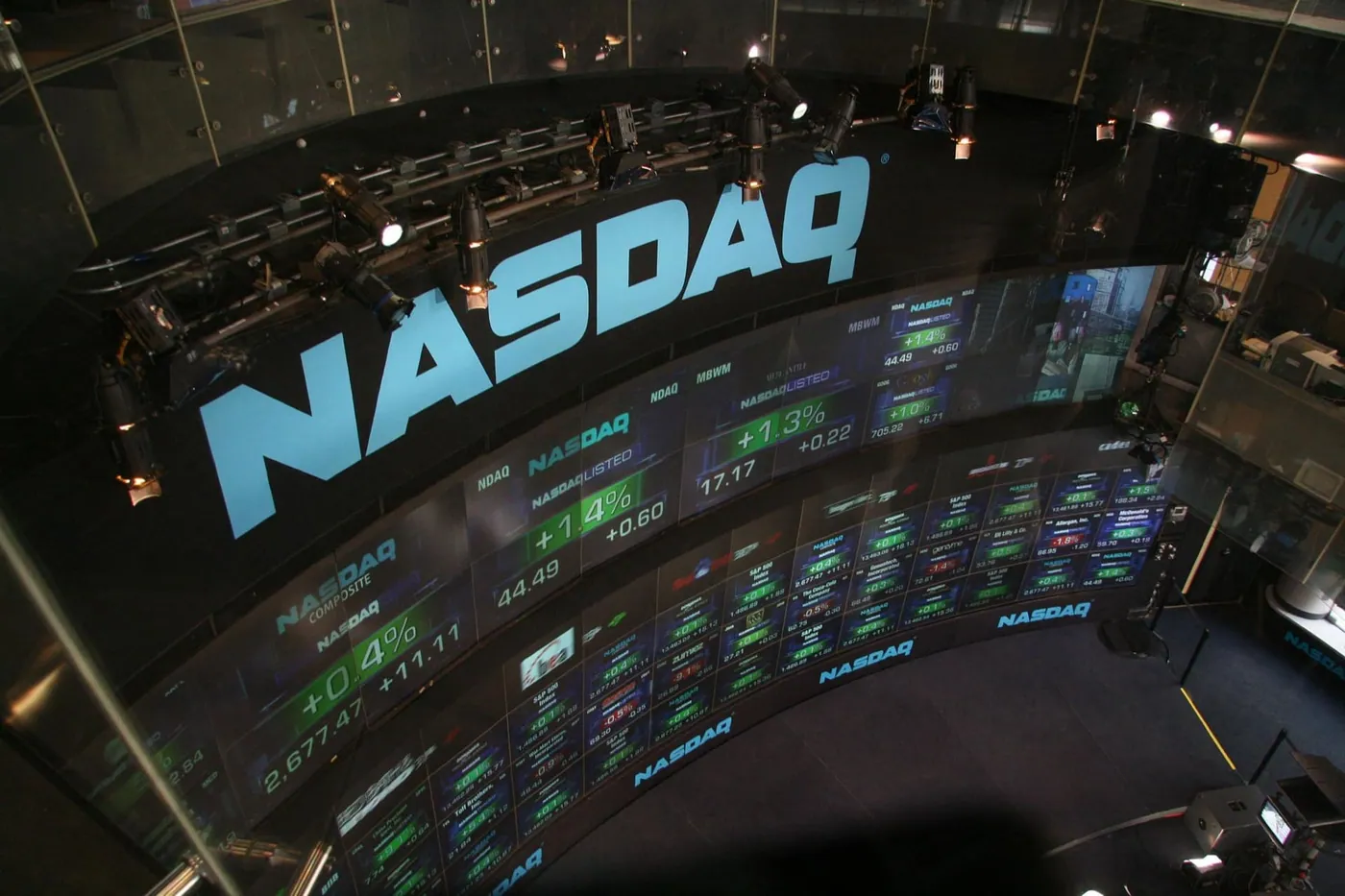
Nasdaq MarketSite tower at Times Square at night. Photo: bfishadow via Wikimedia Commons (CC BY 2.0). Source
Nasdaq said on Sept. 10 that its venture arm agreed to invest $100 million in Payward, the parent company of cryptocurrency exchange Kraken, deepening a partnership aimed at developing infrastructure for trading tokenized equities. The companies also announced a new market surveillance agreement.
The investment was made through Nasdaq Ventures, the company's strategic investment arm, and reflects the strategic nature of the work the two organizations are advancing together, according to a GlobeNewswire release.
Reports put the investment at a $21 billion valuation for Payward, according to Bloomberg. Payward's fundraising plans were first reported by CoinDesk in May, when sources said it was seeking new capital at a $20 billion valuation ahead of a potential IPO. Wells Fargo served as Nasdaq's exclusive capital markets advisor on the transaction.
Nasdaq and Payward will continue to advance the operational and commercial infrastructure supporting Nasdaq Equity Tokens, known as NETs, with an expectation to launch NETs in the second quarter of 2027. Earlier this year, Nasdaq announced plans to develop NETs and introduced a framework designed to connect them with Payward's xStocks ecosystem.
The NETs framework is designed to allow stocks to circulate as blockchain-based tokens while maintaining existing shareholder rights and investor protections, according to the release. Under the funding agreement, Kraken will distribute tokenized Nasdaq-listed stocks on its own platform, letting users buy and own them in tokenized form with the same voting rights as shares that trade on Nasdaq's exchange, per CoinDesk.
The $100 million commitment through Nasdaq Ventures pairs the company's investment activity with a product collaboration. Nasdaq described Nasdaq Ventures as the strategic investment arm that backs technologies and market infrastructure that support the long-term evolution of global capital markets. The release says the investment in Payward reflects the strategic nature of the work the two organizations are advancing together, and that the partnership is meant to help capital move more efficiently across the financial system.
"More than $2 trillion of stock trades run through the U.S. clearing system every day. Buys and sells net down by about 98 percent, and the clearing house holds $10 billion to $20 billion of collateral against what is left while it waits a day to settle. Cutting that wait from two days to one in 2024 released $3 billion. Onchain settlement removes the wait. The next phase of the collaboration is planned to advance Nasdaq Equity Tokens onto rails that do not close, with shareholder rights intact," said Arjun Sethi, co-CEO of Payward.
Nasdaq's president, Tal Cohen, said the next era of market evolution will be defined by how efficiently capital and assets move across the financial system with durable liquidity, and that expanding the relationship with Payward reflects Nasdaq's conviction that the company can play a role in building the infrastructure that supports that evolution. Nasdaq described the deeper investment as support for the continued evolution of tokenized market infrastructure, and said the work is meant to preserve the trust, transparency, and integrity that underpin capital formation.
As part of the expanded relationship, Payward will adopt Nasdaq's market surveillance technology across its portfolio of trading venues, including crypto, equities, tokenized equities, futures, and options. The companies said the arrangement combines tokenized market infrastructure with the safeguards needed for transparent and trusted markets at scale.
Within Nasdaq, the collaboration is led by Digital Liquidity Networks, the company's markets business focused on building always-on market infrastructure. Nasdaq described the approach as supporting the evolution of tokenized market infrastructure while keeping an issuer-centric design grounded in governance, regulatory compliance, and market integrity.
The surveillance agreement expands what Nasdaq already does as a technology provider. Nasdaq supplies market technology and surveillance systems to venues beyond its own exchange, and the Payward agreement extends that product line across the trading venues Payward runs. Nasdaq said the arrangement builds on the earlier collaboration around tokenized equities rather than replacing it.
The tokenized equities market has drawn growing interest from exchange operators. Binance's bStocks reached approximately $118.5 million in two months, and the NYSE said in January that it was developing its own venue for around-the-clock trading of tokenized stocks and ETFs. Nasdaq started working with Kraken in March on the infrastructure to bridge tokenized equities between regulated and onchain markets, before the NETs announcement named the working relationship, per CoinDesk.
The release leaves several operational details open. It does not say which listed companies would participate in NETs, how many stocks would be available at launch, which jurisdictions would allow trading, or how Payward's venues would source the underlying shares. It also does not describe how NETs holders would exercise the voting rights that CoinDesk says the tokens carry, or how custody of the underlying securities would be arranged. Nasdaq said in March that its equity token design is intended to give publicly traded companies more control over their shares in tokenized form, but the design has not been applied to a named issuer.
The arrangement with Kraken, which operates a licensed crypto exchange, sits alongside regulatory scrutiny of crypto-trading venues. Nasdaq and Payward have not identified the regulators they would need to satisfy for NETs to trade, and the companies' earlier work in March on bridging infrastructure between regulated and onchain markets has produced no published technical specification.
The companies say NETs are expected to launch in the second quarter of 2027, more than a year after the investment announcement. Between now and then, Nasdaq and Payward will need to line up issuers, settle the custody and voting mechanics, and secure whatever regulatory approvals the product requires. The $100 million investment gives Payward capital and gives Nasdaq a financial stake in a company whose business currently centers on crypto trading, not equities clearing. The release cautions that the anticipated benefits of the work, including Payward's adoption of Nasdaq's surveillance technology, are forward-looking and subject to risks that include economic and market conditions, regulation, geopolitical instability, and implementation challenges. Whether that is enough to carry NETs to launch will depend on details neither company has disclosed.