Loading article...

Solana lending protocol Kamino named Yieldstreet co-founder Michael Weisz as chief executive on Sept. 15 as it sets up a New York headquarters and expands lending against tokenized assets.
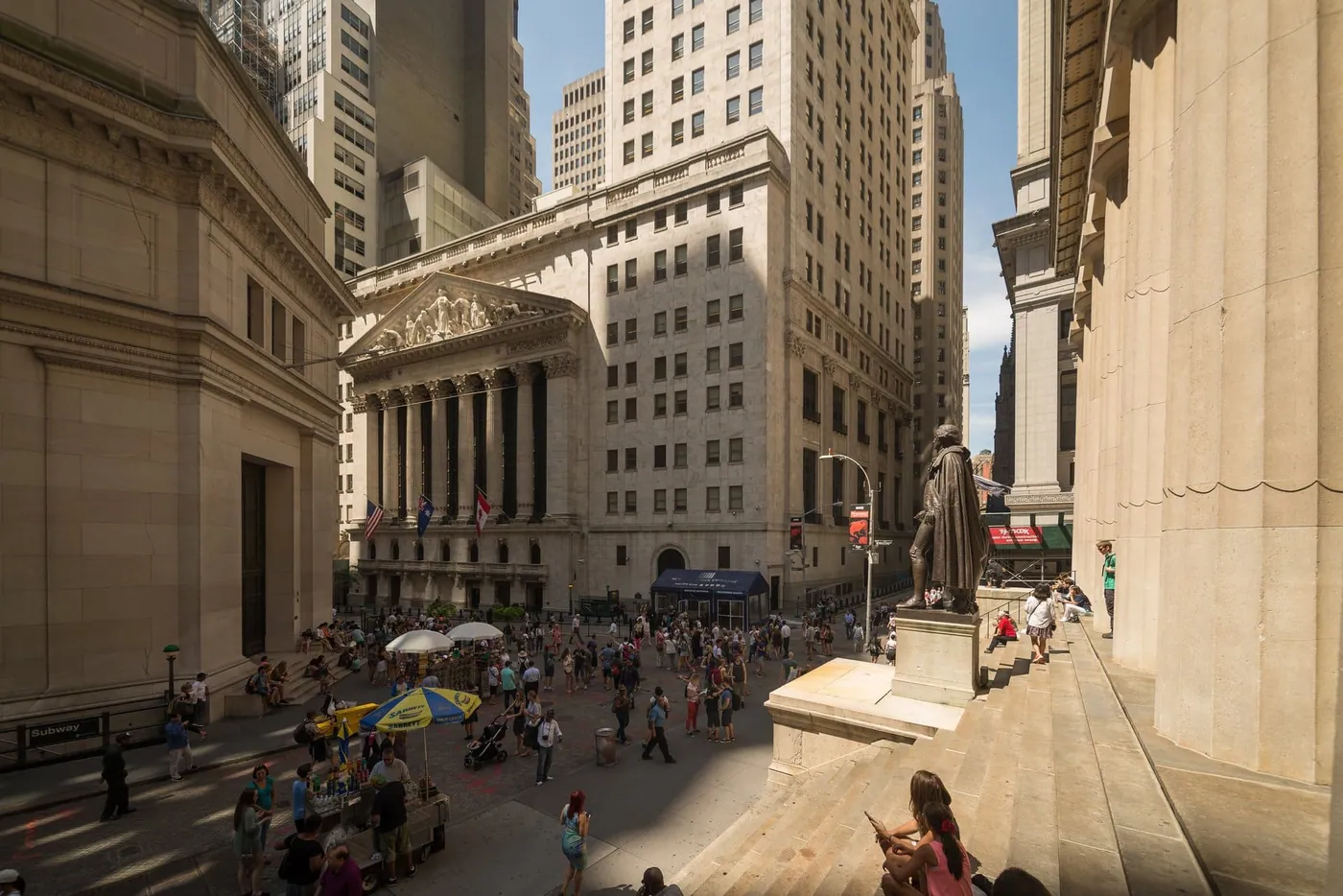
The New York Stock Exchange building in August 2017. Photo: Arild Vagen via Wikimedia Commons (CC BY-SA 4.0). Source
Kamino named Michael Weisz as its chief executive on Sept. 15, bringing in the Yieldstreet co-founder to run the Solana lending protocol as it sets up a New York headquarters and courts Wall Street firms. CoinDesk reported the appointment on Tuesday, describing a push that pairs a physical move to New York with growth in lending against tokenized real-world assets. Crypto Briefing said the appointment took effect Sept. 15 and aims to speed up institutional growth and widen the protocol's business in the United States.
Weisz tied the move to closeness with money managers. "Being in New York puts Kamino at the intersection of the asset managers, distribution platforms and institutional capital that will define the next phase of on-chain finance," he said, according to CoinDesk. The comment frames the hire as a distribution play as much as a management change, with the new office meant to sit near the firms Kamino wants as clients and partners.
The New York footprint is still taking shape. Kamino said it is looking at about 20,000 square feet of office space in the city and plans to hire a chief financial officer and a head of legal, CoinDesk reported. Those two hires point to a company preparing for closer contact with regulated institutions, since finance and legal chiefs are usually prerequisites for deals with banks and asset managers rather than optional extras.
Weisz arrives with a record in selling private-market products to ordinary investors. He co-founded Yieldstreet, an alternative investment platform that deployed more than $6 billion alongside firms including Goldman Sachs, Carlyle, KKR and Ares, according to CoinDesk. Yieldstreet has since been renamed Willow Wealth. Crypto Briefing reported the company raised more than $250 million in venture and private equity funding and said Weisz spent more than two decades in financial technology before taking the Kamino job.
At Yieldstreet, Weisz built a business that opened asset classes such as real estate, marine finance and art lending to retail and institutional buyers, Crypto Briefing reported. Those markets were traditionally fenced off by high minimums and private-bank relationships. The experience maps closely onto Kamino's current pitch, which is to take assets that already exist off chain and give investors a way to borrow against them once they move onto Solana.
Weisz put the problem in plain terms. "The hardest part is rarely creating the asset," he said. "It is building the infrastructure that meets distribution and asset managers where they are," CoinDesk reported. The remark suggests Kamino sees plumbing, custody arrangements and sales channels as the binding constraint on tokenized finance, not the act of issuing tokens themselves.
Kamino is one of the largest lending protocols on Solana. CoinDesk put its assets at $1.4 billion, citing DeFiLlama data, and said the protocol has processed more than $650 billion in cumulative transaction volume over four years. Crypto Briefing describes it as a peer-to-pool lending market on Solana with automated liquidity vaults that support leveraged strategies and, increasingly, real-world asset integrations, in its report on the appointment.
The clearest example of that strategy is PRIME, a lending market Kamino developed with Figure Technologies and Hastra that uses Figure's blockchain-based home equity loans as collateral. Deposits in PRIME passed $600 million within 107 days of launch, Kamino said, according to CoinDesk. The speed of that buildup stands out because home equity debt is slow-moving paper in traditional markets, and its appearance as on-chain collateral shows how fast the tokenized-credit niche is being tested.
Other institutional names are already using the rails. Nasdaq-listed Solana treasury company Forward Industries and digital asset manager Galaxy use Kamino's infrastructure for tokenized equity and US Treasury positions, the company said, as reported by CoinDesk. Those relationships give Weisz existing reference clients as he approaches more asset managers, since both firms have already trusted Kamino systems with regulated or quasi-regulated exposures.
The protocol's recent numbers give the new chief a growing base. Kamino generated $1.84 million in revenue in the second quarter of 2026, and deposits reached $2.29 billion by the end of the quarter, Crypto Briefing reported. The Ethena market alone drew more than $500 million in deposits, while the PRIME segment passed $600 million in size. Crypto Briefing also reported the protocol has carried zero bad debt since it started, a statistic that matters to institutions weighing counterparty risk.
Product development has continued alongside the growth. Recent launches include isolated markets, fixed-rate products and institutional yield vaults, according to Crypto Briefing. In August 2026, Kamino added a Commodity Yield vault with $25 million in initial USDC capacity to finance real-world commodity trade. Each of those products narrows the gap between DeFi lending desks and the structured products traditional credit funds already buy.
The timing lines up with a wider Wall Street bet on tokenization, the practice of putting stocks, bonds and funds on blockchain rails for faster settlement and round-the-clock trading. Citi projected the tokenized securities market could reach $5.5 trillion by 2030, a forecast CoinDesk cited in its coverage of the appointment. Lending and collateral markets are now forming around those assets, which opens a second front for DeFi platforms that first grew up serving crypto-native borrowers.
Kamino has not said when the New York office will open or who will fill the finance and legal posts. The company described the space as under review and the hires as planned, which leaves the pace of the Wall Street move dependent on deals and personnel that are not yet signed.