Loading article...

The Treasury on Oct. 2 designated five Hamas-linked targets accused of moving over $2 million through sham French charities and crypto transfers.
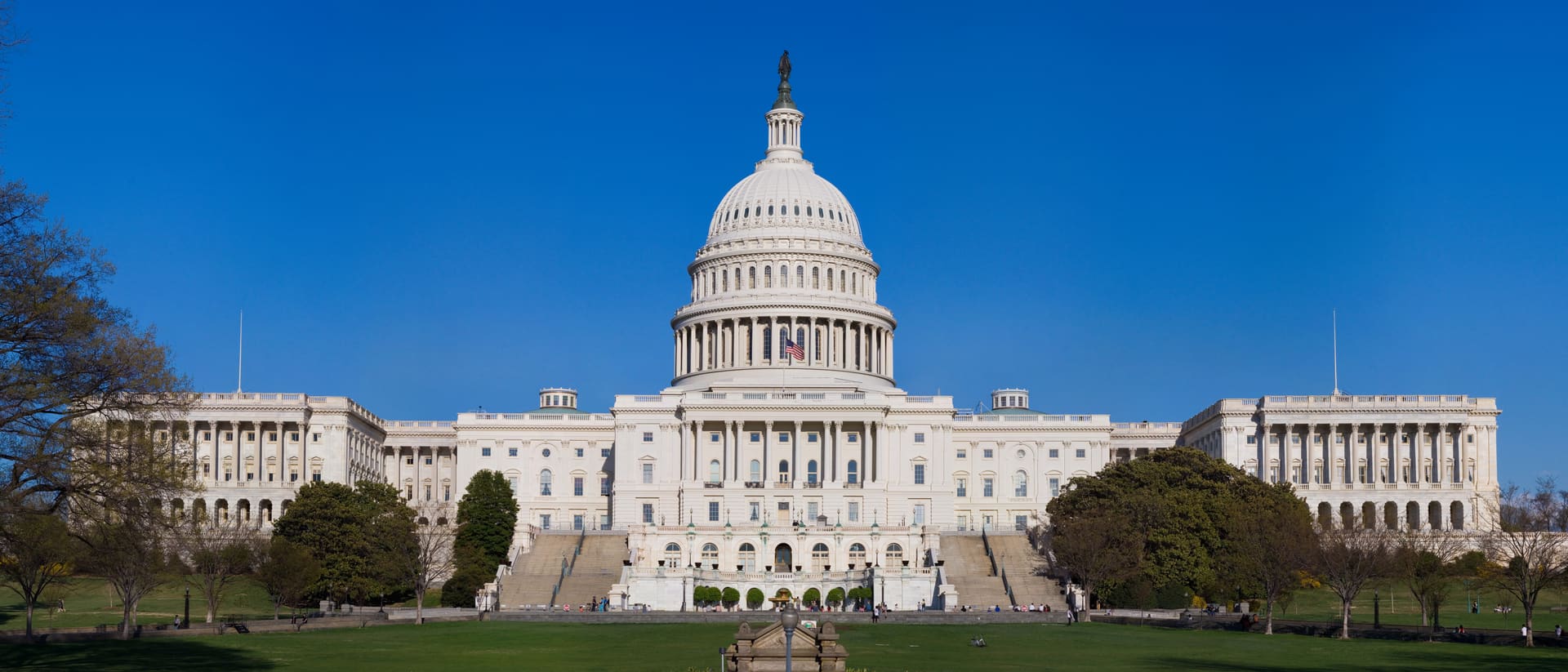
Full view of the United States Capitol building. Photo: Noclip via Wikimedia Commons (Public domain). Source
The Treasury Department's Office of Foreign Assets Control on Oct. 2 designated five Hamas-linked targets accused of running a multi-year financing scheme through sham charities and crypto transfers, the department said in its press release. The action names two France-based fundraisers, two associated entities and one Gaza-based Hamas operative. CryptoSlate reported that the designations expand the screening list for exchanges and payment firms subject to US rules.
The designations were issued under Executive Order 13224, as amended, the US counterterrorism sanctions authority, according to the release. The order targets Hamas, which the State Department listed in 2001 and which also carries a Foreign Terrorist Organization tag under immigration law. The Oct. 2 listing places all five names on the Specially Designated Nationals list with a Hamas link tag.
At the Gaza end sits Saleem Abdallah Saleem al-Zaq, described by Treasury as a battalion deputy in the Hamas military wing who oversees a financial network for the Al-Qassam Brigades. He used money services businesses and crypto wallets to shift funds to the brigades, the department said. He was designated for acting on behalf of Hamas.
The France end centers on Faouzi Barika and Amel Oualid, also known as Bouchekif, who operate from France and ran purported charities for Gazan civilians, according to the Treasury account. Barika lives in St-Andre-de-Cubzac and Oualid in St-Etienne, addresses published in the OFAC listing show. Barika jointly set up Association Baraka with al-Zaq, while Oualid set up Ensemble C Mieux, and both groups solicited public donations that went to al-Zaq for transfer to Hamas. Barika was designated for supporting Hamas, while Oualid was designated for supporting al-Zaq.
The two entities carry French charity registrations. Association Baraka holds number W331005557 and Ensemble C Mieux holds W423015492, the OFAC notice lists. Association Baraka gives an address in St-Andre-de-Cubzac with a website and email contact, while Ensemble C Mieux gives an address on rue Parmentier in St-Etienne. Both were designated as owned or controlled by Barika and Oualid respectively. CryptoSlate noted that compliance teams must look beyond the five names because related companies can also fall under the block.
Crypto played a defined part inside a larger fundraising total. Barika and Oualid sent hundreds of thousands of dollars in crypto to al-Zaq, Treasury stated. Al-Zaq then moved funds onward to the Al-Qassam Brigades through money services businesses and wallets, and he advertised the two fundraisers' accounts on his own social media. The department did not say the full amount moved by coin, a distinction stressed in coverage of the case.
The broader scale spans six years. Barika, Oualid and al-Zaq collected more than 2 million dollars for Hamas between 2020 and 2026, with about 1.5 million dollars of that gathered after the Oct. 7, 2023 attack on Israel, according to the press release. That total covers all channels, not coins alone. The Crypto Times wrote that the crypto subset ran into the hundreds of thousands while the headline figure reflected the whole network.
The action was coordinated with an FBI-led multi-jurisdictional operation to take apart several Hamas fundraising ventures, including ones active inside the United States, Treasury said. Local partners included the New York Police Department. The department framed the move as part of a whole-of-government push with the FBI against use of the charitable sector for terror funding. Treasury Secretary Scott Bessent stated groups like Hamas rely on financial facilitators and deceptive public appeals, and that the department will keep isolating those lifelines, in remarks quoted in the release.
The legal effects start at once for anyone under US jurisdiction. All property and interests in property of the blocked persons in the United States or held by US persons must be blocked and reported to OFAC, the release explains. Entities owned 50 percent or more in the aggregate by one or more blocked persons are also blocked. US persons are generally barred from transactions involving that property unless licensed or exempt.
Penalties apply on a strict-liability basis, meaning a violation can draw a civil penalty even without intent, under guidelines cited in the release. Criminal penalties are also possible. OFAC treats digital assets under the same framework as fiat, CryptoSlate explained. A US-regulated company that finds assets of a blocked person must deny access and report to the agency.
Foreign banks and intermediaries face added risk. Firms that knowingly conduct large transactions for persons designated under the authority may face secondary sanctions, including limits on US correspondent or payable-through accounts, Treasury warned. That risk does not freeze every chain transaction worldwide by itself, since enforcement turns on jurisdiction, ownership and the facts of each transfer. Still, offshore exchanges and payment firms touching the network may need to review past exposure.
The designations follow a Sept. 1 seizure by the Justice Department of more than 560,000 dollars in crypto said to be bound for the Al-Qassam Brigades, the Crypto Times added in its recap. Investigators in that case also took wallets, servers and domains tied to a donation site that rotated wallet addresses.