Loading article...

Patrick Steven Yaroch admitted to wire fraud and money laundering after using credentials collected in 35 FBI investigations to move about $2.47 million into wallets he controlled.
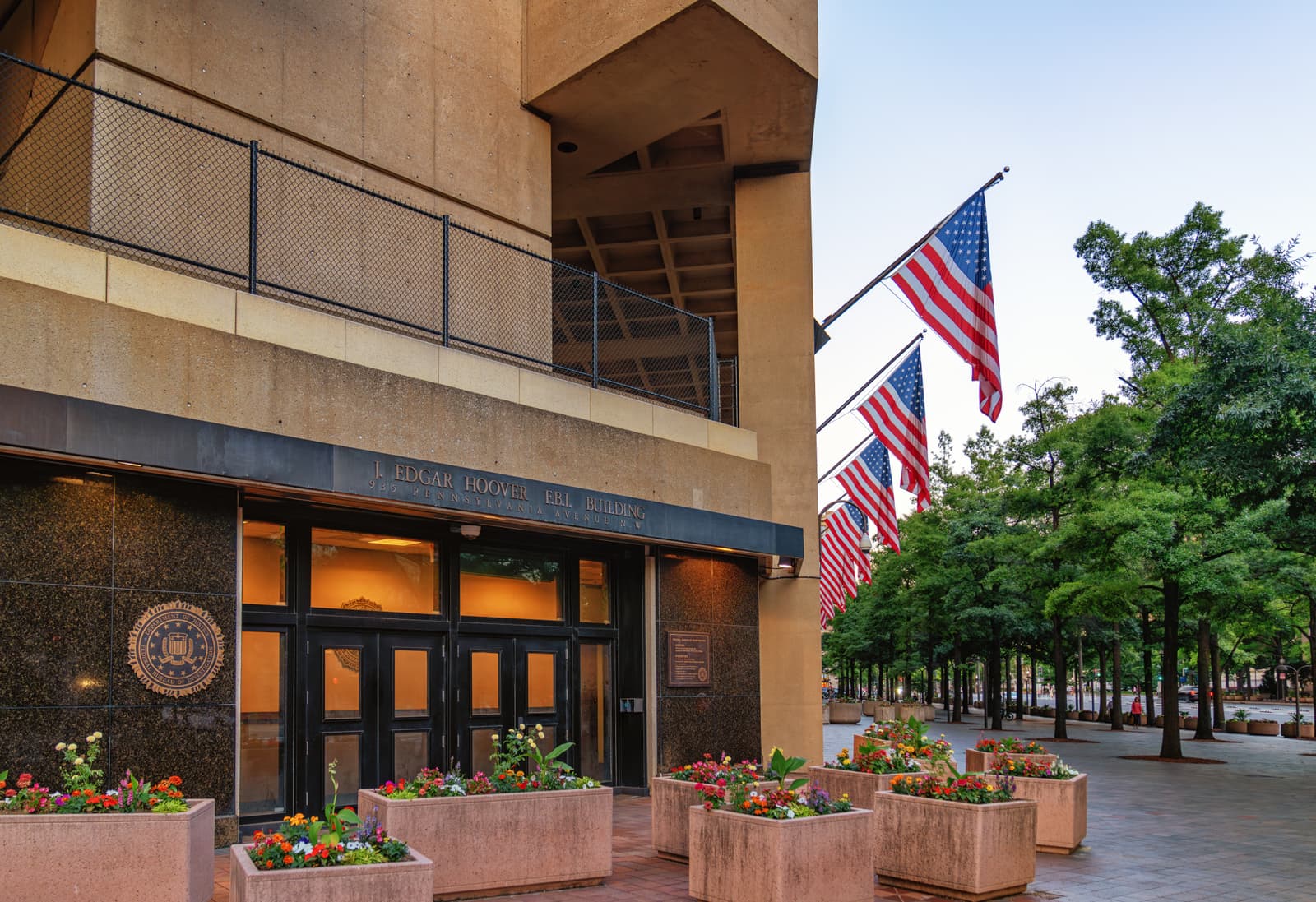
The J. Edgar Hoover FBI Building in Washington. Photo: Tony Webster via Wikimedia Commons (CC BY 2.0). Source
Patrick Steven Yaroch, a former FBI supervisory special agent, pleaded guilty on November 5, 2026 to wire fraud and money laundering for stealing about $2.47 million in cryptocurrency from wallets whose credentials he could reach through bureau systems. Yaroch, 37, of Ashburn, Virginia, entered the plea in federal court in Alexandria, where US District Judge Patricia Tolliver Giles accepted it. He faces up to 20 years in prison and is scheduled for sentencing on March 4, 2027, Bitcoin Magazine reported.
Court papers put the proceeds at $2,474,380.66. Prosecutors said Yaroch made roughly 100 fraudulent transfers using credentials tied to 35 separate FBI investigations, drawing on wallets controlled by investigation subjects, adversarial nation-state actors and at least one wallet the FBI itself had created for an operation. He began moving coins no later than December 2024, then swapped the stolen cryptocurrency into other digital assets and ran further transactions meant to obscure its source, nature and ownership, the report said.
From 2017 through early 2025, Yaroch worked in the FBI Boston Division on a squad focused on an adversarial nation-state. From February 2025 through July 31, 2026, he served in the Counterintelligence and Espionage Division at FBI headquarters, with access to systems that stored cryptocurrency credentials gathered in investigations.
The Justice Department Office of the Inspector General had flagged the case on August 4, 2026, after Yaroch's arrest on a criminal complaint in the Eastern District of Virginia. That earlier account described a smaller set of transfers, about 10 moves totaling roughly $1 million, and said Yaroch had self-reported the activity to two department employees on July 29, 2026. The plea figures are larger.
An FBI affidavit filed in the case fills in the confession. Yaroch told a former colleague at the Justice Department's National Security Division on July 29 that he had made "very poor decisions" involving crypto wallets, then self-reported to FBI headquarters, saying he had become frustrated that the bureau "could not or would not act" against an adversary's crypto accounts and had decided to "take matters into his own hands," according to the affidavit as summarized by Decrypt. Agents searching his home two days later seized a Trezor hardware wallet, three passports and a slip of paper bearing seed phrases. His Kraken account held about $188,600, mostly in dollars and the USDC stablecoin, and a further $933,800 sat in Suilend, a lending protocol on the Sui blockchain. Yaroch told agents he chose Suilend "simply because he liked that the logo was a water droplet."
Between November 25, 2025 and January 13, 2026, Yaroch moved about $93,082 into one of his accounts, then shuffled funds among other accounts to cover debts, including credit cards, car payments and loans, the US Attorney's Office for the Eastern District of Virginia said as quoted by Bitcoin Magazine. Agents transferred roughly $925,000 from his accounts to government-controlled wallets after he consented, the affidavit said; about $165,600 held as dollars on Kraken could not be moved the same way.
The agreed statement of facts says the conduct compromised multiple FBI investigations into criminal groups and nation-state adversaries, as well as sources and methods used in foreign intelligence collection and criminal cases, and that it "deprived FBI employees of their ability to carry out their functions to protect public safety and national security."
Yaroch also planned an exit. He asked ChatGPT how to maximize investment returns and where to live in the European Union, and after the chatbot suggested buying a vineyard in Portugal, he gave Portuguese lawyers a power of attorney on June 15, 2026 to register him with the Portuguese Tax and Customs Authority, obtain a tax identification number and collect the password to his finance portal, the office said. He arranged travel to Portugal for September 2026.
First Assistant US Attorney Theophani K. Stamos and Daniel S. Wierzbicki, special agent in charge of the FBI Washington Field Office's Counterintelligence Division, announced the plea. Assistant US Attorneys Kathleen Robeson and Russell Carlberg are prosecuting the case, which is docketed as 1:26-CR-208 in the Eastern District of Virginia.