
ブロックチェーン・ハッカソン 2026 | XRPL Hackathon at Blockchain Kaigi 2026 (Tokyo)
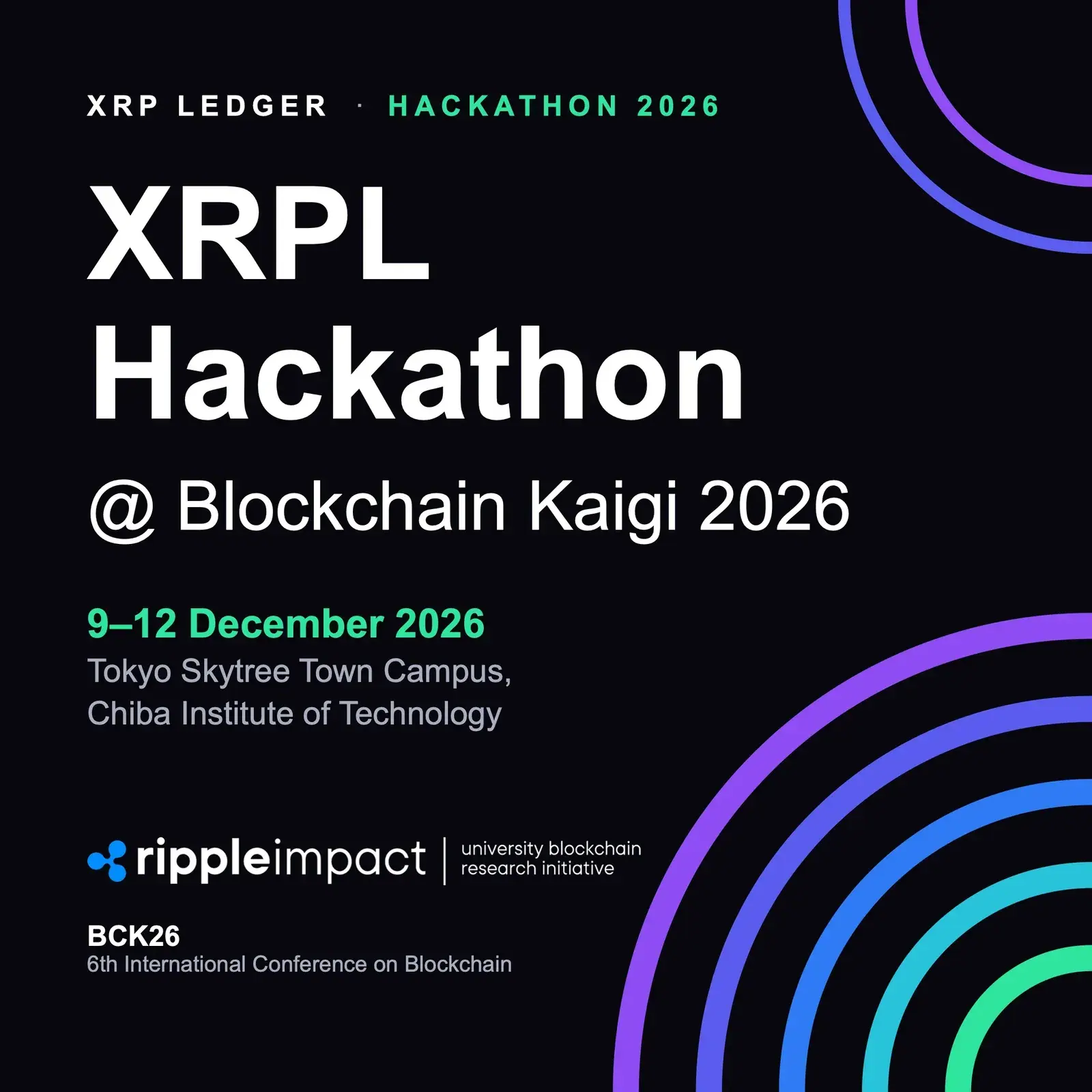
About the event
============== English Follows ==============
ブロックチェーン・ハッカソン 2026
ハッカソンのテーマ:期限付き支援による災害救援金の給付
参加チームは、災害救援金を XRP Ledger(XRPL)上でプログラム可能・期限付き・監査可能な支援に変え、Ripple USD(RLUSD)で決済する、実際に動作する概念実証(PoC)を構築します。目指すのは、検証済みの被災者に支援が数か月ではなく数分で届き、1円・1ドルに至るまで端から端まで追跡でき、使われない資金が滞留せず自動的に再循環することを示すデモです。
地震、洪水、サイクロン、熱波の後、支援は遅く、不透明で、しばしば漏れが生じます。例えば、カナダでは災害支援が全額行き渡るまでに平均で約7年かかります。ドイツ・アール渓谷の300億ユーロの基金は、5年が経過しても配分済みは5分の1にとどまりました。米国連邦緊急事態管理庁(FEMA)は、本人確認と住所確認を事前に行わなかったため、ハリケーン・カトリーナおよびリタの申請において推定10億ドル(16%)を不適切または不正に支払いました。2024年の能登半島地震の後、石川県当局は支援を必要とする人を特定できませんでした。
PoCは、以下の4つの失敗モードに対処する必要があります。
PoCで示すべきこと:コード化されたルールに基づく数分以内の給付
PoCで示すべきこと:被災者データベースと照合した、本人確認に紐づく受給資格の判定
PoCで示すべきこと:同一の受益者に届く各ドナー層の資金を個別に追跡可能
PoCで示すべきこと:期限付きの配分が自動的に失効し、返還される
- スピード
- 現状の問題点:被害認定・申請・承認が逐次的かつ手作業で行われる
- 対象の特定と漏出
- 現状の問題点:本人確認・住所確認が事前に行われない、あるいは確認が過剰で何も支払われない
- ドナーにとっての不透明性
- 現状の問題点:資金がプールされ、どのドナーも自らの資金の行き先を示せない
- 資金の滞留
- 現状の問題点:未請求の配分が、機能していない事業の中に固定されたままになる
実装すべき4つのレイヤーは以下のとおりです。
受給資格の検証。AIを活用した被害オラクルが、衛星・地理空間データによる評価(浸水範囲、震度、地表面温度)を、地上センサー、気象データ、位置情報付きの報告と統合し、ゾーンごとの被害スコアを算出します。模擬的な政府デジタルIDの照合により、申請者が被災ゾーンに居住していることを確認します。
プログラム可能な給付。XRPLのエスクローが、プログラムごとのルール(基本給付金、世帯あたりの上限、被害度に応じた区分、繰り返し被災した世帯への上乗せ)に従い、所定額のRLUSDを検証済みのウォレットに払い出します。
多層的なドナー資金フロー。国、都道府県、国際ドナーからの拠出金は、それぞれ固有の条件(地域、被災者区分、利用期間、使途)を伴い、個別に追跡可能な状態を保ったまま同一の受益者に決済されます。
失効と返還。すべての配分には期限があります。請求されなかったエスクロー資金は、期間終了時にプールまたは拠出元のドナーに返還されます。これこそが、本設計を単なる「速い銀行振込」と区別する特徴です。
シナリオの例。いずれかを選ぶか、独自のシナリオを提案してください。
- 都市型地震:震度に基づくゾーンのスコアリング、高齢者や通信環境の乏しい受益者、繰り返し被災した場合の上乗せ給付、オフラインまたは代理による請求
- 河川洪水:迅速な少額給付と時間を要する高額給付を同一の基盤上で実行、条件の異なる市町村・州・連邦の各層
- 沿岸暴風雨:不正の圧力下での大量給付、重複する2つの災害にまたがる二重申請の検知
- 熱波:事前に特定された脆弱層、行動を促す少額給付、数日単位の失効期間、大規模な返還
成果物の目安
Testnetにデプロイされた、XRPLのエスクローおよび決済ロジック。テスト用資金はXRPLフォーセット(xrpl.org/resources/dev-tools/xrp-faucets)から取得できます。 (https://xrpl.org/resources/dev-tools/xrp-faucets)から取得できます。)
被害オラクルとIDブリッジ(使用したデータソースと、統合・スコアリングの手法を含む)
条件の異なる2者以上のドナーを扱う、多層ドナー・ルールエンジン
配分・給付・失効・返還を表示する、ドナーおよび管理者向けダッシュボード
前提条件、脅威モデル、および実運用に必要となる条件についての簡潔な説明文書
チームは、従来の決済システムでは同等に実現できない働きをXRPLのどのプリミティブが担っているのかを、一文で説明できる必要があります。データベース上でも同じように動作するソリューションは減点されます。
参加条件
本ハッカソンは、居住地を問わずどなたでも参加できます。参加登録は必須で、リモート参加も可能です。
チームは1~6名で構成し、産業界と学術界のメンバーの混成も可能です。チームの全メンバーは、共通のチーム名でLumaに個別に登録してください。
すべての参加者は、オープニング、ピッチ、クロージングの各セッションに必ず対面で出席しなければなりません。
PoCはXRPLプロトコルを使用し、XRPL Testnet上にデプロイしてください。メインネットでの価値の移転は禁止です。
チームは、審査員による審査のため、デモの画面録画(3~5分)を提出しなければなりません。
課題の4つのレイヤー(受給資格の検証、プログラム可能な給付、多層的なドナー資金フロー、失効と返還)のすべてがデモ動画に含まれている必要があり、少なくとも1回は失効と返還を実演してください。
チームは、コードベースのGitHubリポジトリのリンクを、前提条件と脅威モデルに関する説明文書とともに共有しなければなりません。
仮想マシンまたはコンテナ化されたビルドを推奨します。審査時のデプロイ作業を最小限に抑えたソリューションは、特に考慮されます。
審査員は、オフチェーンのロジックへの依存を最小限に抑えたうえでの機能の網羅性を評価します。ID情報には、模擬データまたは合成データのみ使用できます。
参加登録とスケジュール
- 12月1日 23:59:参加登録締切
- 12月9日 14:00~16:40:ハッカソン・キックオフ
- 12月10日~11日 10:30~17:00:コーディングセッション(メンターアワーあり)
- 12月11日 23:59:提出締切
- 12月12日 11:00~11:40:選抜された10チームによるピッチ
- 12月12日 12:50~13:20:ハッカソン表彰式
時刻はすべて日本標準時(JST、UTC+9)です。
XRPLプロトコルについて
XRP Ledgerは、決済のために設計された、パブリックかつ分散型のレイヤー1ブロックチェーンです。トランザクションは3~5秒で決済され、確定的なファイナリティを備えています。つまり、トランザクションは確定するか失効するかのいずれかであり、保留状態のまま残ることはありません。手数料は1セントに満たず、事前に把握できます。
以下のリソースは、開発を始める際やハッカソン期間中に役立ちます。
XRPLでのコーディングを学ぶ:learn.xrpl.org (https://learn.xrpl.org)
ドキュメント、およびTestnet・Devnetのフォーセット:xrpl.org (https://xrpl.org)
XRPL Commons(コミュニティ、GitHub、YouTubeチャンネル):xrpl-commons.org (https://xrpl-commons.org)
XRPL Developer Discordでは、ハッカソン期間中にプロトコルに関する質問ができます。
XRPLの基礎:docs.xrpl-commons.org/xrpl-basics (https://docs.xrpl-commons.org/xrpl-basics)
また、Rippleが2026年6月9日に公開したXRPL AI Starter Kit(Agentic Transactions)も活用できます。AIエージェントやAIを活用する開発者が、コーディングツールから直接、XRPLのウォレットと決済を構築し、資金を供給し、運用できるようにするものです。詳細は https://xrpl.org/resources/dev-tools/ai-tools をご覧ください。
賞
12月12日にピッチを行う10チームの中から、3チームの受賞者が選ばれます。
1位:$2,500
2位:$1,500
3位:$1,000
ピッチを行う10チームすべてに参加証明書が授与されます。
主催・協賛
本ハッカソンは、京都ブロックチェーン研究センター,京都大学大学院総合生存学館,千葉工業大学が共催し、アジア太平洋地域におけるXRP Ledgerエコシステムの成長支援に取り組む非営利団体XRP Asiaの協力を得て開催されます。賞金はRippleの提供によるものです。
会場
本ハッカソンは、2026年12月9日~12日に千葉工業大学 東京スカイツリータウンキャンパス(東京ソラマチ8階、東京都)で開催されるBlockchain Kaigi 2026(https://www.blockchainkyoto.org/en/bck26)のサテライトイベントです。
お問い合わせは、Rafik HADFI(rafik dot hadfi at i.kyoto-u.ac.jp (https://i.kyoto-u.ac.jp))までご連絡ください。
Hackathon Theme: Disaster Relief Disbursement with Time-Bound Aid
Teams build a working proof of concept that turns disaster relief money into programmable, expiring, auditable aid on the XRP Ledger (XRPL), settled in Ripple USD (RLUSD).
The success consists in a demo in which aid reaches a verified survivor in minutes rather than months, every yen or dollar must be traceable end to end, and idle money recycles itself instead of sitting in a backlog.
After earthquakes, floods, cyclones and heatwaves, aid is slow, opaque and often leaky.
For example, full disaster aid takes about seven years on average to flow in Canada.
The €30 billion Ahr valley fund was one-fifth allocated five years on.
FEMA paid an estimated $1 billion (16%) in improper or fraudulent Katrina/Rita claims because identity and address were never validated upfront.
After the 2024 Noto earthquake, Ishikawa authorities could not identify who needed help.
Your proof of concept must address the four following failure modes:
1.
Speed
Problem: Assessment, application and approval are sequential and manual
- What the PoC must show: Release within minutes under encoded rules
2.
Targeting and leakage
Problem: No upfront identity or address validation, or so much that nothing is paid
- What the PoC must show: Identity-linked eligibility resolved against a victim database
3.
Donor opacity
Problem: Pooled funds, no donor can show where its money landed
- What the PoC must show: Each donor layer separately traceable to the same beneficiary
4.
Idle capital
Problem: Unclaimed allocations stay locked in dead programmes
- What the PoC must show: Time-bound allocations that expire and revert automatically
The four layers to implement are:
1.
Verified eligibility.
An AI-assisted damage oracle fuses satellite and geospatial assessments (flood extent, shake intensity, land surface temperature) with ground sensors, weather and geolocated reports into a per-zone damage score.
A mock government digital identity check confirms the claimant lives in an affected zone.
2.
Programmable disbursement.
XRPL Escrow releases a defined RLUSD amount to the verified wallet under per-programme rules: base grants, household caps, severity tiers, top-ups for repeat-hit households.
3.
Layered donor flows.
National, prefectural and international donor contributions each carry their own conditions (geography, victim category, spending window, permitted use) and settle into the same beneficiary while staying separately traceable.
4.
Expiry and reversion.
Every allocation is time-bound.
Unclaimed escrowed funds revert to the pool or originating donor when the window closes.
This is the feature that distinguishes the design from a faster bank transfer.
Tracks and example scenarios (pick one or propose your own)
Track 1
Urban earthquake
Zone scoring from shake intensity, elderly and low-connectivity beneficiaries, repeat-disaster top-ups, offline or delegated claiming
Track 2
Riverine flood
Fast small grant and slow large tranche on one rail; municipal, state and federal layers with different conditions
Track 3
Coastal storm
High-volume disbursement under fraud pressure; duplicate-claim detection across two overlapping disasters
Tack 4.
Heatwave
Pre-identified vulnerable cohort, small behavioural payouts, days-long expiry windows, reversion at scale
Suggested deliverables
XRPL escrow and settlement logic deployed on Testnet.
Test funds can be obtained from the XRPL faucet at xrpl.org/resources/dev-tools/xrp-faucets (https://xrpl.org/resources/dev-tools/xrp-faucets).
Layered-donor rule engine with at least two donors carrying different conditions
- Damage oracle and identity bridge, with data sources and the fusion or scoring method used
- Dashboard for donors and administrators showing allocation, release, expiry and reversion
- Short written note on assumptions, threat model, and what would need to be true for a real deployment
Teams should be able to state in one sentence which XRPL primitive does work that a conventional payment system cannot do as well.
Solutions that would run equally happily on a database will be marked down.
Participation Criteria
The hackathon is open to all, regardless of geographic location.
Registration is mandatory, and remote participation is allowed.
- The teams may have up to 1-6 members and may mix industry and academia.
All team members register individually on Luma under a common team name.
- All participants MUST attend the opening, pitching, and closing sessions in person.
- The proof of concept must use the XRPL protocol, deployed on XRPL Testnet.
No mainnet value transfer.
- Teams must submit a screen recording of their demo (3 to 5 minutes) for review by the judges.
- All four layers of the challenge (verified eligibility, programmable disbursement, layered donor flows, expiry and reversion) must be present in the demo video, including at least one live expiry and reversion.
- Teams must share a GitHub repository link for their codebase, together with the written note on assumptions and threat model.
- Virtual machines or containerised builds are recommended.
Solutions that minimise deployment effort during evaluation receive special consideration.
- The jury judges feature coverage with minimum reliance on off-chain logic.
Only mock or synthetic identity data may be used.
Registration & Timeline
December 1, 23:59 - Registration closes
December 9, 14:00-16:40 - Hackathon Kickoff
December 10-11 10:30AM-5PM - Coding sessions with scheduled mentor hours
December 11, 23:59 - Submission deadline
December 12, 11:00-11:40 - Pitches from 10 shortlisted teams.
December 12, 12:50-13:20 - Hackathon Awards Ceremony
All times are Japan Standard Time (JST, UTC+9).
Know About the XRPL Protocol
The XRP Ledger is a public, decentralised layer-1 blockchain designed for payments.
Transactions settle in 3 to 5 seconds with deterministic finality, meaning they either confirm or expire and never sit pending.
Fees are a fraction of a cent and are known in advance.
The following resources will help you get started and support you throughout the hackathon.
XRPL Commons offers a community along with GitHub and YouTube channels at xrpl-commons.org (https://xrpl-commons.org).
The XRPL Developer Discord is the place to ask protocol questions during the hackathon.
XRPL Basics at docs.xrpl-commons.org/xrpl-basics (https://docs.xrpl-commons.org/xrpl-basics).
- Learn to code on the XRPL at learn.xrpl.org (https://learn.xrpl.org).
- Documentation and the Testnet and Devnet faucets are available at xrpl.org (https://xrpl.org).
Teams may also wish to explore the XRPL AI Starter Kit (Agentic Transactions), released by Ripple on June 9, 2026.
It lets AI agents and AI-assisted developers build, fund and operate XRPL wallets and payments directly from their coding tools.
Awards
Three winners are selected from the ten teams that pitch on December 12:
- First prize: $2,500
- Second prize: $1,500
- Third prize: $1,000
All ten pitching teams receive a certificate of participation.
Hosts and Sponsors
This Hackathon is co-hosted by Kyoto University, Chiba Institute of Technology, with assistance from XRP Asia, a non-profit dedicated to supporting the growth of the XRP Ledger ecosystem in APAC.
Prizes are sponsored by the Ripple Impact - University Blockchain Research Initiatives (UBRI) programme.
Enquiries
Venue details will be visible to approved registrants.
For any queries, please contact Rafik HADFI at rafik dot hadfi at i.kyoto-u.ac.jp (https://i.kyoto-u.ac.jp).