Loading article...

A technical guide to understanding crypto shilling, undisclosed promotion, wash trading tactics, SEC enforcement precedents, and on-chain forensics for DYOR.
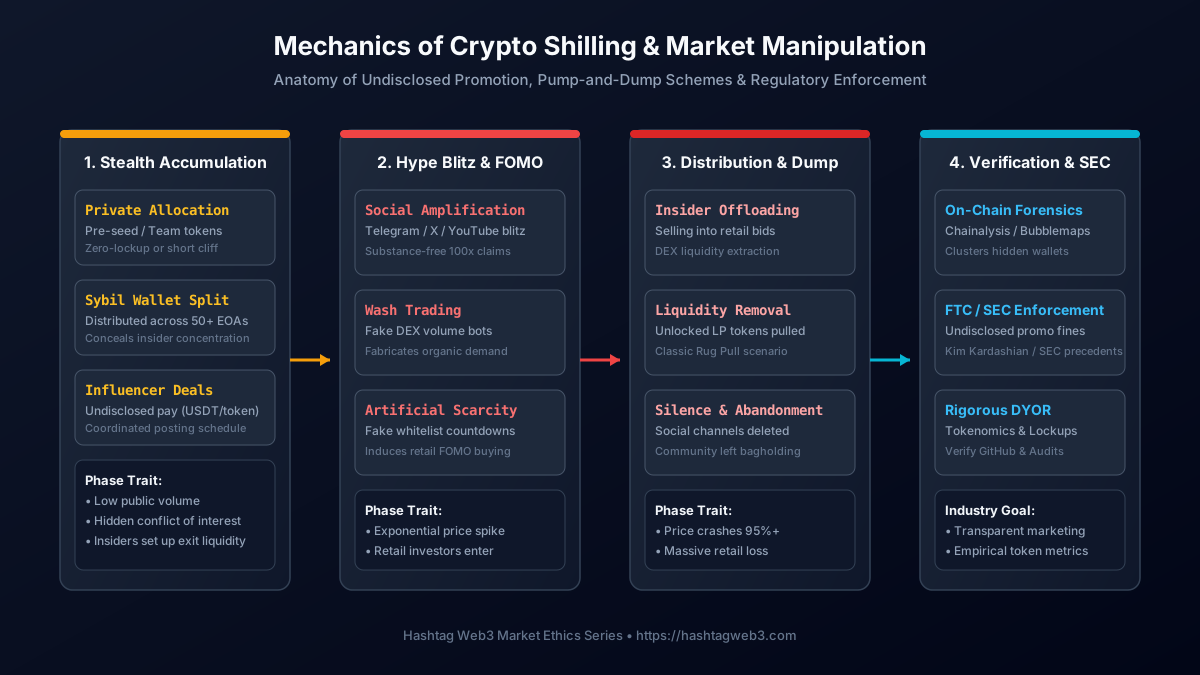
In cryptocurrency and Web3 markets, the term shilling describes the intentional, aggressive, and often covert promotion of a digital asset, token project, or NFT collection to artificially drive market sentiment, trading volume, and asset valuations. Derived from traditional carnival and casino slang where a paid plant ("shill") pretended to be an enthusiastic customer to dupe bystanders into rigged games, crypto shilling operates as a primary distribution mechanism for low-liquidity token projects, speculative meme coins, and predatory pump-and-dump schemes.
While organic community enthusiasm and legitimate developer marketing are essential components of open-source project adoption, shilling is distinguished by undisclosed financial conflicts of interest, deceptive messaging, and structural manipulation. Promoters urge retail buyers to purchase assets while privately liquidating their own discounted pre-seed, team, or promotional allocations into incoming retail buy orders.
Understanding the mechanics, incentive alignment, on-chain signature patterns, and regulatory consequences of shilling is essential for investors, protocol designers, community managers, and compliance professionals navigating decentralized markets.
Shilling is rarely an isolated phenomenon. In modern token markets, it represents a coordinated campaign involving token issuers, marketing agencies, social media influencers, and automated wash-trading bots.
┌────────────────────────────────────────────────────────────────────────┐
│                   Legitimate Marketing vs. Crypto Shilling              │
├──────────────────────────────────────┬─────────────────────────────────┤
│ Organic Project Marketing            │ Cryptographic Shilling          │
├──────────────────────────────────────┼─────────────────────────────────┤
│ • Disclosed team & advisor allocations│ • Hidden wallet concentrations   │
│ • Focus on architecture & utility    │ • Vague 100x / WAGMI claims     │
│ • Transparent vesting & cliffs       │ • Zero lockup / immediate dumps │
│ • Published security audit reports   │ • Fake social proof & bot armies│
│ • Long-term roadmap milestones       │ • Manufactured urgency & FOMO   │
└──────────────────────────────────────┴─────────────────────────────────┘
The economic lifecycle of a typical shilling campaign follows four distinct phases:
Before public promotion begins, project insiders, venture backers, or marketing agency partners acquire significant token balances at substantial discounts through private sales, pre-mines, or low-cost initial liquidity provision. In predatory schemes, promoters negotiate compensation directly in unlocked tokens or stablecoins (USDT/USDC) transferred to unlinked Externally Owned Accounts (EOAs).
Promoters launch coordinated campaigns across high-velocity social platforms including X (formerly Twitter), Telegram groups, Discord servers, YouTube, and specialized crypto forums. Key tactics deployed during this phase include:
As retail market participants observe surging volume, rising price charts, and widespread social endorsement, Fear Of Missing Out (FOMO) triggers aggressive retail buying. Retail market orders consume sell liquidity placed by insiders. The promoters gradually or aggressively unload their token inventory into retail buy orders, extracting native ETH, SOL, or stablecoins from liquidity pools.
Once insider token balances are liquidated or pool liquidity is exhausted, promotional activity ceases abruptly. In extreme cases ("rug pulls"), operators remove un-locked liquidity from decentralized exchanges like Uniswap or Raydium, rendering remaining retail token balances non-transferable or worthless. The project's social channels are deleted or abandoned, leaving retail buyers with massive capital losses.
Crypto shilling is not merely an unethical market behavior; it increasingly triggers severe civil and criminal regulatory enforcement under global financial oversight frameworks.
In the United States, section 17(b) of the Securities Act of 1933 makes it illegal for any person to publish, give publicity to, or circulate any notice or communication describing a security for consideration received from an issuer, directly or indirectly, without fully disclosing the receipt and amount of compensation.
Under the European Union's Markets in Crypto-Assets (MiCA) regulation, market abuse rules explicitly cover market manipulation, misleading recommendations, and undisclosed conflicts of interest. Article 88 and Article 92 of MiCA penalize individuals who disseminate false or misleading signals regarding digital asset supply, demand, or pricing through media, including internet channels and social platforms.
Unlike traditional stock markets where order books and broker routing are opaque, public blockchains provide absolute transaction transparency. Security researchers, data analysts, and diligent investors use on-chain forensic tools to expose shilling networks before committing capital.
┌────────────────────────────────────────────────────────────────────────┐
│             Practical DYOR Checklist to Evaluate Token Marketing       │
├────────────────────────────────────────────────────────────────────────┤
│ 1. Disclosures: Are influencers disclosing exact payment terms?       │
│ 2. Contract Verification: Is source code verified on Etherscan/Solscan?│
│ 3. LP Lockup: Are LP tokens locked in a verifiable smart contract?     │
│ 4. Holder Clusters: Does Bubblemaps reveal hidden wallet clusters?     │
│ 5. Audit Integrity: Has the code been audited by reputable firms?      │
└────────────────────────────────────────────────────────────────────────┘
As institutional capital enters digital asset markets and regulatory oversight intensifies, demand for professionals who can identify market manipulation, audit token distribution, and enforce compliance is surging:
Navigating Web3 successfully requires replacing emotional social media hype with rigorous, empirical research (Doing Your Own Research - DYOR). By scrutinizing smart contract code, verifying on-chain token distribution, inspecting LP lockups, and demanding full promotional disclosure, market participants protect their capital while supporting genuine blockchain innovation.
Interested in building on-chain intelligence tools, conducting cryptographic forensics, or enforcing Web3 market integrity? Explore active positions across analytics, security, and compliance in our verified directory of Web3 jobs.
Explore more guides and career playbooks