Hashtag Web3 Logo

Web3 Skills Guide – Essential Knowledge for Career Success

A comprehensive guide covering the core skills and knowledge areas every Web3 professional needs to build a successful career in blockchain, DeFi, NFTs.

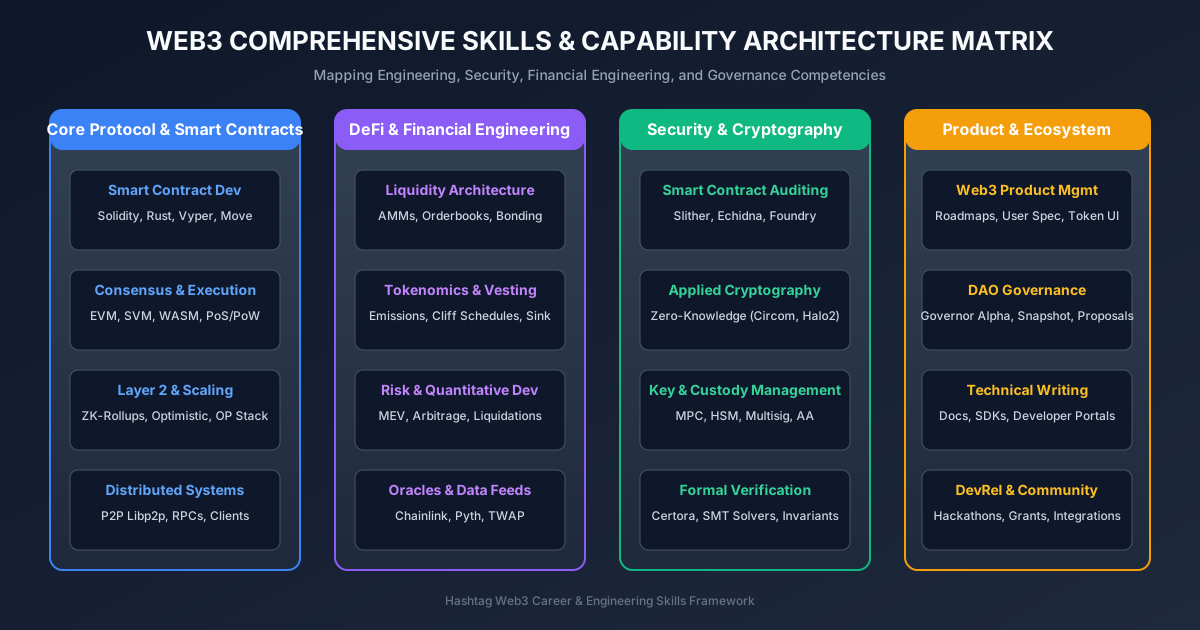
Web3 Skills Guide – Essential Knowledge for Career Success - Hashtag Web3 article cover

Master These Core Areas

Web3 careers span multiple specializations, but certain foundational skills are universally valuable.

1. Blockchain Fundamentals

Understanding distributed ledgers, consensus mechanisms, and cryptography is essential for any Web3 role.

  • Consensus Protocols: Proof of Work, Proof of Stake, and their trade-offs
  • Cryptographic Hashing: How blockchain data is secured and immutable
  • Smart Contracts: The programmable backbone of decentralized applications
  • Scalability Solutions: Layer 2s, sidechains, and rollups

2. Programming & Development

For technical roles, proficiency in one or more languages is critical.

  • Solidity: The de facto standard for Ethereum smart contract development
  • Rust: Used in Solana, Polkadot, and other high-performance chains
  • JavaScript/TypeScript: Essential for frontend and dApp development
  • Python: Valuable for data analysis and research roles

3. DeFi & Tokenomics

Understanding decentralized finance mechanics is crucial.

  • Automated Market Makers (AMMs): How liquidity pools function
  • Yield Farming: Risk and reward strategies
  • Tokenomics Design: Supply models, vesting, and incentive structures
  • Risk Management: Auditing, smart contract security, and portfolio management

4. Business & Soft Skills

Technical knowledge alone isn't enough—community engagement and communication matter.

  • Community Building: Growing and nurturing crypto communities
  • Technical Writing: Explaining complex concepts clearly
  • Leadership: Managing teams in distributed organizations
  • Negotiation: For partnerships and business development roles

Career Paths Using These Skills

  • Smart Contract Developer: Requires blockchain fundamentals + Solidity + DeFi knowledge
  • DeFi Analyst: DeFi + tokenomics + financial modeling
  • Community Manager: Soft skills + blockchain knowledge
  • Product Manager: Business acumen + technical literacy

Resources to Learn These Skills

  • Courses: Udemy, Coursera, specialized platforms like A16z Crypto School
  • Community: Discord servers, governance forums, hackathons
  • Practice: Build on testnets, contribute to open-source projects
  • Real Experience: Internships, contributor roles, freelance gigs

Start with the fundamentals, then specialize based on your career goals.

The Web3 Opportunity

The Web3 sector is experiencing explosive growth, with demand far outpacing supply for qualified talent. Unlike traditional tech, Web3 offers unique advantages: higher compensation, equity opportunities, fully remote roles, and the chance to work on transformative technology.

Market Context

The Web3 job market has fundamentally different dynamics than Web2:

Compensation: Web3 roles typically pay 20-40% higher than equivalent Web2 positions, with significant bonus and equity components.

Remote-First Culture: Most Web3 organizations operate fully or primarily remote, offering flexibility that's rare in traditional tech.

Growth Trajectory: Career progression happens faster in Web3 due to rapid company scaling and talent shortage.

Equity Upside: Token and equity packages are standard, offering significant wealth-building potential.

Step-by-Step Transition Strategy

Step 1: Build Web3 Knowledge Foundation

Spend 4-8 weeks learning blockchain fundamentals. Understand:

  • How blockchain technology works
  • Different blockchain architectures
  • Smart contracts and their use cases
  • DeFi, NFTs, and DAOs
  • Current Web3 ecosystem and key players

Step 2: Learn Relevant Skills

Depending on your target role:

  • Engineers: Solidity, JavaScript/TypeScript, Web3 libraries (ethers.js, web3.js)
  • Product Managers: Token economics, protocol governance, user growth in Web3
  • Business Development: Market analysis, partnership strategy, regulatory landscape
  • Community/Operations: Community building, Discord management, governance

Step 3: Build Your Portfolio

Create tangible proof of your Web3 expertise:

  • Complete open-source contributions to Web3 projects
  • Build a small DApp or smart contract
  • Write about Web3 topics on Medium or Twitter
  • Contribute to DAOs or community projects
  • Participate in hackathons

Step 4: Network in Web3

The Web3 community is incredibly accessible:

  • Join Discord communities of projects you're interested in
  • Attend Web3 conferences (Consensus, Devcon, ETHDenver)
  • Engage on Twitter/X with Web3 builders and thought leaders
  • Participate in governance forums
  • Join local Web3 meetups

Step 5: Apply Strategically

Target roles that leverage your existing expertise plus new Web3 knowledge:

  • If you're a backend engineer, look for blockchain infrastructure roles
  • If you're a PM, look for protocol product roles
  • If you're in sales/business, look for Web3 business development

Real-World Success Stories

Developer to Smart Contract Engineer

Alex, a 5-year backend engineer at a FAANG company, spent 3 months learning Solidity while maintaining his day job. He contributed to an open-source protocol, caught the attention of a major DeFi project, and transitioned with a 50% salary increase and significant equity.

Product Manager in Web3

Jessica, a PM from traditional finance, leveraged her domain expertise in DeFi. Her understanding of financial products combined with Web3 technology made her incredibly valuable. She found a role at a leading DeFi protocol within 4 weeks.

Career Changer Success

Marcus left his corporate job to focus on Web3 for 6 months. Through consistent learning, networking, and portfolio building, he landed a role leading Developer Relations at a major blockchain platform, with compensation far exceeding his previous role.

Web3-Specific Challenges

Volatility Risk: The sector's volatility can impact job stability. Diversify and build emergency funds.

Regulatory Uncertainty: Regulations are still evolving. Choose projects with strong legal teams.

Due Diligence: Not all projects are legitimate. Research thoroughly before joining.

Learning Curve: The learning curve is steep, but the community is incredibly supportive.

FAQ

Q: Do I need to be a blockchain expert to work in Web3? A: No. Companies need diverse skills—marketing, design, operations, business development. Your existing expertise is valuable; you just need to learn the Web3 context.

Q: How much can I earn in Web3? A: Significantly more than Web2 equivalents. Base salaries are higher, plus signing bonuses, equity, and token packages. Realistic expectation: 30-60% increase from Web2 roles.

Q: Is it risky to transition to Web3? A: Like any emerging industry, there's risk. Mitigate by joining established, well-funded projects with strong teams and track records. Avoid speculation; focus on building.

Q: How long does the transition take? A: 2-6 months depending on your background and effort level. Engineers and product managers transition faster due to transferable skills.

Q: What if the crypto market crashes? A: The fundamental technology and use cases remain valid. Bear markets often create better opportunities—teams can focus on building rather than hype-driven growth.

Key Takeaways

  • Web3 offers significant compensation, growth, and impact opportunities
  • Transition takes 2-6 months with dedicated effort
  • Your existing skills are valuable; focus on learning Web3 context
  • Networking and portfolio building matter more than certifications
  • Join established projects to mitigate risk
  • The community is incredibly supportive and accessible

Related Articles & Resources

  • Web3 job boards and opportunities
  • Blockchain fundamentals for non-engineers
  • Smart contract security for developers
  • Token economics explained
  • How to evaluate a Web3 project
  • Building your Web3 career path

The Web3 Opportunity

The Web3 sector is experiencing explosive growth, with demand far outpacing supply for qualified talent. Unlike traditional tech, Web3 offers unique advantages: higher compensation, equity opportunities, fully remote roles, and the chance to work on transformative technology.

Market Context

The Web3 job market has fundamentally different dynamics than Web2:

Compensation: Web3 roles typically pay 20-40% higher than equivalent Web2 positions, with significant bonus and equity components.

Remote-First Culture: Most Web3 organizations operate fully or primarily remote, offering flexibility that's rare in traditional tech.

Growth Trajectory: Career progression happens faster in Web3 due to rapid company scaling and talent shortage.

Equity Upside: Token and equity packages are standard, offering significant wealth-building potential.

Step-by-Step Transition Strategy

Step 1: Build Web3 Knowledge Foundation

Spend 4-8 weeks learning blockchain fundamentals. Understand:

  • How blockchain technology works
  • Different blockchain architectures
  • Smart contracts and their use cases
  • DeFi, NFTs, and DAOs
  • Current Web3 ecosystem and key players

Step 2: Learn Relevant Skills

Depending on your target role:

  • Engineers: Solidity, JavaScript/TypeScript, Web3 libraries (ethers.js, web3.js)
  • Product Managers: Token economics, protocol governance, user growth in Web3
  • Business Development: Market analysis, partnership strategy, regulatory landscape
  • Community/Operations: Community building, Discord management, governance

Step 3: Build Your Portfolio

Create tangible proof of your Web3 expertise:

  • Complete open-source contributions to Web3 projects
  • Build a small DApp or smart contract
  • Write about Web3 topics on Medium or Twitter
  • Contribute to DAOs or community projects
  • Participate in hackathons

Step 4: Network in Web3

The Web3 community is incredibly accessible:

  • Join Discord communities of projects you're interested in
  • Attend Web3 conferences (Consensus, Devcon, ETHDenver)
  • Engage on Twitter/X with Web3 builders and thought leaders
  • Participate in governance forums
  • Join local Web3 meetups

Step 5: Apply Strategically

Target roles that leverage your existing expertise plus new Web3 knowledge:

  • If you're a backend engineer, look for blockchain infrastructure roles
  • If you're a PM, look for protocol product roles
  • If you're in sales/business, look for Web3 business development

Real-World Success Stories

Developer to Smart Contract Engineer

Alex, a 5-year backend engineer at a FAANG company, spent 3 months learning Solidity while maintaining his day job. He contributed to an open-source protocol, caught the attention of a major DeFi project, and transitioned with a 50% salary increase and significant equity.

Product Manager in Web3

Jessica, a PM from traditional finance, leveraged her domain expertise in DeFi. Her understanding of financial products combined with Web3 technology made her incredibly valuable. She found a role at a leading DeFi protocol within 4 weeks.

Career Changer Success

Marcus left his corporate job to focus on Web3 for 6 months. Through consistent learning, networking, and portfolio building, he landed a role leading Developer Relations at a major blockchain platform, with compensation far exceeding his previous role.

Web3-Specific Challenges

Volatility Risk: The sector's volatility can impact job stability. Diversify and build emergency funds.

Regulatory Uncertainty: Regulations are still evolving. Choose projects with strong legal teams.

Due Diligence: Not all projects are legitimate. Research thoroughly before joining.

Learning Curve: The learning curve is steep, but the community is incredibly supportive.

FAQ

Q: Do I need to be a blockchain expert to work in Web3? A: No. Companies need diverse skills—marketing, design, operations, business development. Your existing expertise is valuable; you just need to learn the Web3 context.

Q: How much can I earn in Web3? A: Significantly more than Web2 equivalents. Base salaries are higher, plus signing bonuses, equity, and token packages. Realistic expectation: 30-60% increase from Web2 roles.

Q: Is it risky to transition to Web3? A: Like any emerging industry, there's risk. Mitigate by joining established, well-funded projects with strong teams and track records. Avoid speculation; focus on building.

Q: How long does the transition take? A: 2-6 months depending on your background and effort level. Engineers and product managers transition faster due to transferable skills.

Q: What if the crypto market crashes? A: The fundamental technology and use cases remain valid. Bear markets often create better opportunities—teams can focus on building rather than hype-driven growth.

Key Takeaways

  • Web3 offers significant compensation, growth, and impact opportunities
  • Transition takes 2-6 months with dedicated effort
  • Your existing skills are valuable; focus on learning Web3 context
  • Networking and portfolio building matter more than certifications
  • Join established projects to mitigate risk
  • The community is incredibly supportive and accessible

Related Articles & Resources

  • Web3 job boards and opportunities
  • Blockchain fundamentals for non-engineers
  • Smart contract security for developers
  • Token economics explained
  • How to evaluate a Web3 project
  • Building your Web3 career path

Master These Core Areas

Web3 careers span multiple specializations, but certain foundational skills are universally valuable.

1. Blockchain Fundamentals

Understanding distributed ledgers, consensus mechanisms, and cryptography is essential for any Web3 role.

  • Consensus Protocols: Proof of Work, Proof of Stake, and their trade-offs
  • Cryptographic Hashing: How blockchain data is secured and immutable
  • Smart Contracts: The programmable backbone of decentralized applications
  • Scalability Solutions: Layer 2s, sidechains, and rollups

2. Programming & Development

For technical roles, proficiency in one or more languages is critical.

  • Solidity: The de facto standard for Ethereum smart contract development
  • Rust: Used in Solana, Polkadot, and other high-performance chains
  • JavaScript/TypeScript: Essential for frontend and dApp development
  • Python: Valuable for data analysis and research roles

3. DeFi & Tokenomics

Understanding decentralized finance mechanics is crucial.

  • Automated Market Makers (AMMs): How liquidity pools function
  • Yield Farming: Risk and reward strategies
  • Tokenomics Design: Supply models, vesting, and incentive structures
  • Risk Management: Auditing, smart contract security, and portfolio management

4. Business & Soft Skills

Technical knowledge alone isn't enough—community engagement and communication matter.

  • Community Building: Growing and nurturing crypto communities
  • Technical Writing: Explaining complex concepts clearly
  • Leadership: Managing teams in distributed organizations
  • Negotiation: For partnerships and business development roles

Career Paths Using These Skills

  • Smart Contract Developer: Requires blockchain fundamentals + Solidity + DeFi knowledge
  • DeFi Analyst: DeFi + tokenomics + financial modeling
  • Community Manager: Soft skills + blockchain knowledge
  • Product Manager: Business acumen + technical literacy

Resources to Learn These Skills

  • Courses: Udemy, Coursera, specialized platforms like A16z Crypto School
  • Community: Discord servers, governance forums, hackathons
  • Practice: Build on testnets, contribute to open-source projects
  • Real Experience: Internships, contributor roles, freelance gigs

Start with the fundamentals, then specialize based on your career goals.

The Web3 Opportunity

The Web3 sector is experiencing explosive growth, with demand far outpacing supply for qualified talent. Unlike traditional tech, Web3 offers unique advantages: higher compensation, equity opportunities, fully remote roles, and the chance to work on transformative technology.

Market Context

The Web3 job market has fundamentally different dynamics than Web2:

Compensation: Web3 roles typically pay 20-40% higher than equivalent Web2 positions, with significant bonus and equity components.

Remote-First Culture: Most Web3 organizations operate fully or primarily remote, offering flexibility that's rare in traditional tech.

Growth Trajectory: Career progression happens faster in Web3 due to rapid company scaling and talent shortage.

Equity Upside: Token and equity packages are standard, offering significant wealth-building potential.

Step-by-Step Transition Strategy

Step 1: Build Web3 Knowledge Foundation

Spend 4-8 weeks learning blockchain fundamentals. Understand:

  • How blockchain technology works
  • Different blockchain architectures
  • Smart contracts and their use cases
  • DeFi, NFTs, and DAOs
  • Current Web3 ecosystem and key players

Step 2: Learn Relevant Skills

Depending on your target role:

  • Engineers: Solidity, JavaScript/TypeScript, Web3 libraries (ethers.js, web3.js)
  • Product Managers: Token economics, protocol governance, user growth in Web3
  • Business Development: Market analysis, partnership strategy, regulatory landscape
  • Community/Operations: Community building, Discord management, governance

Step 3: Build Your Portfolio

Create tangible proof of your Web3 expertise:

  • Complete open-source contributions to Web3 projects
  • Build a small DApp or smart contract
  • Write about Web3 topics on Medium or Twitter
  • Contribute to DAOs or community projects
  • Participate in hackathons

Step 4: Network in Web3

The Web3 community is incredibly accessible:

  • Join Discord communities of projects you're interested in
  • Attend Web3 conferences (Consensus, Devcon, ETHDenver)
  • Engage on Twitter/X with Web3 builders and thought leaders
  • Participate in governance forums
  • Join local Web3 meetups

Step 5: Apply Strategically

Target roles that leverage your existing expertise plus new Web3 knowledge:

  • If you're a backend engineer, look for blockchain infrastructure roles
  • If you're a PM, look for protocol product roles
  • If you're in sales/business, look for Web3 business development

Real-World Success Stories

Developer to Smart Contract Engineer

Alex, a 5-year backend engineer at a FAANG company, spent 3 months learning Solidity while maintaining his day job. He contributed to an open-source protocol, caught the attention of a major DeFi project, and transitioned with a 50% salary increase and significant equity.

Product Manager in Web3

Jessica, a PM from traditional finance, leveraged her domain expertise in DeFi. Her understanding of financial products combined with Web3 technology made her incredibly valuable. She found a role at a leading DeFi protocol within 4 weeks.

Career Changer Success

Marcus left his corporate job to focus on Web3 for 6 months. Through consistent learning, networking, and portfolio building, he landed a role leading Developer Relations at a major blockchain platform, with compensation far exceeding his previous role.

Web3-Specific Challenges

Volatility Risk: The sector's volatility can impact job stability. Diversify and build emergency funds.

Regulatory Uncertainty: Regulations are still evolving. Choose projects with strong legal teams.

Due Diligence: Not all projects are legitimate. Research thoroughly before joining.

Learning Curve: The learning curve is steep, but the community is incredibly supportive.

FAQ

Q: Do I need to be a blockchain expert to work in Web3? A: No. Companies need diverse skills—marketing, design, operations, business development. Your existing expertise is valuable; you just need to learn the Web3 context.

Q: How much can I earn in Web3? A: Significantly more than Web2 equivalents. Base salaries are higher, plus signing bonuses, equity, and token packages. Realistic expectation: 30-60% increase from Web2 roles.

Q: Is it risky to transition to Web3? A: Like any emerging industry, there's risk. Mitigate by joining established, well-funded projects with strong teams and track records. Avoid speculation; focus on building.

Q: How long does the transition take? A: 2-6 months depending on your background and effort level. Engineers and product managers transition faster due to transferable skills.

Q: What if the crypto market crashes? A: The fundamental technology and use cases remain valid. Bear markets often create better opportunities—teams can focus on building rather than hype-driven growth.

Key Takeaways

  • Web3 offers significant compensation, growth, and impact opportunities
  • Transition takes 2-6 months with dedicated effort
  • Your existing skills are valuable; focus on learning Web3 context
  • Networking and portfolio building matter more than certifications
  • Join established projects to mitigate risk
  • The community is incredibly supportive and accessible

Related Articles & Resources

  • Web3 job boards and opportunities
  • Blockchain fundamentals for non-engineers
  • Smart contract security for developers
  • Token economics explained
  • How to evaluate a Web3 project
  • Building your Web3 career path

The Web3 Opportunity

The Web3 sector is experiencing explosive growth, with demand far outpacing supply for qualified talent. Unlike traditional tech, Web3 offers unique advantages: higher compensation, equity opportunities, fully remote roles, and the chance to work on transformative technology.

Market Context

The Web3 job market has fundamentally different dynamics than Web2:

Compensation: Web3 roles typically pay 20-40% higher than equivalent Web2 positions, with significant bonus and equity components.

Remote-First Culture: Most Web3 organizations operate fully or primarily remote, offering flexibility that's rare in traditional tech.

Growth Trajectory: Career progression happens faster in Web3 due to rapid company scaling and talent shortage.

Equity Upside: Token and equity packages are standard, offering significant wealth-building potential.

Step-by-Step Transition Strategy

Step 1: Build Web3 Knowledge Foundation

Spend 4-8 weeks learning blockchain fundamentals. Understand:

  • How blockchain technology works
  • Different blockchain architectures
  • Smart contracts and their use cases
  • DeFi, NFTs, and DAOs
  • Current Web3 ecosystem and key players

Step 2: Learn Relevant Skills

Depending on your target role:

  • Engineers: Solidity, JavaScript/TypeScript, Web3 libraries (ethers.js, web3.js)
  • Product Managers: Token economics, protocol governance, user growth in Web3
  • Business Development: Market analysis, partnership strategy, regulatory landscape
  • Community/Operations: Community building, Discord management, governance

Step 3: Build Your Portfolio

Create tangible proof of your Web3 expertise:

  • Complete open-source contributions to Web3 projects
  • Build a small DApp or smart contract
  • Write about Web3 topics on Medium or Twitter
  • Contribute to DAOs or community projects
  • Participate in hackathons

Step 4: Network in Web3

The Web3 community is incredibly accessible:

  • Join Discord communities of projects you're interested in
  • Attend Web3 conferences (Consensus, Devcon, ETHDenver)
  • Engage on Twitter/X with Web3 builders and thought leaders
  • Participate in governance forums
  • Join local Web3 meetups

Step 5: Apply Strategically

Target roles that leverage your existing expertise plus new Web3 knowledge:

  • If you're a backend engineer, look for blockchain infrastructure roles
  • If you're a PM, look for protocol product roles
  • If you're in sales/business, look for Web3 business development

Real-World Success Stories

Developer to Smart Contract Engineer

Alex, a 5-year backend engineer at a FAANG company, spent 3 months learning Solidity while maintaining his day job. He contributed to an open-source protocol, caught the attention of a major DeFi project, and transitioned with a 50% salary increase and significant equity.

Product Manager in Web3

Jessica, a PM from traditional finance, leveraged her domain expertise in DeFi. Her understanding of financial products combined with Web3 technology made her incredibly valuable. She found a role at a leading DeFi protocol within 4 weeks.

Career Changer Success

Marcus left his corporate job to focus on Web3 for 6 months. Through consistent learning, networking, and portfolio building, he landed a role leading Developer Relations at a major blockchain platform, with compensation far exceeding his previous role.

Web3-Specific Challenges

Volatility Risk: The sector's volatility can impact job stability. Diversify and build emergency funds.

Regulatory Uncertainty: Regulations are still evolving. Choose projects with strong legal teams.

Due Diligence: Not all projects are legitimate. Research thoroughly before joining.

Learning Curve: The learning curve is steep, but the community is incredibly supportive.

FAQ

Q: Do I need to be a blockchain expert to work in Web3? A: No. Companies need diverse skills—marketing, design, operations, business development. Your existing expertise is valuable; you just need to learn the Web3 context.

Q: How much can I earn in Web3? A: Significantly more than Web2 equivalents. Base salaries are higher, plus signing bonuses, equity, and token packages. Realistic expectation: 30-60% increase from Web2 roles.

Q: Is it risky to transition to Web3? A: Like any emerging industry, there's risk. Mitigate by joining established, well-funded projects with strong teams and track records. Avoid speculation; focus on building.

Q: How long does the transition take? A: 2-6 months depending on your background and effort level. Engineers and product managers transition faster due to transferable skills.

Q: What if the crypto market crashes? A: The fundamental technology and use cases remain valid. Bear markets often create better opportunities—teams can focus on building rather than hype-driven growth.

Key Takeaways

  • Web3 offers significant compensation, growth, and impact opportunities
  • Transition takes 2-6 months with dedicated effort
  • Your existing skills are valuable; focus on learning Web3 context
  • Networking and portfolio building matter more than certifications
  • Join established projects to mitigate risk
  • The community is incredibly supportive and accessible

Related Articles & Resources

  • Web3 job boards and opportunities
  • Blockchain fundamentals for non-engineers
  • Smart contract security for developers
  • Token economics explained
  • How to evaluate a Web3 project
  • Building your Web3 career path

Looking for a Web3 Job?

Get the best Web3, crypto, and blockchain jobs delivered directly to you. Join our Telegram channel with over 60,000 subscribers.