Loading article...

The Justice Department filed a civil forfeiture action on Nov 23 for over $1.1 billion in USDC tied to the October Binance theft, with Circle agreeing to mint replacement tokens if a court orders forfeiture.
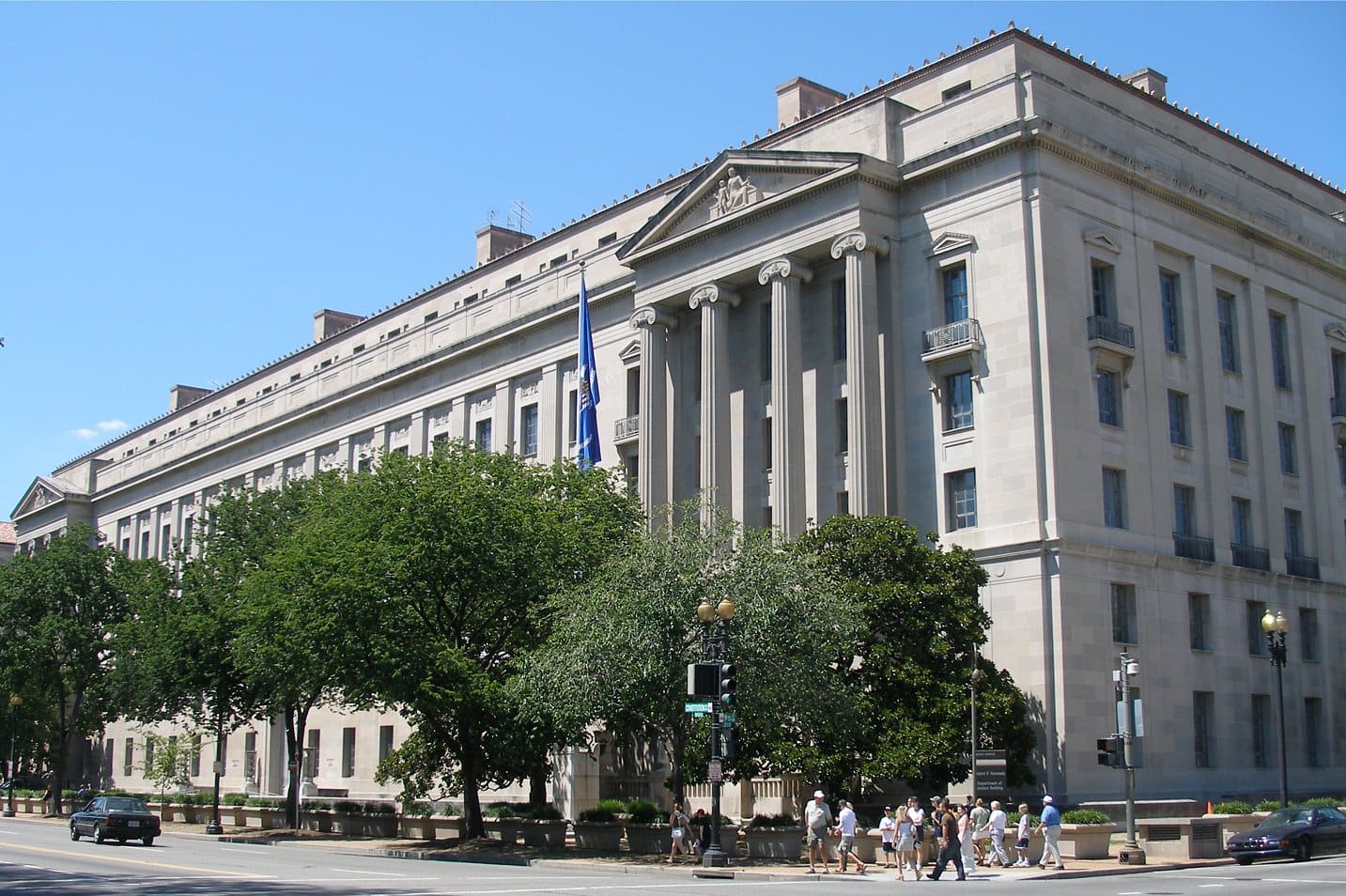
The United States Department of Justice headquarters in Washington. Photo: Sebmol via Wikimedia Commons (CC BY-SA 3.0). Source
Editorial news report. Hashtag Web3 does not operate the companies, protocols, or scam networks described below. This page summarizes public filings and third-party reporting; it is not a request for passwords, seed phrases, wallet signatures, or payments.
The Justice Department announced on Nov 23 that it has filed a civil forfeiture action to take control of more than $1.1 billion in USDC that North Korean actors obtained from Binance, moving the seized funds from a court restraint toward a permanent transfer of title. The department said the claim covers stablecoin proceeds and laundered funds from the theft from Binance on or about Oct. 29, and that it forms part of a wider effort to help the exchange recover more than $6 billion in stolen assets.
The filing lands in the U.S. District Court for the District of Columbia against USDC held at 36 addresses across 18 blockchains, according to Bankless, which reviewed the complaint's balance table and put the sum at about $1.17 billion. Decrypt reported that the assets had already been placed under a restraining order the government requested after the hack, and that Circle, the company that issues USDC, provided what the department called valuable assistance.
Because USDC sits on ledgers Circle controls, the issuer can freeze addresses but cannot move the tokens out of them. Bankless reported that Circle told prosecutors it has no way to pull the USDC out of the blocklisted addresses, and instead agreed to issue an equal amount of new tokens to the United States once a court grants a forfeiture order. The complaint labels those replacements Substitute USDC. Of the total, about $342 million sits in Binance hot wallets and contracts that the attackers took over through EIP-7702, and the largest single balance is roughly $259 million on Circle's own Arc chain, the report said.
The department said U.S. authorities have helped freeze, seize or return more than $2.9 billion in cryptocurrency from multiple sources since the theft, up from the $2.7 billion it reported on Nov 12, when it disclosed court approval to seize or restrain more than $1.2 billion. "North Korean cyber hackers stole more than $6 billion in cryptocurrency from Binance, but swift coordination between the government and private sector partners helped prevent a substantial portion of those assets from disappearing," Assistant Attorney General A. Tysen Duva of the department's Criminal Division said.
Secret Service investigators identified and froze stolen funds within minutes of the hack, Special Agent in Charge Todd Bratz of the agency's Criminal Investigations Division said in the same release. The FBI, the Secret Service and IRS Criminal Investigation are handling the case, and the FBI has attributed the theft to TraderTraitor, which the department describes as members of the North Korean military, Decrypt reported. North Korea has denied involvement in the theft, and Binance has set aside $6.34 billion to cover customer losses.
Tracing work continues on the funds that moved. Decrypt reported that at least $247 million has been funneled through Bitcoin coinjoins since wallets tied to the hack resumed activity in mid-November, citing analytics firm Elliptic, which estimates that about $2.85 billion has been frozen while roughly $2.35 billion remains in addresses tied to the theft. The report also noted that Tether and Circle froze funds after the hack, and that Binance has pursued the money through the courts, winning a $6.5 billion freezing order from Abu Dhabi courts that can be served on wallet holders through the blockchain.
Binance says it has already covered user losses with its own funds, and the Justice Department frames the forfeiture as helping the exchange recover what remains, according to Bankless. The complaint asks only that the U.S. Marshal dispose of the funds according to law, and an Abu Dhabi court that granted the freezing order will consider asset handovers on Dec. 1.