Loading article...

Bitwise's Q4 2026 Staking Report puts Ethereum's staked supply at 35.9% after a sixth straight quarter of net inflows, while the gross staking yield slipped to 2.63% and Solana's active stake rose to 440.5 million SOL.
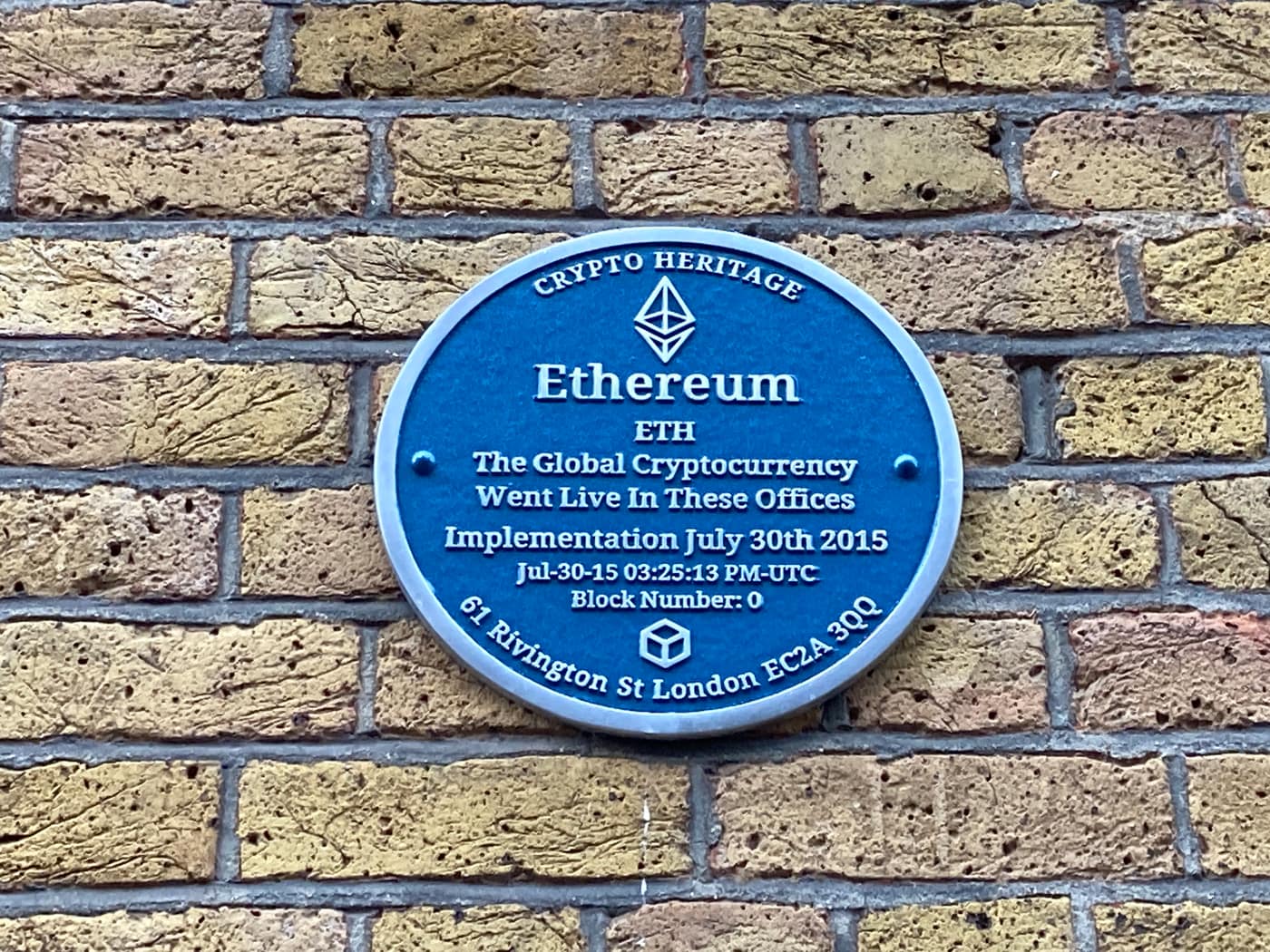
A commemorative plaque in London marking the offices where Ethereum went live in 2015. Photo: Matt Brown via Wikimedia Commons (CC BY 2.0). Source
Bitwise published its Q4 2026 Staking Report on Oct. 20, and the headline Ethereum figure is a record. Active validators held 43.80 million ETH at the end of the third quarter, equal to 35.9% of total supply, up from 40.24 million ETH and 33.0% three months earlier. The report puts the gross annualized staking yield at 2.63%, down from 2.81% in the second quarter.
Net staking inflows added 1.99 million ETH during the quarter, a sixth consecutive quarter of positive flows and up from 1.44 million in Q2, though well below the 4.53 million added in Q1. Across the first three quarters of 2026, 7.96 million ETH entered staking, which the report calculates as 6.1 times the 1.31 million recorded over the same stretch of 2025. Institutional demand features in that total. Bitmine's reported stake rose from 0.41 million ETH in late December 2025 to 5.07 million ETH as of Sept. 27, according to the report. Crypto Briefing covered the same figures on the day of publication.
The number of active validators moved the other way. It fell from close to 1.1 million to roughly 881,000 even as the ETH locked in those validators reached an all-time high. The report attributes the divergence to the Pectra upgrade, activated in May 2025, which lets validators using the newer 0x02 withdrawal credentials automatically restake their consensus rewards and consolidate several validators onto fewer machines. Pectra raised the maximum effective balance per validator to 2,048 ETH; the minimum stake to open one remains 32 ETH. The estimated wait for new deposits to reach active stake dropped from around 70 days in February 2026 to about 25 days at quarter end.
Yield is falling as the staked pool grows and execution rewards thin out. Inflationary consensus rewards contributed 2.53 percentage points of the 2.63% gross yield, or 96.3% of the total, while priority fees and MEV added only 0.10 points. Bitcoin.com News reported the same composition on Oct. 21 and noted that the average cost of four common Ethereum transaction types fell 67% year over year to $0.45, a figure the report also carries. Fees and MEV themselves shrank. Ethereum generated 18,210 ETH from those sources in the quarter, worth $40.64 million at daily prices, an average of 198 ETH per day against 331 in Q2 and the lowest daily average since Q1 2025. The higher gas limits from the Fusaka upgrade, live since December 2025, expanded blockspace capacity; users got cheaper transactions, but the added activity has not yet translated into stronger fee revenue for validators. Ethereum's DeFi ecosystem grew alongside the staking numbers, with mainnet total value locked rising from $42.30 billion to $55.40 billion during the quarter, according to the report's figures from DefiLlama.
Solana's numbers moved on a different track. Active stake rose by about 13.4 million SOL to a record 440.5 million SOL, taking the staking ratio from 68% to 69% of supply. Gross staking yield slipped to near 6.0% as issuance declined under the network's 15% annual disinflation schedule, while block rewards and Jito tips recovered some of the drop. The active validator count fell to 659 from 696 as smaller operators continued to leave. Liquid staking declined for a third consecutive quarter, which the report mostly ties to a smaller DoubleZero delegation program. The network also raised block capacity from 60 million to 100 million compute units and cut slot times from 400 to 250 milliseconds ahead of the Alpenglow consensus mechanism. An outage at Teraswitch in August took close to 29% of stake offline, and Solana kept producing blocks. Solana processed a record 14.2 billion non-vote transactions, up 45% from Q2, and tokenized equity trading volume on the network reached $6.93 billion, also up 45%.
The report tracks five networks in total: Ethereum, Solana, Hyperliquid, Robinhood Chain, and NEAR. On the operator side, Bitwise said in September it became the first validator operator to begin consolidating on Lido Core, a process it expects to cut roughly 8,000 of its own validators down to 125.