Loading article...

Sparkasse savings banks began offering bitcoin, ether, XRP, Solana and Polygon trading on Oct. 19 through DekaBank, reaching toward 50 million customers one institution at a time.
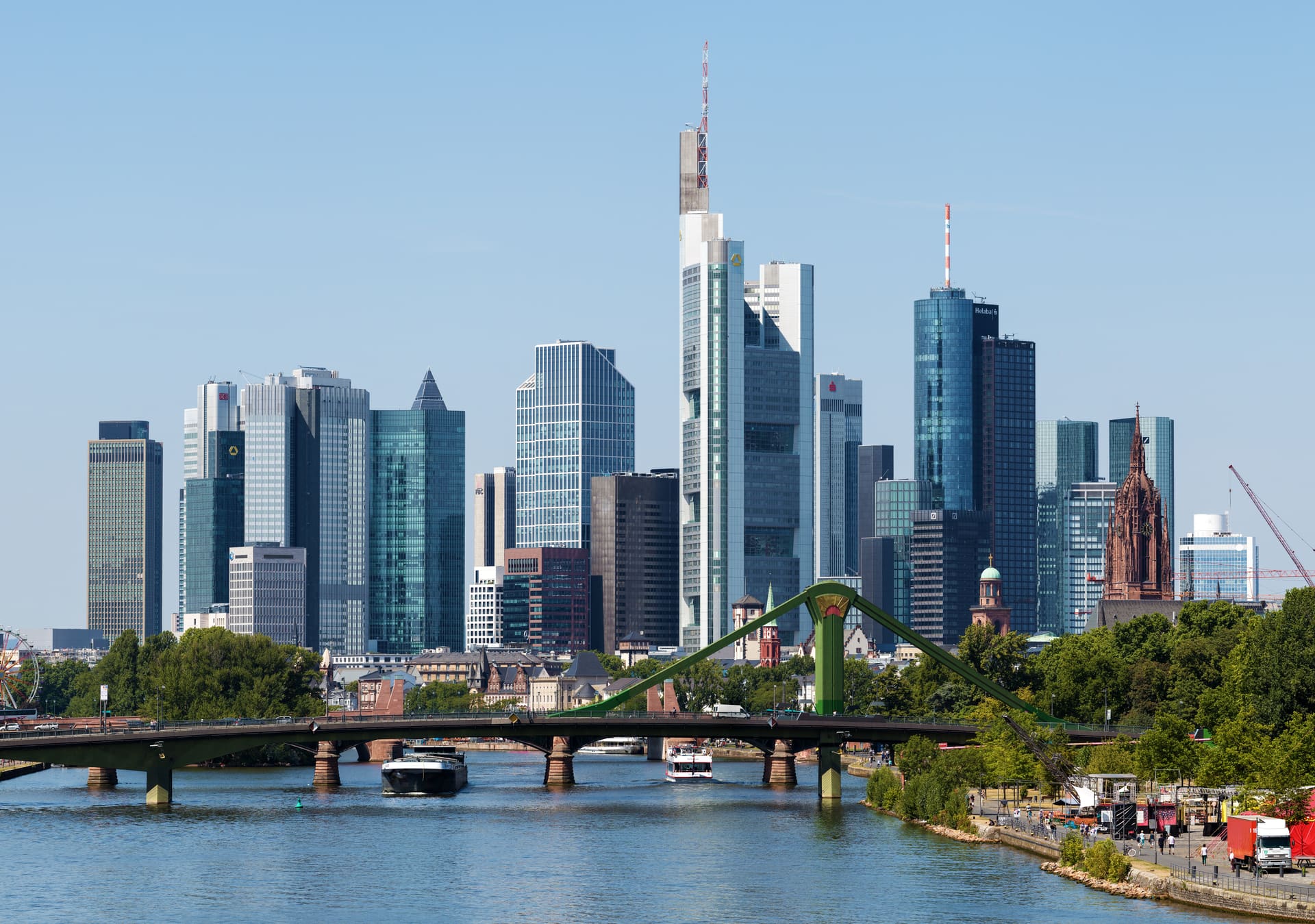
The Frankfurt skyline, home of DekaBank. Photo: Christian Wolf via Wikimedia Commons (CC BY-SA 3.0 de). Source
Germany's largest retail banking network started selling crypto on Monday. Sparkasse savings banks switched on a service called Krypto, powered by Deka, that lets customers buy and sell Bitcoin, Ether, XRP, Solana, and Polygon's POL token from inside the familiar Sparkasse banking app, Crypto Briefing reported and crypto.news confirmed, citing DekaBank's own product page.
The addressable base is close to 50 million customers. The actual Monday footprint was not. Participation is voluntary at the local savings bank level, and only a handful of institutions switched the product on at launch. More than 230 have expressed interest, with an expected pace of 30 to 40 additional banks joining each month and a target of broad network coverage in the first half of 2027.
Customers open a dedicated cryptocurrency account with DekaBank inside the investment section of the Sparkasse app. No separate securities brokerage account is required. Trading is execution-only: staff at the local savings bank do not recommend purchases, do not check suitability, and do not advise. DekaBank quotes a binding price for a limited window so the customer can review the order before committing.
The reported order fee is €0.99 per trade, with spreads on top. Trading can run outside ordinary stock-exchange hours since crypto markets do not close, though DekaBank warns that maintenance windows and market disruptions can leave customers unable to complete a transaction at their preferred time or price.
Custody sits with DekaBank. Private keys are held in trust in a jointly managed omnibus structure, not by the customer. Withdrawals are permitted only to wallet addresses associated with approved crypto-asset service providers. Sending bitcoin to a hardware wallet in a drawer is not part of the product. DekaBank also holds the trading side together with Boerse Stuttgart as part of the settlement infrastructure behind the quoted prices, which keeps the execution path inside German regulated plumbing rather than routing retail orders to a crypto exchange.
Stablecoins and meme coins are out of scope for the initial product. The menu is five assets, chosen for size and recognition rather than long-tail coverage: Bitcoin, Ether, XRP, Solana, and Polygon's POL. That list is itself a signal about which assets a supervised German bank is willing to put in front of retail customers on day one.
Sparkasse is a network of regional savings banks, historically cautious about digital assets and long associated, in crypto circles, with the opposite of an open door. The reversal follows a decision by the German Savings Banks and Giro Association to let member institutions offer crypto services, and it lands under the EU's Markets in Crypto-Assets framework, with BaFin oversight of the underlying provider.
The association's role matters for the pace. DSGV sets the permission; each local Sparkasse sets the calendar. That is why a product aimed at 50 million customers can launch on a Monday with five banks live and still be described accurately as a launch. The 30 to 40 institutions per month pace, if it holds, would put a meaningful share of the interested 230 into production before mid-2027.
For crypto adoption, distribution beats novelty. Buying bitcoin through Sparkasse means no new exchange account, no separate custody app, and no transfer from a bank that still treats on-ramps as a risk conversation. The trade-off is the custody model itself. Assets lack Germany's statutory deposit insurance, and the keys stay at the bank, which is the opposite of what the original bitcoin pitch promised and exactly what most retail customers have asked for.
Initial reporting identified five participating savings banks at launch, including Frankfurter Sparkasse, Taunus Sparkasse, Sparkasse Karlsruhe, Sparkasse Rottal-Inn, and Niederrheinische Sparkasse RheinLippe. Customers at institutions that have not activated the product wait for their own bank's decision. The network is large. The rollout is one app update at a time.