Loading article...

London's High Court ruled Chinese law governs victim claims to 61,000 seized bitcoin worth about $5 billion, narrowing the claimants' path and improving the state's odds of keeping the coins.
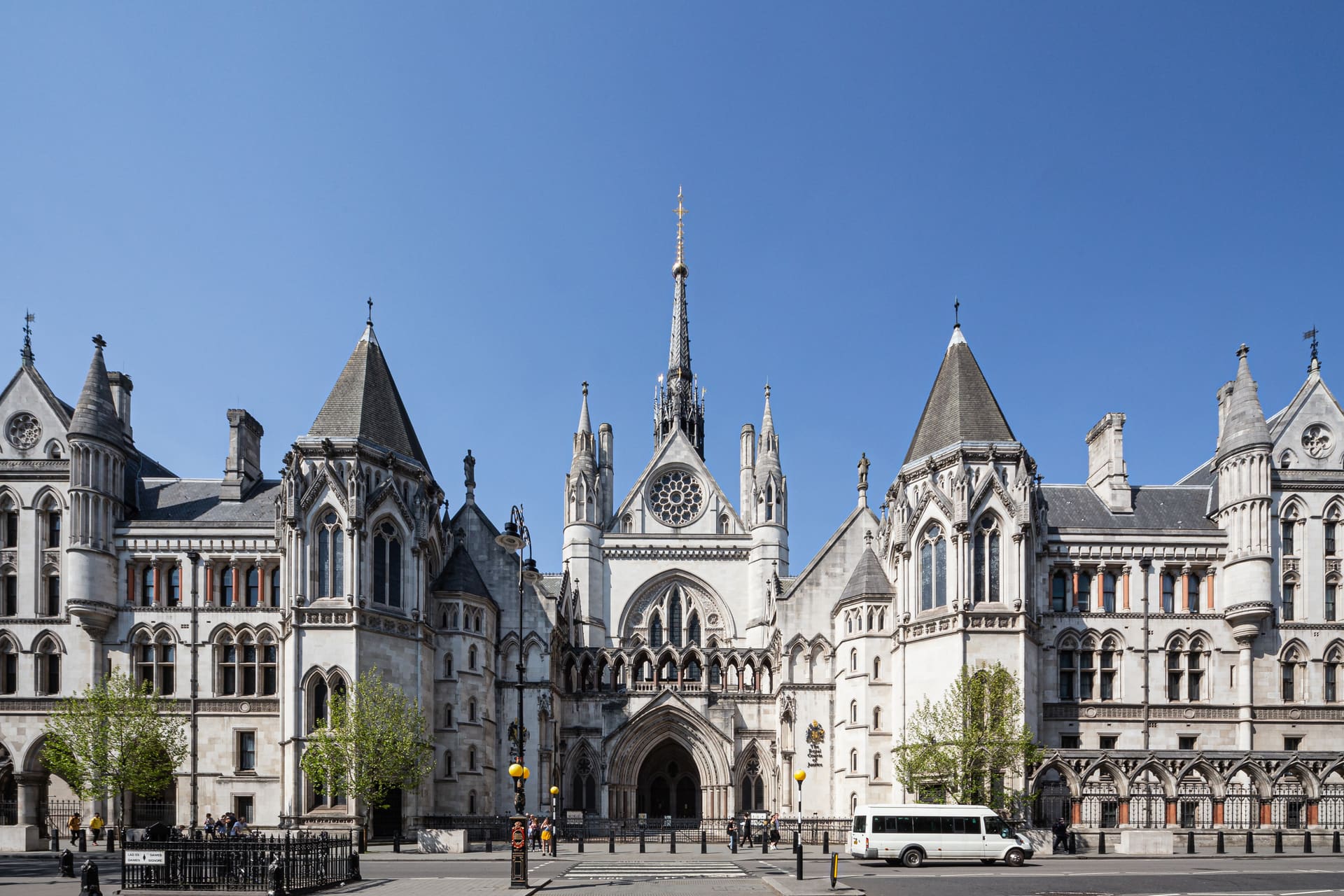
The Royal Courts of Justice in London, home of the High Court. Photo: David Castor via Wikimedia Commons (CC0). Source
London's High Court has ruled that Chinese law will decide whether alleged victims of a large Ponzi scheme own any share of more than 61,000 bitcoin seized in Britain, a holding worth about $5 billion. Mr Justice Mark Turner handed down the judgment on Oct. 12 after hearings in July, siding with the Director of Public Prosecutions against thousands of claimants who wanted English law to apply. The ruling awards the coins to no one, but it narrows the victims' path to recovery and CoinDesk reported that it strengthens the government's chances of keeping most of them.
Turner found that the fraud, the payments and the contracts all sat in China. "The relevant damage occurred in China. The applicants parted with their money in China," he wrote, adding that the contracts were entered into there and the immediate economic effects were suffered there. Because the bitcoin was bought in China, tracing the coins in England cannot revive property rights the victims lost under Chinese law when that purchase took place, Decrypt noted in its account of the ruling. The judge reached the same answer under each of the legal routes he considered, concluding that the governing law "is Chinese law."
The case centers on Zhimin Qian, who ran a Ponzi scheme through Tianjin Lantian Gerui Electronic Technology between 2014 and 2017. An audit counted at least 128,409 investment contracts connected to the fraud, with victims paying in about 40.2 billion yuan and about 34.1 billion yuan paid back out to some of them, according to the assumed facts set out in the judgment. Qian fled China in July 2017 and reached London that September on a St Kitts and Nevis passport in another name, where she has lived since. Her company was never licensed to offer financial products to investors, a point she admitted in her basis of plea, the judgment records. She pleaded guilty to fraud and money laundering charges and was jailed for more than 11 years last year, Decrypt said.
The bitcoin was bought in China, the judgment records. More than 100,000 coins were purchased through a Huobi trading account opened in June 2014 in the name of an associate, further coins came from over-the-counter deals arranged through a former Huobi employee between January and June 2017, and more came from mining machines located in China. All of the victim funds converted into bitcoin were converted before Qian left China. Police in London seized devices and access keys on Oct. 31 and Nov. 1, 2018, and took additional assets when Qian was arrested in April 2024. The seized property includes more than 61,000 bitcoin.
Thousands of victims have applied under section 281 of the Proceeds of Crime Act, which lets a person claim seized property back on proof it belongs to them. Each applicant must show a proprietary interest in the coins, Turner wrote, because the law creates no wider compensation scheme for people who lost money to crime. The victims had pressed for English law because it could have let them claim direct ownership of the bitcoin rather than seek payment as creditors, Cointelegraph reported. English law had been seen as substantially more favorable to them, the Financial Times said.
The content and proof of Chinese law are matters for a later stage, Turner wrote, so the ruling settles neither ownership nor any payout. Fieldfisher, the firm representing the claimants, is pursuing an appeal, according to the Financial Times. Prosecutors have previously said victims could be compensated through a redress scheme run from China. In March the victims challenged a proposed compensation arrangement involving that scheme, arguing it could leave British authorities with much of the gain from bitcoin's price rise, Cointelegraph reported. CoinDesk put the stash at about 3.8 billion pounds at current prices. Across the Atlantic, the United States set up a strategic bitcoin reserve in March 2025 that holds coins taken in enforcement actions, CoinDesk noted. Unnamed Treasury officials have privately discussed whether the seized coins could help fill a shortfall in Britain's public finances, in an account published last year. The Crown Prosecution Service said a further hearing will determine how Chinese law applies and whether any victim can establish an interest in the bitcoin.