Loading article...

Polymarket's U.S. exchange sued Ohio officials on Oct. 16, arguing the state's license demand violates the Commerce Clause and is preempted by federal commodities law.
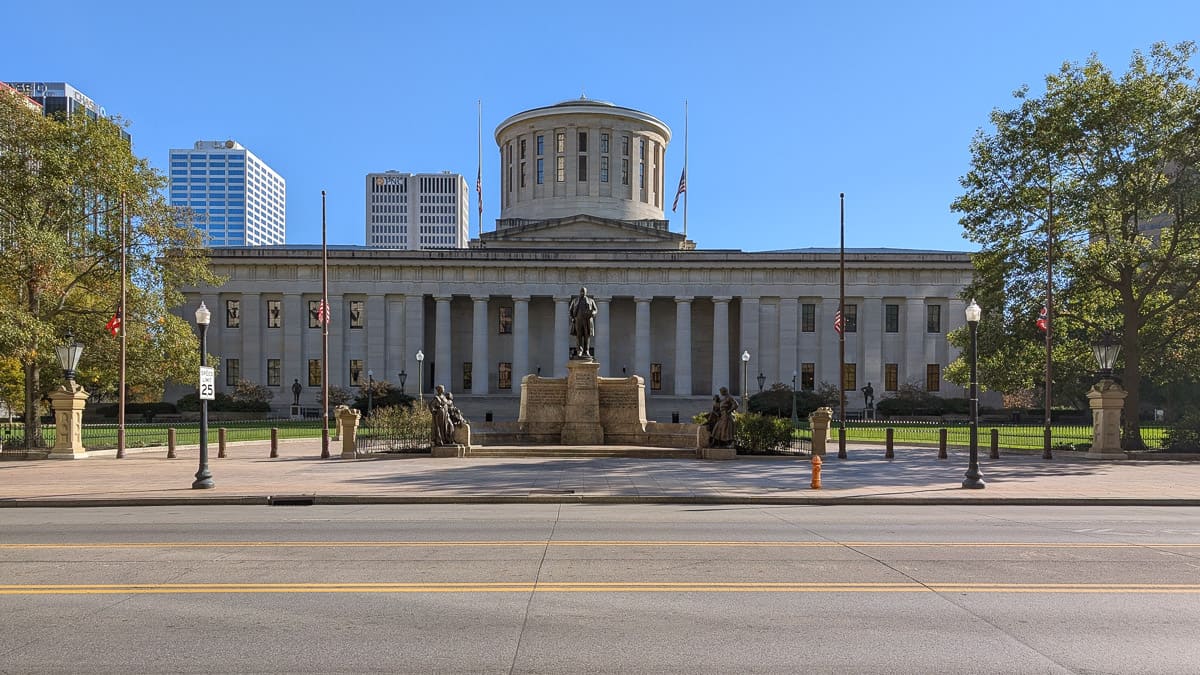
The Ohio Statehouse in Columbus, Ohio. Photo: JThorne via Wikimedia Commons (CC BY-SA 4.0). Source
Polymarket's U.S. exchange sued Ohio's attorney general and casino regulators in federal court on Oct. 16, the same day the state's deadline expired for operators to stop offering sports event contracts without an Ohio license. The company argues the state's demand reaches beyond its authority and conflicts with federal commodities rules, Unchained reported on Oct. 21.
QCX LLC, which operates Polymarket's U.S. platform, filed the complaint in the U.S. District Court for the Southern District of Ohio. The case is assigned to Judge Douglas Cole. The defendants are Attorney General Andy Wilson, the seven members of the Ohio Casino Control Commission and interim executive director Andromeda Morrison, according to Unchained.
The commission sent cease-and-desist notices to ten companies earlier this month and gave them until Oct. 16 to confirm they would stop. One company has confirmed compliance, and two are litigating, a commission spokesperson said. Polymarket is one of the two, DeFi Rate reported. The regulator has not identified the company that complied or the second litigant.
The notices told the recipients to "immediately cease and desist from offering" sports event contracts without a state license. The Oct. 2 letter to Polymarket alleged the company was engaged in bookmaking in violation of Ohio civil and criminal law, the complaint states in a passage quoted by Unchained.
Ohio Governor Mike DeWine said the state intends to follow the warnings with cases. "The law is very clear. The court decisions have been very clear," DeWine told reporters. "These are not self-executing. You have to actually go out and file these suits, and that's what we are going to do," DeFi Rate quoted him.
The complaint raises two theories. First, it says Ohio's licensing rules favor operators with a physical presence in the state, involving local operations, infrastructure spending and a minimum duration of Ohio presence. "These discriminatory, balkanizing measures violate the Constitution's promise of open, interstate commerce," Polymarket's lawyers argue, in a quote both outlets attribute to the filing. The company also contends that even a license would confine it to serving customers physically inside Ohio, fracturing its national exchange.
Second, the filing argues that the Commodity Exchange Act gives the Commodity Futures Trading Commission exclusive authority over event contracts on federally designated exchanges. The complaint says the Sixth Circuit's September ruling against Kalshi came out before this month's agency actions, and it cites two CFTC moves from Oct. 9: an interim final rule carving casino-style gambling out of the swap definition and a proposed rule writing event contracts into the rules, Unchained reported.
Polymarket asks the court to declare Ohio's gambling laws unconstitutional and preempted as applied to it, and to issue preliminary and permanent injunctions blocking enforcement. As of Oct. 21 the company had not moved for a preliminary injunction, and Ohio had not yet responded, Unchained reported on Oct. 21.
The filing lands after a setback for the industry in the appeals court that covers Ohio. On Sept. 25 a three-judge Sixth Circuit panel affirmed a lower court's refusal to grant Kalshi a preliminary injunction and vacated a related injunction in a Tennessee case, DeFi Rate reported. Kalshi asked the panel and the full court for rehearing on Oct. 9, citing the CFTC's swap definition proposal and its interim gambling rule as reasons to reconsider.
Other courts are still weighing the same question. A federal judge canceled an Oct. 9 hearing in the CFTC's case against Kentucky officials and ordered supplemental briefs by Oct. 23 on the Sixth Circuit ruling and the effect, if any, of the CFTC's rulemaking, according to DeFi Rate. New Jersey has petitioned the U.S. Supreme Court to review the Third Circuit's pro-Kalshi decision, and the NFL and 39 attorneys general have urged the justices to take the case. The court has not agreed to hear it, and Kalshi's response in the New Jersey matter is due Nov. 9.
Court entries show QCX LLC v. Wilson pending by Oct. 19, with summons issued and counsel appearances recorded.