Loading article...

The OCC issued its final rule implementing the GENIUS Act on Oct. 21, setting reserve, redemption, and risk standards for payment stablecoin issuers under its jurisdiction before the law takes effect on Jan. 18, 2027.
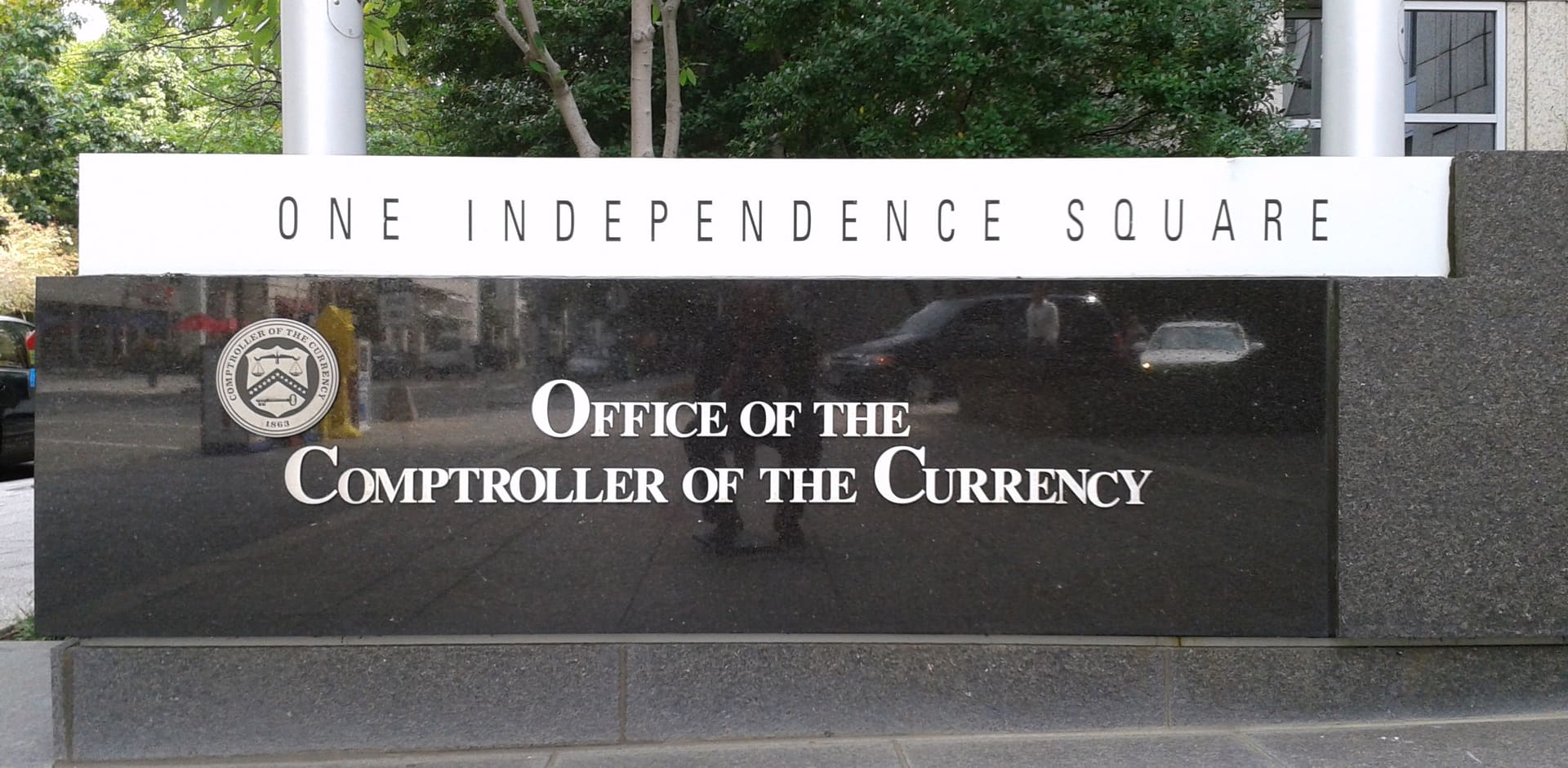
Office of the Comptroller of the Currency headquarters sign in Washington, D.C. Photo: Matthew Bisanz via Wikimedia Commons (CC BY-SA 3.0). Source
The Office of the Comptroller of the Currency issued its final rule implementing the GENIUS Act on Wednesday, Oct. 21, setting out the requirements that payment stablecoin issuers under its oversight will have to meet when the law takes effect on Jan. 18, 2027, the banking regulator announced.
The rule applies to payment stablecoin issuers that fall under the OCC's jurisdiction, including subsidiaries of national banks and federal savings associations, nonbank issuers approved at the federal level, certain state-qualified issuers, foreign issuers, and certain custody activities at OCC-supervised firms, according to an OCC bulletin.
Most of the requirements sit in a new section of the OCC's regulations covering reserve assets, redemption, risk management, audits and reporting, custody, applications, the supervision of foreign issuers, and a capital and operational backstop. The rule also covers how state-qualified issuers transition to the federal framework, and when the OCC can revoke an issuer's approval.
"We are providing a clear, practical framework for payment stablecoin innovation, with strong standards for reserve backing, redemption, and risk management," Comptroller of the Currency Jonathan Gould said in the release.
Rules on the Bank Secrecy Act, anti-money laundering, and sanctions are not included in this rulemaking, and will come in a separate rulemaking with the Treasury Department. FinCEN and OFAC proposed their own anti-money laundering and sanctions requirements in April, requiring issuers to run anti-money laundering programs, report suspicious activity, and maintain sanctions compliance programs.
The OCC received hundreds of comments on its proposal from crypto companies, community bankers, trade groups, and academics. Given "the nascency of the industry," the agency said it would monitor how the sector develops and adjust its framework where necessary.
The GENIUS Act bars anyone other than a permitted issuer from issuing a payment stablecoin in the U.S., and stops digital asset service providers from offering or selling stablecoins to Americans unless they come from a permitted issuer or a foreign issuer that meets certain requirements. The law also prohibits issuers from paying yield or interest "solely in connection with the holding, use, or retention" of a payment stablecoin.
The final rule does not offer a safe harbor for rewards programs that predated the GENIUS Act. "The OCC declines to presume that rewards programs that predated the GENIUS Act comply with the GENIUS Act," the rule document states, according to CoinDesk. "The fact that Congress may have had notice of these rewards programs does not necessarily imply that Congress endorsed them as permissible."
The agency said it "will apply the language of the statute to the facts and circumstances of any particular arrangement." It also suggested that the word "solely" carries significant weight, and that a reward that "might be made, at least in part, for other reasons" would fall outside the ban.
U.S. exchanges including Coinbase, PayPal, and Kraken already run stablecoin rewards programs. Without a safe harbor, those programs face case-by-case OCC review under the new framework. The rule removes what the OCC had called "rebuttable presumptions" that assumed specified activities would violate the rule, Decrypt reported.
Treasury Secretary Scott Bessent compared the GENIUS Act to Abraham Lincoln's National Currency Act of 1863, which "established a national framework for bank-issued currency," Cointelegraph reported. Bessent said in a statement that the rule "carries that landmark legislation forward, providing a clear, practical foundation for private-sector innovation, competition, and American leadership in digital assets."
The OCC has not said when it will start accepting applications and waiver requests from prospective stablecoin issuers. Gould said in August that the agency was "very intent on moving quickly and getting a final rule out by November so that we will be able to start processing applications within the new year," Decrypt noted. That timeline is now ahead of schedule, but the application window remains unscheduled.
The OCC is the first federal agency to finalize rules under the GENIUS Act. The Treasury Department, Federal Reserve, and FDIC also have rulemakings underway. The FDIC proposed application standards late last year and its approach to state-chartered institutions in April. Treasury proposed its handling of the law in August. The Fed issued proposals for member banks' subsidiaries last month.
The overall effective date of the GENIUS Act was supposed to arrive in January, but it is unlikely all required rules will be in place before then, based on the comment periods still open at other agencies, CoinDesk reported.
The OCC changed its reserve requirements between the proposed and final rules, adopting what it called "a principles-based approach with respect to reserve asset diversification and concentration requirements," backed by minimum daily liquidity requirements and limits on single-counterparty concentration.