Loading article...

Ukraine's National Bank said on Nov. 4 it cannot support Draft Law No. 10225-d on virtual assets in its current form, objecting to foreign token access and operator licensing terms after a Rada committee cleared the bill for a final vote.
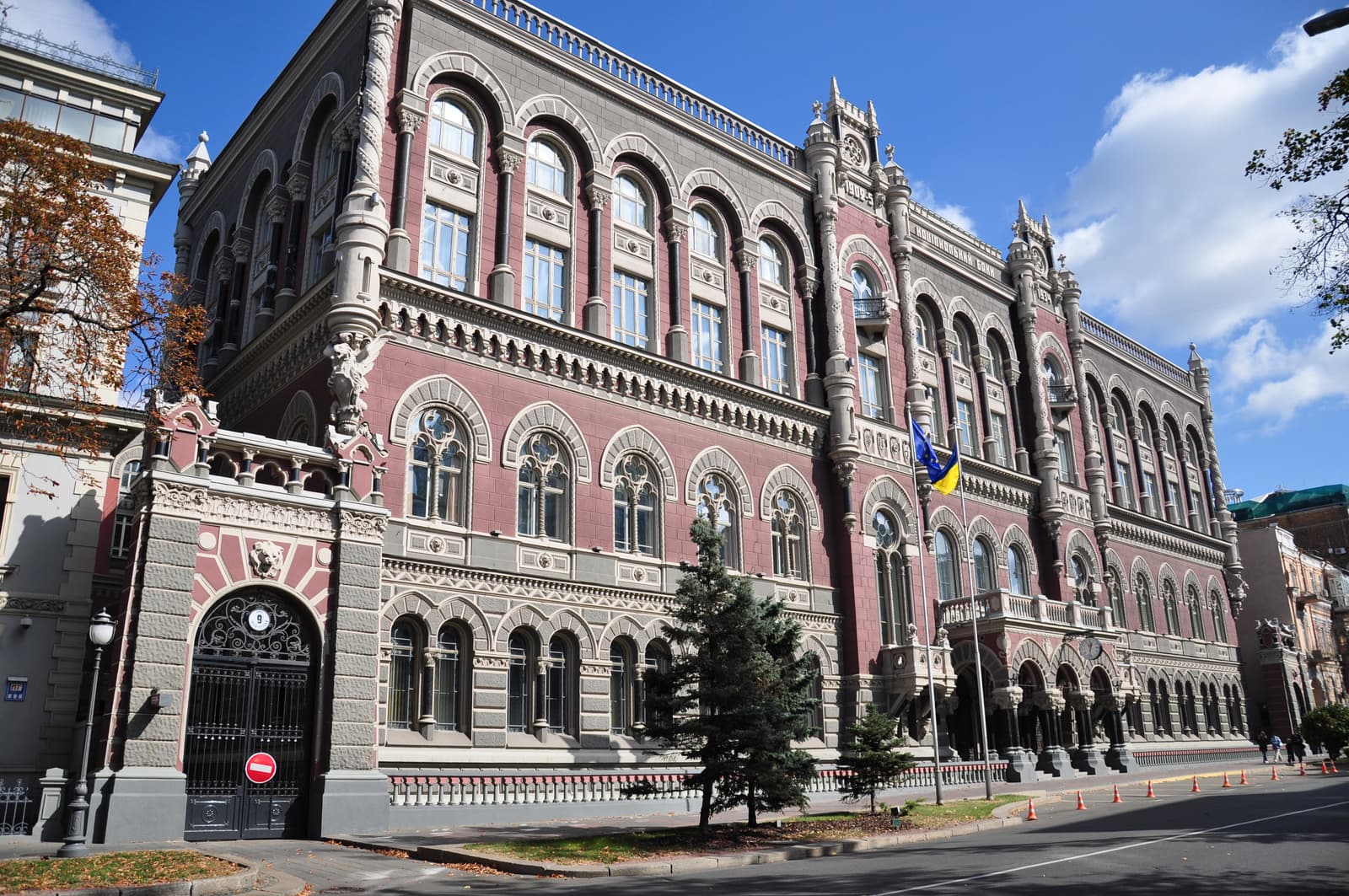
The National Bank of Ukraine building in Kyiv. Photo: Musia-97 via Wikimedia Commons (CC BY-SA 3.0). Source
Ukraine's National Bank said on Nov. 4 that it cannot support Draft Law No. 10225-d on the circulation of virtual assets in its current form, hours after the Verkhovna Rada's Finance, Tax and Customs Policy committee cleared the bill for adoption in the second reading and as a whole. The bank said it received the final text only late the evening before the committee vote and that the process "was not sufficiently transparent," Bitcoin Magazine reported.
Deputy Governor Oleksii Shaban raised the bank's objections at the committee meeting, but the NBU said the format did not allow a full debate. The bank has taken part in drafting the bill and backs its direction in principle. "The National Bank of Ukraine supports the regulation of the virtual asset market in Ukraine based on the European MiCA approach, international standards, and IMF recommendations," the NBU statement said, according to UA.NEWS. The bank added that market development "must not pose a threat to Ukraine's monetary sovereignty, price and financial stability, or economic security."
The NBU laid out three objections. First, the draft would let foreign tokens that function effectively as electronic money enter Ukraine without matching supervision in the countries that issue them. The bank said that threatens monetary sovereignty, the transmission of monetary policy, payment infrastructure and financial stability, and it wants the power to assess such foreign assets and, when needed, restrict their circulation, the same authority it holds over tokens issued at home.
Second, the bank warned that simplified admission of foreign virtual assets must not let providers sidestep rules that apply to comparable Ukrainian assets. Without that parity, the NBU said, segments of the market could expand outside adequate oversight and create regulatory arbitrage. Third, the NBU flagged monopolization and corruption risks in how the National Securities and Stock Market Commission would authorize trading platform operators. The bank initially opposed numerical caps, then agreed to a compromise limiting the first wave to three legal persons chosen by competitive selection, but the final draft drops a clear five-year cap and leaves the number of operators to the securities commission's discretion, according to Bitcoin Magazine. "This decision is entirely at the discretion of the NSSMC," the NBU said.
The committee's recommendation does not enact the law. Twenty members voted in favor, and the Rada passed the bill in first reading on Sept. 3, 2025, Unchained reported. Under the committee text, the securities commission would be the crypto market's main regulator while the NBU would oversee electronic money tokens. A final Rada vote is expected later in November. If adopted, the rules would take effect on July 1, 2027, Interfax Ukraine reported as cited by Bitcoin Magazine, splitting supervision between the NBU and the securities commission. Under the committee version, personal income from virtual-asset trades would face Ukraine's standard personal income tax, with a reduced 5% rate through the end of 2028 for assets acquired before the law takes effect; crypto-to-crypto exchanges would not be taxed, and virtual-asset deals would sit outside VAT.
Ukraine legalized a framework for virtual assets in 2022, and the new bill would put that market under detailed rules modeled on the European Union's Markets in Crypto-Assets regulation. The NBU concluded that the failure to take its fundamental comments into account makes support for the bill in its current form impossible, the UA.NEWS report said. Its intervention lands as Ukraine debates how deep digital assets should sit in state finance: lawmakers introduced a separate bill last year that would let the NBU hold virtual assets, including bitcoin, in its foreign-exchange and gold reserves, a permission the bank would not be required to use, Bitcoin Magazine reported. The bank called on lawmakers to refine the document with all parties to the process and said it remains ready to cooperate. "The development of the virtual asset market and the protection of monetary and financial stability are not mutually exclusive," the bank said.