Loading article...

The Monetary Authority of Singapore issued S$100 million of four-week tokenised MAS Bills on 6 November, settled with wholesale CBDC, and said the test network will be renamed SG Digital Ledger.
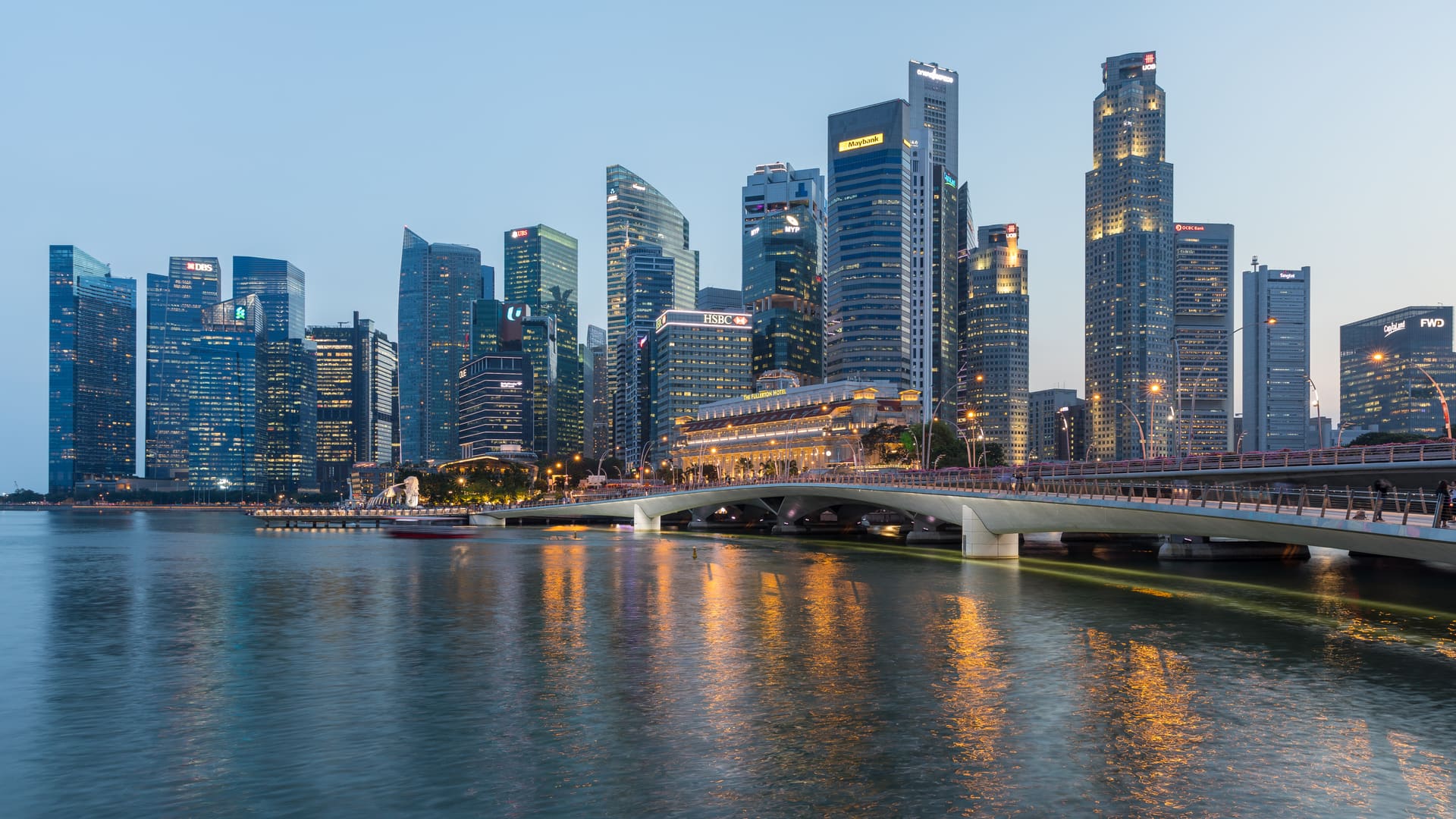
Singapore's central business district in the evening, where MAS is based. Photo: Basile Morin via Wikimedia Commons (CC BY-SA 4.0). Source
The Monetary Authority of Singapore said it issued S$100 million of tokenised MAS Bills on 6 November, with five primary dealers bidding for the four-week paper and paying for it in wholesale central bank digital currency. The media release, published 19 November, puts the dollar equivalent at about $77.5 million.
DBS Bank, HSBC's Singapore branch, OCBC, Standard Chartered (Singapore) and United Overseas Bank took part in the issuance auction, according to the release. Applications came to more than double the amount on offer, and the bills mature on 4 December 2026. Cointelegraph reported the same maturity date and bid coverage on 19 November.
Unlike a conventional sale that is tokenised after the fact, the bills were created directly on the MAS-operated Singapore Dollar Test Network. The central bank said this native issuance removes the reconciliation step and the intermediaries that a split process would require. Fintech News Singapore described the same design, with the bills recorded as tokens on the shared ledger from the start.
Issuing a familiar government-style instrument natively gives borrowers something they can pledge as collateral for loans settled on the network, MAS said. The sale builds on a live transaction from 2025, when banks used the test network and MAS-issued digital currency to settle an overnight interbank loan. Singapore has run blockchain-based bank payment experiments since 2016.
The auction itself ran earlier in the month. MAS published the issue details for auction TD26102S: announced on 3 November, auctioned on 4 November, issued on 6 November, with a minimum denomination of S$1,000 and a uniform price auction format. The issue carries ISIN SGXZ46841136. Primary dealers, as MAS defines them, are Singapore banks approved to act as market makers and dealers in government securities and MAS-issued securities.
MAS Managing Director Chia Der Jiun said the live issuance let the central bank "test a new method of issuance, and further enhance our in-house distributed ledger infrastructure." He added that "over time, tokenised MAS Bills can play a complementary role to conventional MAS Bills."
Chia delivered those remarks on 19 November at the Singapore FinTech Festival, where he also set out the next stage for the infrastructure. The Singapore Dollar Test Network will be renamed SG Digital Ledger and repositioned as an operational utility that supports settlement across institutions, tokenised assets, forms of digital money and ledgers, according to his keynote address.
At the festival Chia argued that settlement infrastructure will matter more as tokenised assets spread. "As the use of tokenized assets and digital money grows, trusted settlement on CBDC will be needed," he said, calling it a foundation for "settlement finality and confidence, especially for large value settlement," as Cointelegraph quoted from the speech.
The media release sets out a concrete 2027 programme: scale up the tokenised bill issuance, bring more financial institutions into the trials, and widen the bills' use in collateral management. MAS has invited financial institutions and market infrastructure providers to join the next phase of live trials in 2027. The same release notes that the issuance "paves the way for secured lending transactions involving tokenised assets" on the renamed ledger.
In the keynote, Chia framed the issuance as the second of three building blocks for tokenised collateral, alongside legal clarity and an ecosystem able to post and accept the assets. On the same day MAS and industry partners published the Guardian Tokenised Collateral Framework, which sets operational requirements across eligibility, custody, valuation, return and enforcement. Chia drew a line between the two asset classes in the same speech: crypto assets "do not represent any underlying asset or value" and are, in MAS's view, unsuitable for retail investors, while tokenised financial assets carry benefits for wholesale markets.
For now the programme remains a trial. The bills are short-dated and the participants are a fixed group of five primary dealers. The next public markers are the 4 December maturity and whatever MAS publishes from the 2027 trials.