
DeFi Security Summit 2026
About the event
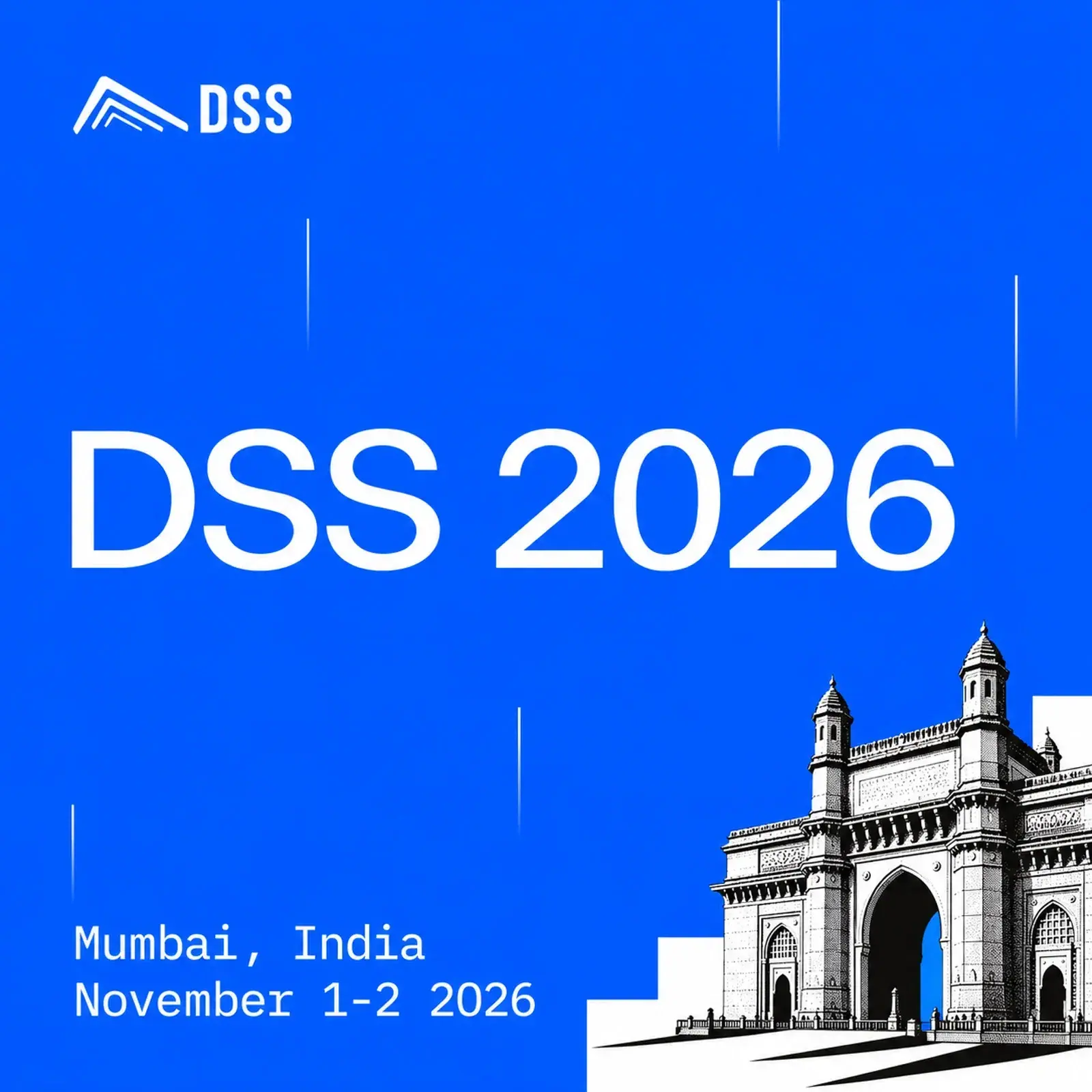
The fifth DeFi Security Summit takes place at Courtyard by Marriott Mumbai International Airport on November 1 and 2, 2026, from 10:00 to 18:00 IST each day. It is intended for security researchers, auditors, protocol builders and the wider DeFi community. The venue address is CTS 215, Andheri-Kurla Road, opposite Carnival Cinemas, Andheri East, Mumbai, Maharashtra 400093.
The organizer has published a 2026 talk directory, although its Luma description still says speakers and program details are forthcoming. The directory identifies the following talks with the November 1 and 2 Marriott summit. Individual session times and rooms remain to be assigned.
Published talks
- Hudson Jameson, head of Web3 at CertiK, revisits the 2017 Parity multisig hacks.
- Steffen Kux, co-founder and co-CEO of corpus.core, discusses trustless transaction analysis before Ethereum wallet signatures.
- Dmytro Matviiv, CEO of HackenProof, examines changes in crowdsourced security, including Code4rena and Hats Finance.
- Natalia Klaus, verification engineer at Runtime Verification, covers a pipeline from production Rust to Lean 4 proofs using AI provers.
- 0xa5df, senior security researcher at Certora, approaches auditing as system risk management.
- Kirk Baird, executive director of Sigma Prime, examines single points of failure in blockchain security.
- Shebin John, senior research engineer at Safe Research, presents a deny-by-default policy engine for Safe.
- Rahul Saxena, founder of Bluethroat Labs, addresses attestation gaps in private AI and TEE-backed DeFi.
- Paul Clemson, audit engineer at Quantstamp, examines collateral flows when auditing Polymarket V2.
- Kalp Shah, smart contract auditor at QuillAudits, discusses circuit-level exploits in DeFi.
- Jacob Czepluch covers Core Solidity.
- Michael Lewellen, head of solutions engineering at Turnkey, examines recovery mechanisms as an attack surface.
- Don Josey, founder of Glossifi, asks how financial incentives affect security judgment.
- Ofir Eliasi, CTO of Lava Foundation, covers security during live Cosmos-to-EVM migrations and the risks of unaudited RPC infrastructure.
- Lokesh Joshi, blockchain and AI engineer, discusses autonomous defense for DeFi.
- Mohamad Mansouri, Web3 security researcher at Dedaub, evaluates AI auditing against real smart-contract audits.
- Victor Okafor, security researcher at QuillAudits, considers quantum threats beyond post-quantum signatures.
- George Loukovitis, senior engineer at Dedaub, combines deterministic analysis and language models to detect unsafe ERC-20 behavior.
- Akand Sitra of Hypernative covers real-time Web3 security monitoring.
- Gerard Persoon, security researcher at Cantina, examines conversion between EVM bytecode and Solidity.
- Anu Adeleke of QuillAudits presents a session on vulnerable Daml code.
- Nemveer, senior security researcher at Certora, discusses ecosystem-specific security lessons from auditing NEAR.
- Raj Kumar, security researcher at Certora, and senior threat researcher Sabanaku77 examine monitoring internals, chain data and incident response.
- Henri Binsztok, co-founder and CEO of OKcontract Labs, examines how a multisig can approve an unintended transaction.
- Uri Kirstein, product manager for Fordefi's blockchain team, discusses information missing from Safe transaction decoders.
- Igor Gulamov, co-founder of SavantChat, applies AI auditing to consensus, mempools and peer-to-peer systems.
- Viraz Malhotra, senior blockchain engineer and security researcher, introduces a methodology for AI-assisted auditing.
- Nicolas Garcia, security researcher at OpenZeppelin, discusses when to deploy an AI auditor and disclose its findings.
- Jochen Hoenicke, formal verification researcher at Certora, examines a self-liquidation issue in Morpho Midnight involving a callback window.
- Josselin Feist, security researcher at Aave Labs, addresses security leadership.
- Jeff Fei, security researcher at Ant International, presents SOAC and zero-trust smart-contract permission governance.
- Jork Leonhardt, co-founder of Corpus Core GmbH, covers RPC trust failures affecting builders and monitoring tools.
- Daniel Monzón, offensive security engineer at Halborn, discusses Web3 red-teaming methods.
- Robert Reith, CEO and co-founder of Accretion and hackhack, examines bugs missed by AI tools.
- Abhimanyu Nag, engineering manager at Muchlearning/Canvas, models cryptoeconomic attacks and adversaries in DeFi.
- Andy M. Lee, founder and CEO of Mamori, examines what fuzzing establishes about smart-contract security.
- Magnus Woodgate, lead security engineer at Asymmetric Research, has two listed talks on post-quantum signatures, stateful risks and Ethereum account security.
- Joaquin Pereyra, lead security engineer at Coinspect, examines the discovery of and response to the Ill Bloom wallet-generation flaw.
- Sumanjeet, maintainer of py-libp2p and unified-testing, shares security and operational lessons from py-libp2p and Py-IPFS-lite.
- Julia Hardy, co-founder and head of investigations at zeroShadow, discusses using money-laundering intelligence to contain active exploits.
- Christopher von Hessert, head of security at Polygon Labs, presents "Never Send a Human to Do a Machine's Job."
- Clément Moller, smart contract engineer at Origin Protocol, covers DeFi liveness testing with stateful invariants and replacing a staking oracle with beacon-chain proofs.
- Davit Kobakhidze of Consensys Diligence discusses AI security challenges looking ahead to 2027.
- Christian Vari, head of audit operations at Oak Security, presents an adversarial methodology for AI audits and a four-year study comparing audit findings with exploits.
- Bernardo Codesido, head of security at RootstockLabs, discusses building a lasting crypto security team.
- Nikita Belenkov, security engineer at Anza, examines running an audit competition.
- Doris Benda, blockchain security engineer and auditor at ChainSecurity, covers dirty bits in Solidity.
- Hrishikesh Bhat of Cantina examines the development of crowdsourced security beyond bounties.
- Sofia Bobadilla, PhD student at KTH Royal Institute of Technology, discusses smart-contract invariants as a defense against attacks.
- Zakaryae Boudi, founder of Tokenfrastructure Group, examines vulnerabilities created by the interaction of otherwise correct contracts.
- Petar Calic, protocol lead at Spectra, covers the opportunities and pitfalls of formal verification with AI.
- Lilian Cariou, security and formal-verification researcher at Certora, examines Aave V4's hub-and-spoke architecture.
- Ivan Djordjevic, head of security and data protection at Degensoft, discusses the SOC 2 Type 2 observation period in a DeFi organization.
- Matthias Egli, founding and managing partner of ChainSecurity, reviews hacks since Devcon 7.
- John Ennis of Safe R&D examines onchain security markets in the context of offensive AI.
- Elliot Friedman of Solidity Labs covers multisig backdoor detection and laptop security in governance-proposal workflows.
- Josef Gattermayer, co-founder of ack3, compares frontier models for EVM auditing and examines practical fuzzing with coding agents.
- Jelle (0xFlint) Goethals, founder of Flint Security, covers x402 integration requirements and indirect dependencies in DeFi trust relationships.
- Neville Grech, co-founder of Dedaub, discusses symbolic execution for math-heavy code alongside AI tools.
- Manu Sheel Gupta, technical lead and maintainer for libp2p, IPLD and Multiformats, examines a Gossipsub crash and its implications for AI security and DeFi infrastructure.
- Peter Kacherginsky, security researcher and author of BlockThreat, surveys DeFi security in 2026.
- George Kobakhidze of Consensys Diligence presents Certiflai and certification workflows.
- Dima Kogan, CTO and co-founder of Fordefi, and Yaron Salman, its cryptography specialist, discuss MPC wallets and post-quantum readiness.
- Kevin Lotz covers formal verification of stake pools and a practical application.
- Yash Saraswat, smart contract engineer at ether.fi, presents a runtime security framework for liquid staking tokens.
- Dhairya Sethi of Aave Labs' core smart-contract team and security researcher Tomer Ganor examine rounding and accounting risks in lending protocols.
- Suryansh Singh, lead blockchain security researcher at OpenZeppelin, discusses security standards and weaknesses in evaluating Web3 AI security tools.
- Anish Agrawal of Olympix draws lessons about real exploits from mutation testing.
- Prabal Banerjee, co-founder of Avail, discusses responses to onchain surveillance infrastructure.
- Yannis Smaragdakis, co-founder of Dedaub, covers reconstructing unverified contracts from bytecode and modeling fund flows using large linear-algebra systems.
- Aarnav Bos, security engineer at Asymmetric Research, examines exploration and testing of consensus-protocol state spaces.
- Sergey Khomutinin, senior Solidity engineer at Lido, discusses continuous auditing with language models.
- nisedo, security engineer at Trail of Bits, presents lessons from AI bug hunting and a short session on evidence, questions and coverage in AI-assisted audits.
- Rudra Singh of CertiK addresses frontend security audits.
- Yuri Tkachenko, head of DeFi engineering at Lido, examines audit work after publication.
- Jason W, security researcher, discusses real-time DeFi threat detection with stream engines.
- Benjamin Flores, co-founder of Verity, covers formal verification in the context of AI.
- Griff Green discusses collective approaches to DeFi security and costs.
- Jan Kalivoda, co-founder of ack3.ai, addresses laptop security and components that audits leave outside their scope.
- Jonathan Mevs, senior audit engineer at Quantstamp, examines agent-assisted formal verification.
- Thomas Marques compares a simple LLM pipeline with more complex agent-based approaches.
- Eugene Mamin, chief technical master at Lido Labs, presents the Lido and Nethermind Evergreen approach to continuous AI-assisted security.
Tickets and the Devcon continuation
Standard admission costs US$50 for both Marriott summit days. Students can use DSSSTUDENT at checkout for US$10 admission. Registration is through the summit's Luma page.
DSS continues on November 3 as a community-led session at Devcon. Devcon admission is separate from the November 1 and 2 summit ticket. The organizer's agenda allows attendees to save a shortlist of talks; saving a talk does not reserve a seat.