Loading article...

Circle CEO Jeremy Allaire said the USDC issuer is preparing to enter roughly 40 developing markets, citing demand in Southeast Asia, Latin America, Africa and the Middle East.
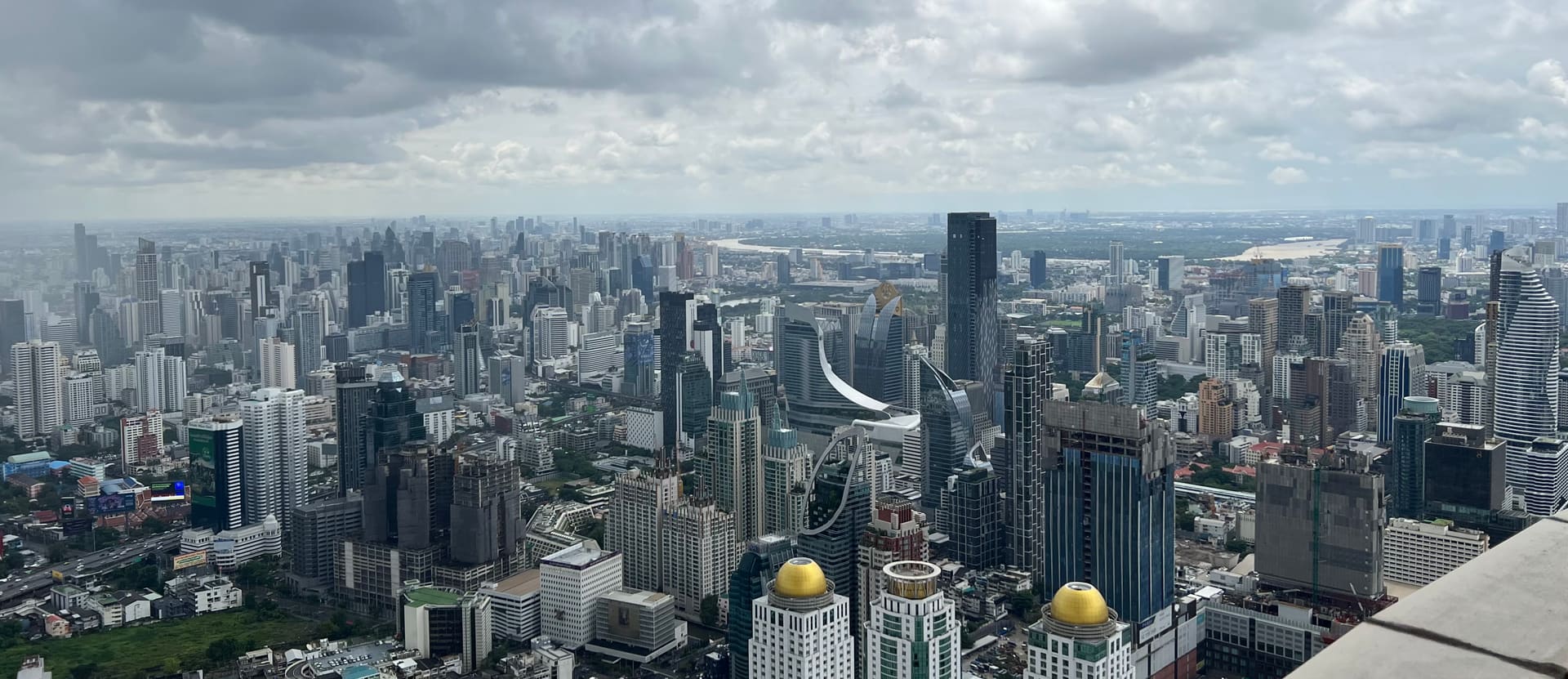
The Bangkok skyline in 2022. Photo: Bigcitydata via Wikimedia Commons (CC BY-SA 4.0). Source
Circle is preparing to enter roughly 40 emerging and developing markets, chief executive Jeremy Allaire said, pointing to demand from people and businesses in Southeast Asia, Latin America, Africa and the Middle East. Allaire made the comments to Reuters on the sidelines of the IMF and World Bank meetings in Bangkok, Decrypt reported.
Allaire said blockchain is moving "from the early adopter phase of blockchain technology into the mainstream scaling phase." He described the demand as coming from users who want to reach an internet-based economy, according to Cointelegraph, which also cited the Reuters interview.
USDC holds about 25% of the stablecoin market, against roughly 60% for Tether's USDT, according to Decrypt. Stablecoins are cryptocurrencies pegged to a traditional asset, usually the US dollar. USDC is the second-largest dollar-backed stablecoin by market capitalization, behind USDT, Cointelegraph reported. Decrypt reported that USDC's circulation rose 19% year over year to $73.3 billion in the second quarter. Cointelegraph put USDC's market capitalization at roughly $72.5 billion late Friday and USDT's at about $183.4 billion, citing CoinMarketCap data.
Circle has funded the expansion through deals and regulatory work. The company agreed in September to acquire Singapore-based cross-border payments platform Tazapay in a $400 million all-stock deal expected to close in 2027, Cointelegraph reported. Binance made a $100 million strategic investment in Circle as part of a five-year commercial agreement, Reuters reported.
Circle also secured a federal banking charter in July and has pursued a New York trust charter, Decrypt reported. Allaire tied the push to the GENIUS Act, the US stablecoin law slated to take effect in January. He said the law would give the world "legal digital dollars" and called it "a watershed moment."
Allaire addressed competition from banks building their own stablecoins. He said the competition is healthy and, after a long period in which incumbents kept outsiders out, "they are no longer in charge, and the innovators are having their day."
Circle's Arc network has been adopted by BlackRock, Visa and Standard Chartered, according to Reuters. Allaire said AI agents making small machine-to-machine payments are adding to USDC usage. He also said AI raises security risks for financial infrastructure. "If you're not concerned about it, then your head is in the sand, right?" he said.
Cointelegraph reported that Bernstein analysts have been bullish on Circle, saying a new growth cycle for USDC could help the company over the next 12 months. Bernstein pointed to factors including renewed momentum in crypto markets, US regulatory clarity, tokenized capital markets and stablecoin payments by AI agents. The firm said USDC's share of adjusted stablecoin transaction volume rose from about 40% in 2025 to more than 60% so far in 2026, overtaking USDT on that measure.
The expansion plans come as Circle's share price has fallen. Cointelegraph reported that Circle's NYSE-traded stock closed down 5.5% on Friday at $82.22, extending a decline of almost 24% over six months.
Circle runs USDC, a stablecoin backed by cash and short-term US government securities. The token is issued across multiple blockchains, and the company reported more than $36 trillion in on-chain USDC transaction volume in the first half of 2026. The issuer told investors in its Oct. 16 economics disclosure that more than 150 partners share in USDC's economics.
Allaire did not say which markets Circle would enter first or how much the expansion would cost. The company has not set a timetable for the roughly 40 markets or named the countries it would target, and Reuters reported that the plans were described during the Bangkok meetings rather than announced as a signed list of countries.