Loading article...

The Senate Agriculture Committee questioned Nathan Anonick and Matthew Rowland on Nov. 18 about prediction markets, staffing and conflicts, with committee and full Senate votes still ahead.
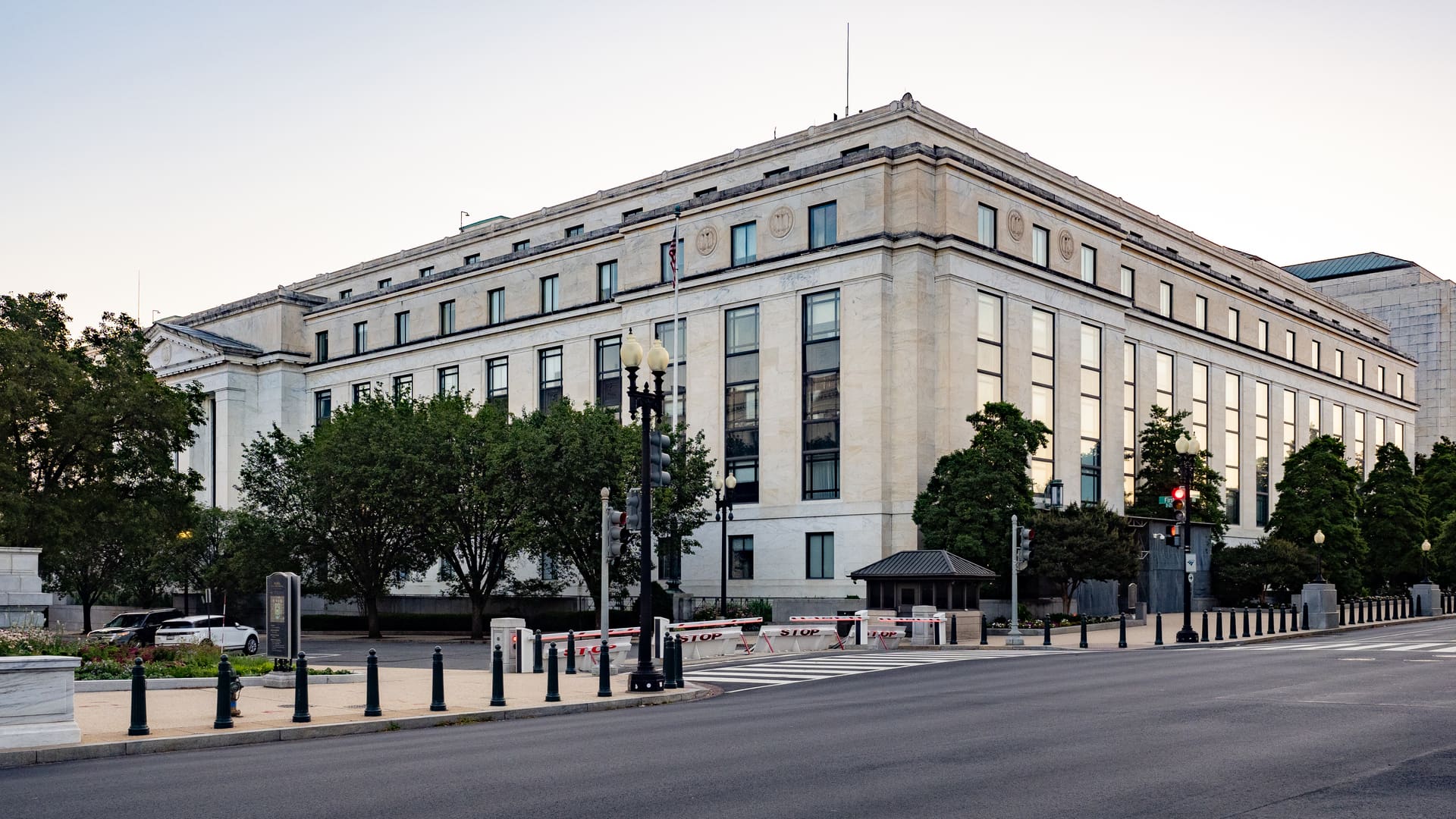
The Dirksen Senate Office Building in Washington, where the committee held the hearing in Room 106. Photo: ajay_suresh via Wikimedia Commons (CC BY 2.0). Source
The Senate Agriculture Committee held a confirmation hearing Tuesday for President Donald Trump's two nominees to the Commodity Futures Trading Commission, spending much of the session on the agency's fight with states and tribes over prediction markets. The panel met at 3 p.m. Eastern in Room 106 of the Dirksen Senate Office Building, and the nominees were Nathan Anonick, a Republican from Virginia, and Matthew Rowland, a Democrat from the District of Columbia, Bitcoin Magazine reported.
The White House sent the nominations to the Senate on Nov. 12 as part of a bipartisan slate for the CFTC and the Securities and Exchange Commission. Anonick works on the Republican staff of the Senate Agriculture Committee under Chairman John Boozman and would take the seat once held by former Chairman Rostin Behnam for a term ending June 19, 2031. Rowland is a CFTC attorney detailed to the committee's Democratic staff under Ranking Member Amy Klobuchar and would serve out the remainder of former Commissioner Summer K. Mersinger's term, which expires April 13, 2028, according to Bitcoin Magazine.
CFTC Chairman Michael Selig, the agency's only sitting commissioner, has called the nominees "two strong bipartisan picks". The commission can seat up to five members, so even if both nominees clear the Senate, two seats would stay vacant until further nominations arrive.
Prediction markets took up much of Tuesday's questioning. Neither Rowland nor Anonick took a strong stand against the agency's approach to event contracts, which the CFTC says belong under federal derivatives law. Rowland told senators the commission should "think long and hard about balancing the public interest against the kind of economic usefulness of these contracts," and he cited Regulation 40.11, a 2011 rule that bars registered exchanges from listing event contracts tied to gaming, terrorism, war or assassination, Unchained reported.
Rowland said it was hard to comment on the agency's pending lawsuits but added that he was "certainly very sympathetic to the concerns that the states and tribes have raised." Anonick called the question complicated under the current legal uncertainty and said he would follow any Supreme Court ruling that settles it. "It's a very charged, emotional issue, and I appreciate how sensitive it is," he said.
Sen. Tina Smith, a Minnesota Democrat, rejected that framing. "I don't think that this is an emotional issue. I think this is a legal issue," she told the nominees, citing the Indian Gaming Regulatory Act and states' rights to regulate sports betting. Smith said jurisdiction over sports gambling rests with states and tribes and that she believed prediction markets were operating in violation of those laws. Kalshi, Polymarket and Coinbase are among the CFTC-regulated platforms that states have taken to court, and federal judges have split on whether state gambling laws apply to them.
The hearing also covered agency capacity. One senator noted the CFTC workforce has shrunk by about a quarter under Selig and the administration's federal workforce cuts; both nominees said they were open to hiring as needed, and both endorsed filling all five commission seats. Anonick said "a full commission is the best approach to sound, durable policy," the report said.
Sen. Raphael Warnock, a Georgia Democrat, asked whether a company's ties to the president or his family should affect how the CFTC treats it. Rowland answered that "the law needs to be enforced fairly without fear or favor, and so the answer is no." Anonick agreed that "the law should apply equally and fairly to everyone. It should not matter who is involved."
The two SEC nominees from the same White House list, Kristin N. Johnson and Steven Levine, are scheduled for a Senate Banking Committee nominations hearing at 10 a.m. Thursday in Dirksen 538, Bitcoin Magazine reported.
The committee has not yet voted on the nominations, and each still needs a committee vote before confirmation by the full Senate. The hearing landed in a lame-duck session after Democrats won both chambers of Congress in the Nov. 3 midterms, and nominations not acted on by January would generally have to be resubmitted to the new Congress. Crypto market structure legislation is stalled alongside them: the Clarity Act failed a Senate cloture vote 49-50 on Sept. 15 and dies on Jan. 3 unless the lame-duck session revives it.