Loading article...

DWF Maas and Falcon Digital sued BitGo in London's High Court, saying the custodian moved Falcon Finance and ESPORTS tokens to exchanges about two months before the first unlock after buying them at a discount.
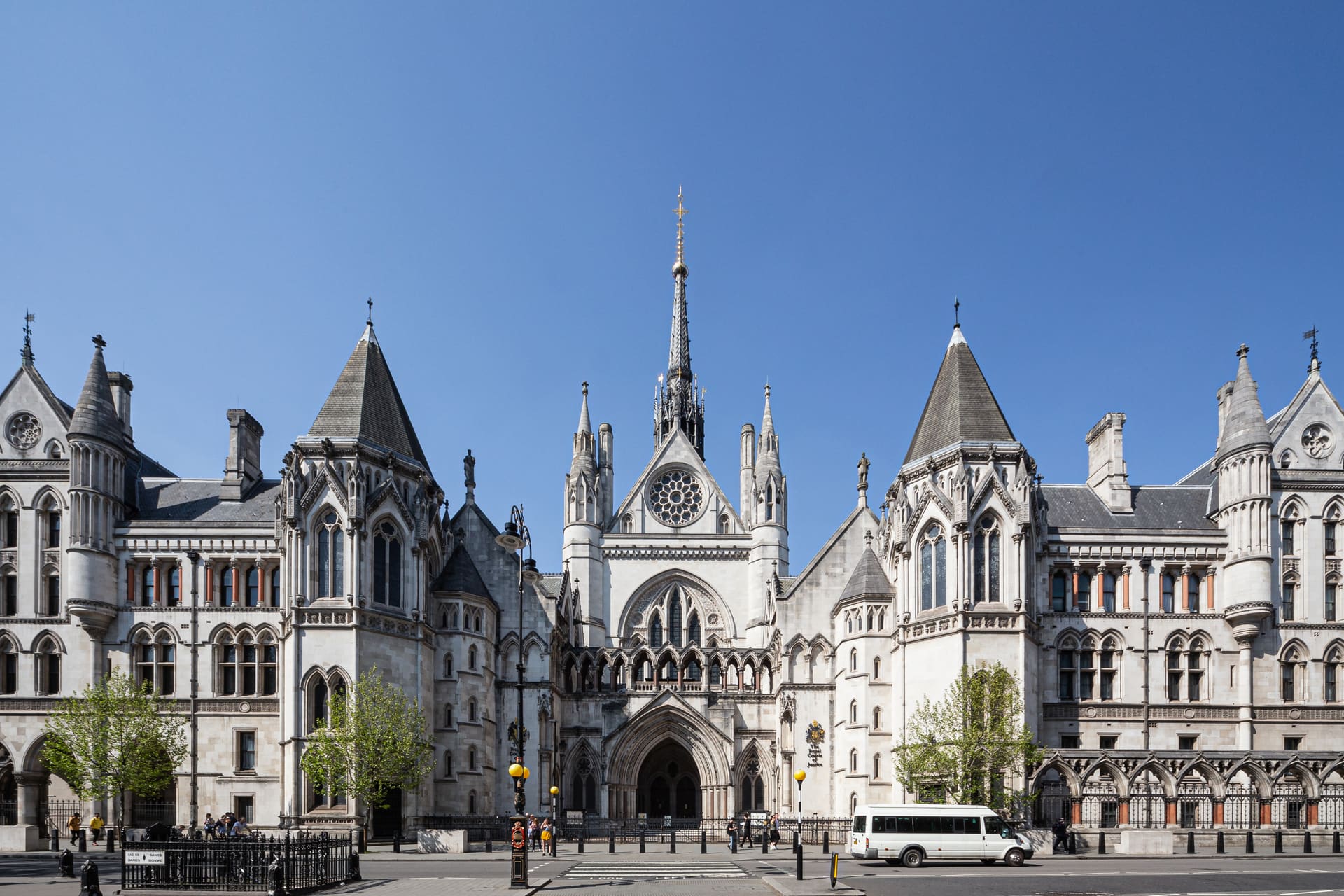
The Royal Courts of Justice in London, home of the High Court. Photo: David Castor via Wikimedia Commons (CC0). Source
Two companies tied to market maker DWF Labs sued crypto custodian BitGo for $141 million in London's High Court, alleging BitGo sold tokens it had agreed to keep locked. The claimants are DWF Maas, based in the British Virgin Islands, and Panama-based Falcon Digital, Unchained reported.
The tokens at issue are Falcon Finance (FF) and ESPORTS, the gaming token linked to Yooldo. BitGo received them at a discount in exchange for a commitment not to sell until lock-up and vesting periods expired, then moved them to exchanges roughly two months before the first scheduled release, as reported Oct. 9. The structure called for an initial three-month lock-up with further vesting restrictions after that.
"The discount BitGo received was conditional on the tokens remaining locked," a DWF spokesperson said, describing the early move to exchanges, in remarks CoinDesk carried from the Financial Times, which first reported the suit on Oct. 9. "We raised this with BitGo in April and May, and with no undertaking forthcoming, court action became necessary."
DWF argues the early selling did the damage. Selling into a thin market created heavy downward pressure that eroded the value of the tokens it still held, per the Oct. 9 account. The numbers cited show FF sliding from $0.08 at the start of the lock-up in early March to about $0.07 by late April, while ESPORTS fell from about $0.28 in mid-March to $0.07 by early June, when DWF alleges BitGo sold, per the same-day account.
DWF says the holding periods were meant to let it build products that would make the tokens easier to trade. Its filing language states there is no contractual or other legal excuse for BitGo transferring or selling them, one Oct. 9 version notes. "We remain hopeful of, and open to, resolution," the spokesperson added.
BitGo has not answered the substance in public. The company declined to comment for the Financial Times report, and the allegations have not been tested in court, as covered Oct. 9. Neither company responded to direct follow-up requests on Oct. 9. A fourth account, CoinMarketCap Academy, matched the core facts on Oct. 10 and added the same status line, that BitGo declined to comment and the allegations have not been proven in court, in its write-up.
The price trail carries a sourcing split rather than a numeric one. One version links its FF and ESPORTS figures to CoinGecko pages, tying ESPORTS to Yooldo Games, while a second says the Financial Times used CoinMarketCap figures, yet both give identical numbers. Bylines: Jamie Crawley with Stephen Alpher editing; staff with Guillermo Jimenez editing; David Okoya editing. Entity naming also shifts by outlet: headlines call the plaintiffs subsidiaries while the bodies say affiliates or tied firms, with only two of the three giving the BVI and Panama domiciles.
One figure needs care. Every headline in the coverage puts the suit at $141 million, but one body text says DWF is seeking $114 million in damages on the basis that the sales drove the price falls, in that report. No opened account explains whether $141 million is the total claim and $114 million the damages portion, so the gap stays unresolved.
The Financial Times version behind the paywall reportedly frames the dispute around a Trump-linked connection, but the readable coverage does not verify that angle, and this report omits it. What the three readable newsrooms agree on: the plaintiffs, the venue, the two tokens, the three-month lock-up with vesting behind it, the two-months-early move to exchanges, and the April and May warnings before filing. Publication ran in a tight morning sequence on Oct. 9, with timestamps of 8:23 a.m. EDT, 9:24 a.m. ET, and later the same day across the three newsrooms. No claim number or court filing reference has surfaced in the readable coverage, and no official statement from either company exists beyond the DWF quotes.