Loading article...

The US government shifted 12,267 bitcoin worth about $1.01 billion from a Bitfinex-seizure wallet to unlabeled addresses on Oct. 8, a day after $383 million in seized crypto hit Coinbase Prime, with no sale indicated under a March 2025 reserve order.
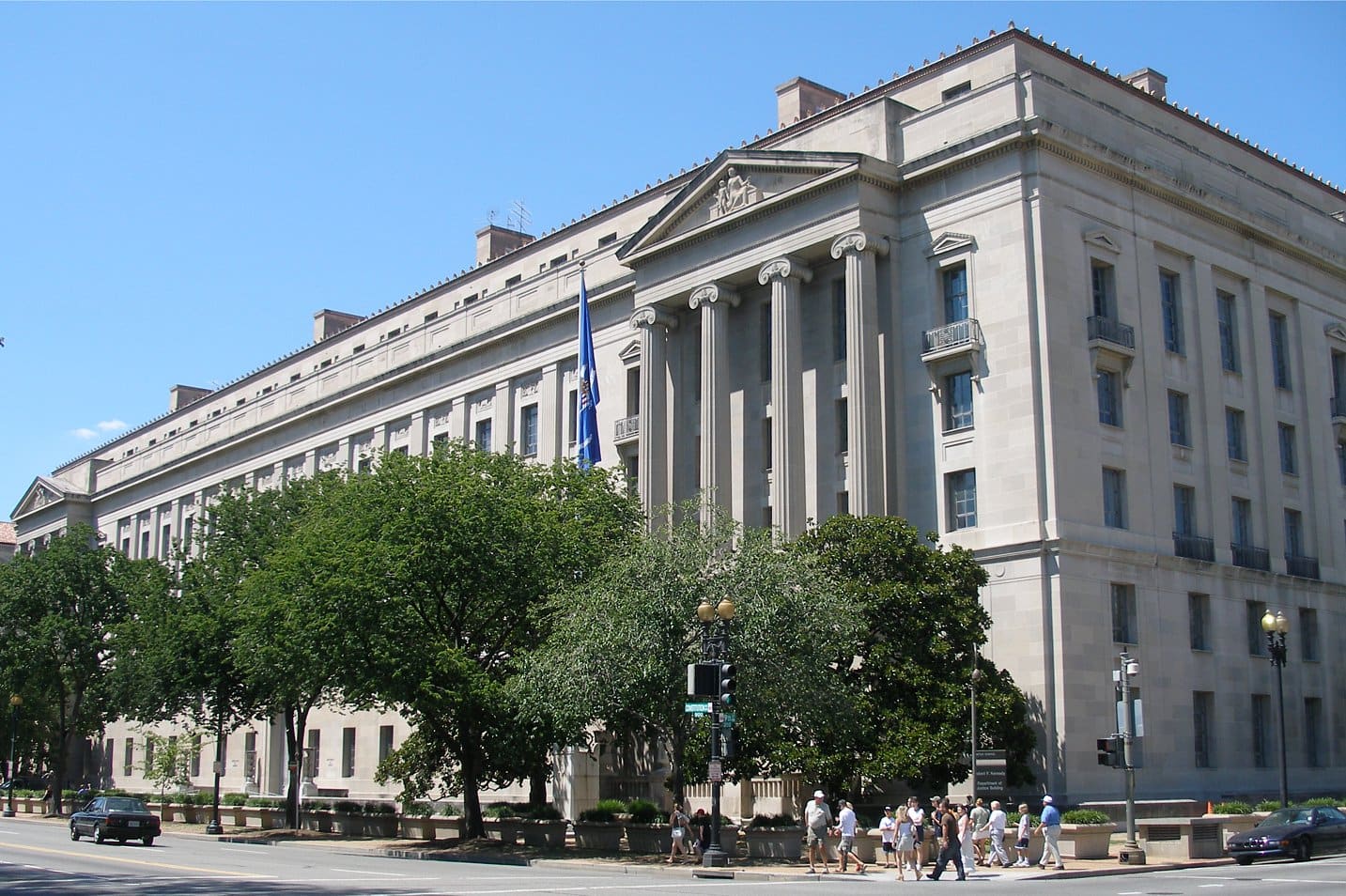
The US Department of Justice headquarters in Washington. Photo: Sebmol via Wikimedia Commons (CC BY-SA 3.0). Source
Wallets linked to the US government moved 12,267 bitcoin, worth about $1.01 billion, on Thursday, Oct. 8, according to data from blockchain intelligence firm Arkham. The coins left a wallet holding funds seized in the 2016 Bitfinex hack and went to new unlabeled addresses, with no exchange deposit recorded, a pattern more consistent with reshuffling than a sale, as reported Oct. 8. That version's dek frames the prior day's $383 million at Coinbase Prime as the setup leg for the billion-dollar move.
The transfer split in two. One transaction went to a new unlabeled address and a second went to a different address, both without exchange links. Unchained matched the headline facts on Oct. 9, writing that the government sent about $1 billion in seized Bitfinex bitcoin to unlabeled wallets with no sale indicated, in its Oct. 9 report. Decrypt carried the same $1 billion figure on Oct. 8, in its brief account.
The billion-dollar move followed heavier exchange-bound activity 24 hours earlier. Roughly 3,200 bitcoin, about $264 million, plus $119 million in USDT reached Coinbase Prime deposit addresses, or about $383 million combined. Those funds came from wallets tied to both the FTX and Alameda and the Bitfinex seizures, according to Arkham's identification, per the Oct. 8 account.
Deposits to Coinbase Prime do not necessarily signal a sale, since the platform also provides custody services. That distinction matters because Prime serves institutions as a custodian as well as a trading venue, so an exchange-linked deposit alone does not establish intent to sell, and the standing reserve order points the other way. A March 2025 executive order directed that forfeited bitcoin be placed into a Strategic Bitcoin Reserve and said it should not be sold. The government still holds about $25.5 billion in crypto, Arkham shows, per the same report.
The week's trail runs longer than these two legs. More than $100 million in BTC and BNB moved in similar fashion on Oct. 7, and in July about $288 million in seized bitcoin and ether was routed to Coinbase Prime through fresh intermediary wallets, the Oct. 8 account notes. The October billion moved differently, going direct from the seizure wallet to fresh addresses in two transactions with no intermediaries in between. That story, by Oliver Knight and edited by Sheldon Reback, frames the billion-dollar shift as the largest in that sequence.
The sourcing split is worth keeping straight. The Coinbase Prime deposits pooled two seizure estates, with funds traced to both FTX and Alameda wallets and Bitfinex wallets. The $1.01 billion leg is Bitfinex-only, drawn from the 2016 hack seizure wallet. That separation matters because only the Prime leg touched an exchange-linked destination, and even there custody, not sale, is the indicated purpose.
The outlets cite Arkham's labeling rather than publishing their own chain analysis, so the wallet attributions carry Arkham's confidence level rather than an official confirmation. The Arkham explorer page for the government entity could not be opened directly during research. Bitcoin traded near $83,588 around the transfer window, the price printed alongside the story, which sets the $1.01 billion figure without implying a realized value. No auction notice, victim-distribution schedule or fresh court order accompanies these moves in any readable account, and the trail ends at addresses with no exchange link.
Publication order tells its own story. The first version went up Oct. 8 at 11:43 a.m. EDT and was updated at 2:59 p.m. Unchained's Oct. 9 version and Decrypt's Oct. 8 brief each run the $1 billion figure without adding new transfers, which keeps the Oct. 8 account as the detailed record. Its embedded chart, credited to Arkham data, labels the flows as government transfers. All three describe the same two-step shape, custody first through Coinbase Prime, then dispersion to fresh addresses, with the standing executive order ruling out a sale.