Loading article...

Web3 architecture is undergoing its most significant transformation yet, moving from monolithic chains to modular, AI-integrated stacks capable of processing thousands of transactions per second. Explore the breakthroughs, real-world deployments, and career opportunities defining 2026.
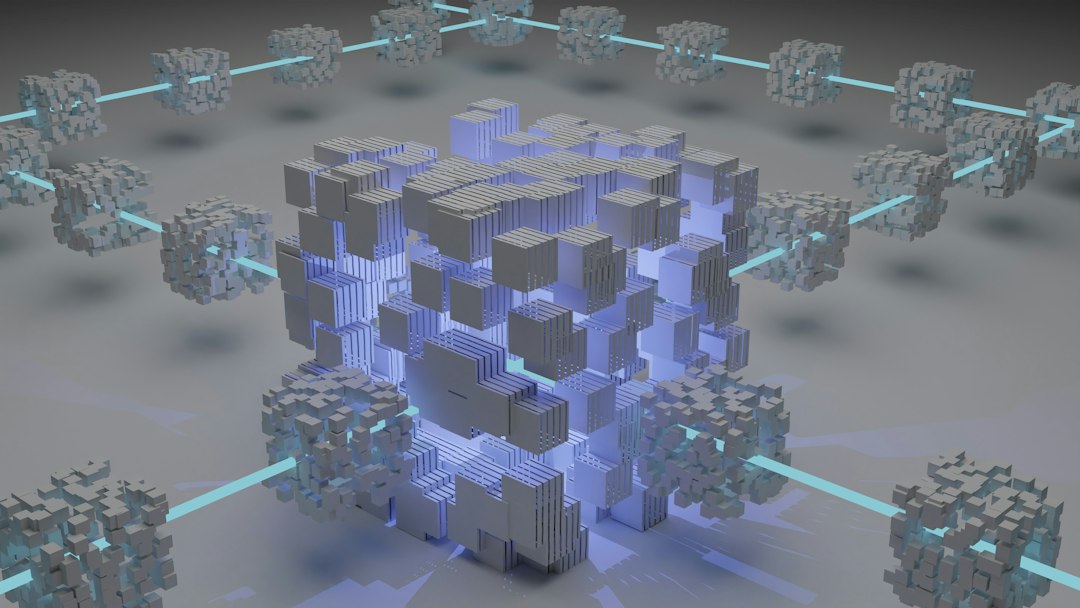
The blockchain infrastructure of 2026 represents a significant transformation from the systems developers faced five years earlier. The previous model, characterized by a monolithic design that attempted to manage execution, data availability, and settlement in a single chain, has evolved into a modular ecosystem. This modular approach addresses critical issues such as transaction throughput limitations, high gas fees, and the growing demand from users and complex on-chain applications.
This article outlines the key developments shaping this evolution: the transition to modular blockchain architecture, the emergence of intent-centric protocols, the integration of AI with on-chain execution, and advancements in zero-knowledge proofs that redefine operational possibilities in 2026.
Ethereum debuted in 2015 as a monolithic blockchain, where a single network managed execution, consensus, data availability, and settlement concurrently. While this design simplified understanding, it limited performance. Under standard conditions, Ethereum processes a relatively low number of transactions per second. During peak demand, users often face high gas fees that can exclude retail users and smaller developers.
The Ethereum community responded with a rollup-centric roadmap, articulated by founder Vitalik Buterin in 2020. Instead of scaling the primary chain, this strategy delegates execution to rollup networks, which batch transactions and submit compressed proofs back to Ethereum. Current rollups, including Arbitrum, Optimism, zkSync, and Starknet, regularly achieve significant transaction throughput in production environments, with potential limits that are even higher.
However, rollups raised a critical question regarding data storage. Ethereum's blob storage, introduced via EIP-4844, significantly improved the situation. Nevertheless, specialized data availability layer networks have emerged to optimize data handling further. Celestia pioneered this area as the first modular DA network on mainnet, enabling rollups to publish their data affordably. Other contenders like
EigenDA, based on EigenLayer's restaking framework, and
Avail, from the Polygon team, offer alternative solutions.
EigenLayer stands out as one of the most important architectural primitives of this cycle. It allows ETH stakers to "restake" their security to new protocols, enabling the creation of DA layers, bridges, oracles, and sequencers without needing to establish a new validator set. By early 2026, a significant amount of restaked ETH was secured through EigenLayer, supporting a growing array of Actively Validated Services (AVS).
As a result, the modular blockchain stack has emerged, where each layer specializes in its function. Developers can select and combine components according to their needs. This setup is not theoretical; it has become the standard architecture for most new Layer 2 and Layer 3 deployments in 2025 and 2026.
Despite rollups managing millions of transactions daily, the Web3 user experience often remains cumbersome. Engaging with DeFi protocols requires that users understand gas tokens, slippage tolerances, routing paths, and approval transactions, creating cognitive burdens that Web2 alternatives do not impose.
Intent-centric protocols redefine this interaction model. Instead of users specifying exact transactions, such as "swap exactly 1 ETH for USDC using this route," they express broader intents like, "I want at least 3,400 USDC for my 1 ETH." A network of specialized actors calledsolvers then competes to fulfill that intent, relieving users from working through the execution complexities.
The
CoW Protocol(Coincidence of Wants) pioneered this concept on Ethereum, enabling peer-to-peer order matching before routing any remaining orders through automated market makers (AMMs). This protocol has processed significant trading volume and consistently provides better pricing than conventional AMM routing. Meanwhile,1inch Fusionhas built on this model by introducing a Dutch auction system where solvers bid to fulfill orders.
Anoma is developing a protocol-level intent-centric architecture, establishing a unified platform where intents serve as the core primitive.
For developers, this transition requires a focus on user goals rather than the mechanics of achieving them. The infrastructure for solvers, off-chain matching and simulation engines, becomes essential. Users benefit from a simplified experience that resembles Web2: specify an outcome, pay a fee, and let the protocol manage the rest.
The intent-centric protocol model also influences the management of concentrated liquidity. Active liquidity managers and Automated Liquidity Managers (ALMs) can articulate their rebalancing strategies as intents, allowing solver networks to optimize execution across multiple venues at once.
One of the most significant trends in Web3 architecture is the integration of artificial intelligence with on-chain execution.
AI agents executing on-chain transitioned from experimental projects to operational realities in 2025. Initial deployments featured basic automated bots executing yield strategies. By 2026, more advanced agents emerged, capable of formulating multi-step DeFi strategies, participating in governance votes, and managing cross-chain portfolios with minimal human intervention. Frameworks like ElizaOS (formerly ai16z) and Virtuals Protocol provide essential infrastructure for launching autonomous agents with on-chain wallets, representing significant monthly on-chain activity.
However, trust poses a challenge: verifying that an AI made decisions based on the claimed model and inputs rather than a modified version. Enter verifiable AI inference. Projects like
Giza and
Modulus Labs(acquired by Aztec in 2024) are leading zero-knowledge proofs for machine learning models. These cryptographic proofs confirm that a specific model, when executed with specific inputs, yields a specific output. This process allows smart contracts to use AI outputs without needing a centralized oracle or trusted execution environment.
The potential applications extend well beyond DeFi. Verifiable AI enables on-chain credit scoring models, fraud detection systems, and dynamic NFTs governed by AI logic that remains auditable. Although zkML (zero-knowledge machine learning) proof generation is currently expensive and limited to smaller models, the trend points toward increased viability.
For instance, Giza's ONNX-to-Cairo compiler enables developers to convert trained machine learning models for operation inside ZK circuits. Modulus Labs successfully demonstrated verifiable inference for a ResNet-18 image classification model in 2023. By 2025, proof generation times for comparable models had decreased significantly.
The modular blockchain thesis has transitioned from theoretical discussions to real-world applications. The following table outlines the modern modular blockchain stack in active deployments:
| Layer | Function | Leading Solutions |
|---|---|---|
| Execution | Process transactions, run smart contracts | Arbitrum, Optimism, zkSync Era, Starknet |
| Data Availability | Store transaction data, ensure retrievability | Celestia, EigenDA, Avail, Ethereum blobs |
| Settlement | Verify proofs, resolve disputes | Ethereum |
| Sequencing | Order transactions, produce blocks | Centralized sequencers (current), shared sequencing (emerging) |
Arbitrum currently leads in developer activity among optimistic rollup networks. Its Orbit stack allows teams to launch custom Layer 3 chains settled on Arbitrum.
Optimism's Superchain initiative connects OP Stack chains, including Base (Coinbase), Mode, and Zora, through a shared messaging layer.zkSync's ZK Stack and
Starknet's Madara framework provide ZK-rollup equivalents.
In the data availability layer, Celestia's "data availability sampling" allows light nodes to verify data availability without downloading full blocks, an essential feature for scalability. EigenDA's architecture uses Ethereum's existing validator set through restaking, resulting in a unique security profile that aligns closely with Ethereum's guarantees. Choosing between DA layers requires careful consideration of costs, security assumptions, and ecosystem alignment.
Practically, a developer building a new application-specific chain in 2026 can launch a rollup using the OP Stack or Arbitrum Orbit, publish data to Celestia or EigenDA, and resolve disputes on Ethereum. This capability enables the establishment of production blockchain environments in days instead of years.
Several specific technical milestones have significantly enhanced the capabilities of the modular stack over the past 18 months.
EIP-4844 (Proto-Danksharding), which activated on Ethereum mainnet in March 2024, introduced "blobs", a new data format that is less expensive to publish than calldata and automatically pruned after approximately 18 days. This change resulted in a significant reduction in data posting costs for Layer 2 networks. Following the upgrade, Arbitrum and Optimism users experienced average transaction fee reductions, dramatically improving the economic viability of the modular stack.
Based sequencing is a new approach where Ethereum validators sequence Layer 2 transactions directly instead of relying on separate centralized sequencers operated by rollup teams. This model, introduced by Justin Drake's "based rollup" proposal, mitigates centralization risks associated with current rollup architectures. Taiko has implemented a based ZK rollup on Ethereum mainnet since 2024.
Shared sequencing networks, with Espresso Systems emerging as the most advanced, allow multiple rollups to use a single decentralized sequencer. This development enables atomic cross-rollup transactions, a feature not achievable when each rollup operates its own sequencer. Users can execute a swap on Arbitrum and receive funds on Optimism in a single atomic operation, eliminating existing bridging delays and risks.
ZK proof generation times have decreased significantly. In 2022, generating a ZK-STARK proof for complex computations took several minutes. By late 2025, Starknet's SHARP prover and Polygon's Type 1 ZK prover achieved proof times under one second for typical transaction batches. This improvement results from algorithmic advancements, specialized ASICs, and distributed proving networks, making ZK proofs practical for applications requiring near-real-time finality.
The architectural changes outlined above significantly impact the Web3 job market in 2026.
ZK engineering has emerged as the most sought-after technical specialty in the field. Skills such as writing circuits in Circom, Cairo, Noir, or Halo2; optimizing constraint systems; and building proving infrastructure command top-tier compensation, with senior ZK engineers earning high salaries at well-funded protocols. The supply of qualified engineers remains limited due to the advanced mathematical knowledge required, which is not typically included in standard computer science curricula.
Modular stack development, creating applications using DA layers, rollup frameworks, and restaking primitives, represents another key growth area. Teams working on Celestia, EigenLayer, or various rollup SDKs seek engineers who understand the entire modular stack rather than just a single chain. Experience with cross-chain and interoperability enhances a candidate's value.
Intent solver development is an emerging specialty with a limited number of practitioners and rapidly increasing demand. Building effective solvers requires expertise in miner extractable value (MEV), routing algorithms, cross-chain bridging, and low-latency systems engineering, a combination that is relatively rare. As the adoption of intent-centric protocols grows, the importance of solver infrastructure will rival that of automated market maker (AMM) liquidity.
AI/Web3 intersection roles, particularly those related to agent frameworks, zkML research, and on-chain AI product development, are nascent, yet expanding quickly. Teams in this space actively recruit from both the machine learning and Web3 sectors, with candidates capable of operating in both domains being exceptionally rare and well-compensated.
For developers transitioning from Web2 or monolithic Web3 development, the modular stack offers a genuine opportunity. The tools have evolved to be user-friendly, and the demand for engineers capable of building applications on this infrastructure, rather than solely developing the infrastructure, is broad and growing.
Web3 architecture in 2026 is more adaptable and interconnected than ever before. The shift from monolithic chains to specialized modular layers has resulted in throughput and cost efficiencies, enabling Web3 applications to compete with Web2 on user experience. Intent-based protocols are removing the last significant UX barriers, while AI agents are beginning to autonomously use this infrastructure. Zero-knowledge proofs are compressing toward the speed and cost necessary for widespread adoption.
While the infrastructure buildout is ongoing, shared sequencing, full danksharding, zkML at scale, and decentralized proving networks are still maturing, the architectural trajectory is evident and is generating tangible user activity and economic value. For engineers, researchers, and product builders entering or advancing in Web3, understanding the modular stack has become essential knowledge. This stack will serve as the foundation for the next generation of decentralized applications.
Explore more guides and career playbooks