Loading article...

A technical guide to crypto faucets and testnet infrastructure. Learn how Sepolia and Holesky testnet faucets power Web3 smart contract development, anti-Sybil mechanisms, and developer tooling.
In the early architecture of public blockchain networks, a crypto faucet referred to a web service that dispensed micro-allocations of mainnet cryptocurrency to user wallets for free or in exchange for completing basic tasks (such as solving a CAPTCHA or viewing a page). In 2010, early Bitcoin developer Gavin Andresen launched the original Bitcoin Faucet, dispensing 5 BTC per visitor to encourage peer-to-peer adoption and wallet testing at a time when Bitcoin held negligible fiat value.
As public blockchain assets gained substantial economic value, mainnet faucets became economically infeasible. Today, the role of crypto faucets has evolved into a critical piece of developer infrastructure.
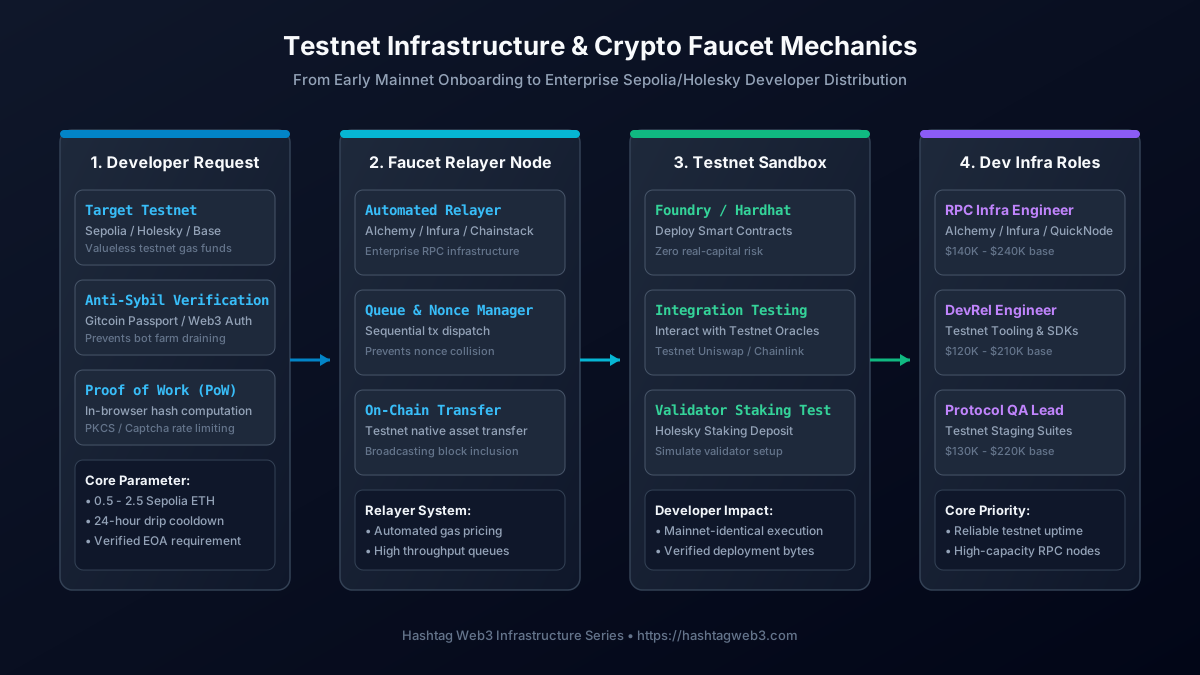
In modern Web3 software engineering, faucets distribute valueless testnet tokens (such as Sepolia ETH or Holesky ETH) to developers. These testnet assets allow smart contract engineers, security auditors, and protocol teams to deploy, simulate, and test complex decentralized applications in sandbox environments that replicate Ethereum mainnet conditions without incurring real financial cost.
This technical guide examines the evolution of crypto faucets, the architecture of modern testnet infrastructure (Sepolia and Holesky), anti-Sybil protection mechanisms, and how developer infrastructure teams manage high-throughput faucet RPC nodes.
Understanding the distinction between early consumer faucets and modern enterprise testnet faucets requires examining the evolution of blockchain execution environments:
┌────────────────────────────────────────────────────────────────────────┐
│               Mainnet Faucets vs. Modern Testnet Faucets               │
├──────────────────────────────────────┬─────────────────────────────────┤
│ Historical Mainnet Faucets (2010-14) │ Modern Testnet Faucets (2026)   │
├──────────────────────────────────────┼─────────────────────────────────┤
│ • Distributed real mainnet BTC/ETH   │ • Distribute valueless testnet ETH│
│ • Targeted consumer onboarding       │ • Targeted developer testing    │
│ • Funded by early developers/ad revenue│ • Funded by infra providers    │
│ • Simple CAPTCHA protection          │ • Gitcoin Passport / Proof of Work│
│ • Depreciated due to asset valuation │ • Essential production pipeline │
└──────────────────────────────────────┴─────────────────────────────────┘
When Bitcoin mainnet was launched, acquiring BTC was technically challenging. Cryptocurrency exchanges were non-existent or illiquid. Faucets served as primary distribution channels to bootstrap wallet adoption. Gavin Andresen's faucet distributed over 19,500 BTC over its operational lifespan. As asset prices appreciated, retail mainnet faucets transitioned into ad-driven micro-earning sites before disappearing due to fraud and unviable economics.
Deploying complex smart contracts (such as Uniswap V4 pools, Aave money markets, or Account Abstraction paymasters) to Ethereum mainnet requires tens of thousands of dollars in gas execution fees. To prevent testing errors from burning real capital, the Ethereum Foundation and client teams maintain public test networks (testnets).
Smart contracts deployed on testnets execute identical EVM bytecode and state transition logic as mainnet. However, gas fees are paid using testnet native tokens distributed freely via developer faucets.
Ethereum development relies primarily on two active testnets, each supported by dedicated faucet infrastructure:
Because testnet ETH can become scarce during major network upgrades or high dApp deployment cycles, malicious actors deploy bot farms to hoard testnet tokens and sell them on secondary OTC markets. To protect developer access, modern infrastructure providers engineering faucet systems enforce strict anti-Sybil rate limits.
┌────────────────────────────────────────────────────────────────────────┐
│                 Modern Faucet Anti-Sybil Defense Layers                │
├────────────────────────────────────────────────────────────────────────┤
│ 1. Web3 Identity & Mainnet Balance Verification                        │
│    Requires EOA to hold >= 0.001 Mainnet ETH (prevents fresh bot EOAs) │
├────────────────────────────────────────────────────────────────────────┤
│ 2. Gitcoin Passport & Social Proof                                     │
│    Requires minimum Gitcoin Passport score or GitHub authentication    │
├────────────────────────────────────────────────────────────────────────┤
│ 3. Client-Side Proof-of-Work (PoW) Mining                              │
│    Browser solves SHA-256 / Equihash puzzle before RPC dispatch       │
├────────────────────────────────────────────────────────────────────────┤
│ 4. Relayer Queue & Nonce Manager                                       │
│    Enterprise node manages sequential nonces to prevent collisions     │
└────────────────────────────────────────────────────────────────────────┘
Leading faucet providers like Alchemy and Infura require requesting wallet addresses (EOAs) to hold a minimum balance of Ethereum mainnet ETH (e.g., 0.001 ETH). Because creating millions of mainnet wallets with non-zero ETH balances incurs real capital costs, this requirement effectively eliminates automated bot farms.
Faucets like the PK910 Faucet require the user's browser to mine hashes locally for several minutes using JavaScript or WebAssembly. The amount of testnet ETH dispensed scales directly with the amount of computational work submitted, making automated batch requests computationally expensive for attackers.
Integrating Gitcoin Passport allows faucets to verify human identity via aggregated stamps (such as Google, GitHub, Twitter, or BrightID verifications) without storing private user data.
Smart contract developers integrate faucet testnet funds into automated deployment pipelines using CLI tools like Foundry and Hardhat:
# 1. Acquire Sepolia ETH from faucet to your dev wallet
# 2. Deploy smart contract to Sepolia testnet using Foundry Forge
forge create --rpc-url https://eth-sepolia.g.alchemy.com/v2/YOUR_API_KEY \
  --private-key 0xYOUR_DEVELOPER_PRIVATE_KEY \
  src/MyProtocol.sol:MyProtocol

# 3. Verify contract source code on Etherscan Sepolia
forge verify-contract YOUR_DEPLOYED_ADDRESS \
  src/MyProtocol.sol:MyProtocol \
  --chain-id 11155111 \
  --etherscan-api-key YOUR_ETHERSCAN_KEY
By leveraging testnet faucets, engineering teams run continuous integration (CI) test suites, execute mainnet-forked simulations using anvil --fork-url, and conduct public security audits on live testnets prior to mainnet launch.
The management, scaling, and protection of testnet infrastructure, RPC endpoints, and developer tooling represent key business operations for Web3 infrastructure companies:
Interested in building high-performance RPC networks, developer SDKs, or public testing infrastructure? Discover active roles across developer tooling, node operations, and protocol engineering on our curated list of Web3 developer jobs.
Explore more guides and career playbooks